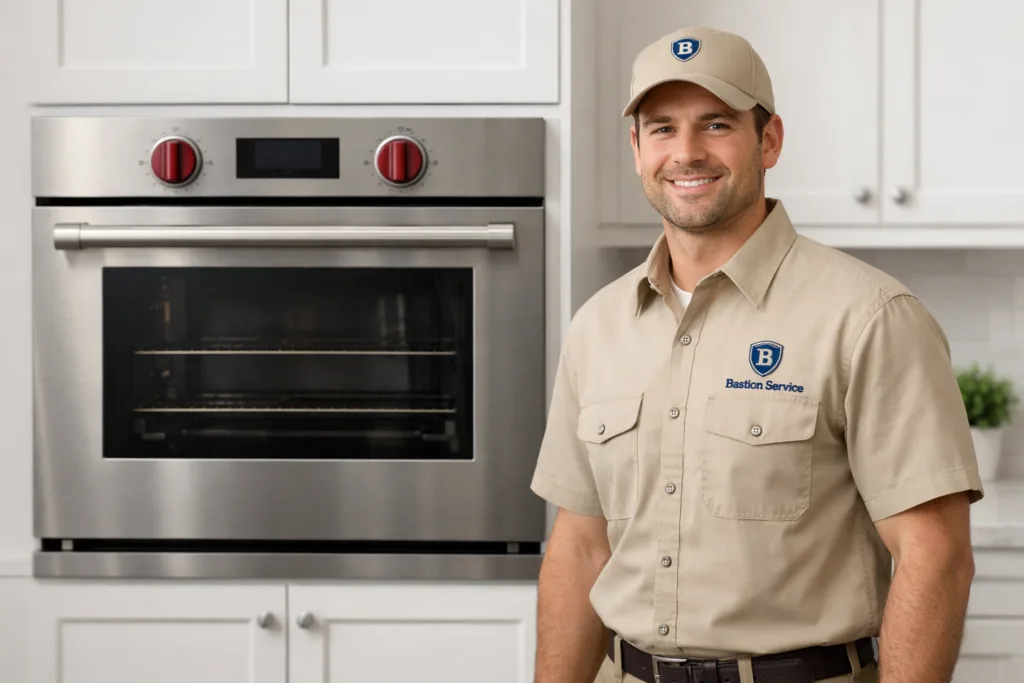
Temperature problems in a Wolf oven rarely come from guesswork-friendly causes. An oven that seems slightly off can be dealing with anything from a weak igniter or failing heating element to a sensor issue, wiring fault, or control problem. Looking at the exact symptom pattern first usually saves time and helps determine whether the repair is straightforward or whether multiple components may be involved.
Common Wolf oven symptoms and what they can mean
Most oven failures show up in repeatable ways. The appliance may still power on, the display may appear normal, and the door may close properly, yet cooking results can still be poor because the oven is not producing or regulating heat the way it should.
- Not heating at all: Often points to an igniter problem on gas models, a failed bake or broil element on electric models, or a control issue preventing normal operation.
- Slow preheat: Can suggest a weakening igniter, reduced element output, or a system that is only partially heating during the preheat cycle.
- Uneven baking: May come from inaccurate temperature sensing, heat distribution issues, or intermittent cycling that leaves hot and cool zones inside the cavity.
- Temperature swings: Frequently involve a sensor problem, calibration drift, relay trouble, or control board faults.
- Stops during cooking: Can indicate overheating protection, loose connections, failing controls, or heat-related electrical failure.
In Rancho Park homes where the oven is used often, these symptoms may start subtly before becoming obvious. A meal that needs extra time, browns unevenly, or burns on one rack while staying pale on another can be an early sign that the oven is no longer holding temperature correctly.
Not heating, weak heating, or very slow preheat
When a Wolf oven will not reach the set temperature, the first step is separating total heating failure from weak heating. If the cavity stays cool, the problem may be more direct, such as an igniter that no longer draws enough current, an open element, or a control fault that is not sending power where it should go.
If the oven eventually heats but takes much longer than before, the failure may be partial rather than complete. Gas models with a weak igniter can delay ignition and struggle through preheat. Electric models may still warm up if one element is working, but performance will be slow and baking results will suffer. In both cases, continued use tends to make the problem more noticeable rather than less.
Slow preheat also matters because it can hide a larger issue. Homeowners sometimes adapt by adding extra cooking time, but that does not solve temperature instability during the actual bake cycle.
Uneven baking and inaccurate oven temperature
When cookies brown unevenly, casseroles finish at different rates, or recipes that used to be reliable suddenly become unpredictable, the oven may be running hotter or cooler than the display indicates. That can happen when the temperature sensor is drifting out of range, when the oven cycles incorrectly, or when one heating source is underperforming.
Uneven results do not always mean the entire appliance is failing. In many cases, the issue is isolated to a serviceable part. The key is confirming whether the oven is misreading temperature, failing to maintain it, or producing heat unevenly from the start.
Signs that point to a temperature regulation problem include:
- Food repeatedly finishing too early or too late
- The top of dishes browning while the center remains undercooked
- Recipes needing constant manual adjustment
- Better results on one rack position than another
- Noticeable difference between preheat completion and actual cooking performance
Error codes, display issues, and intermittent operation
Some Wolf oven problems are consistent, while others appear only after the unit has been running for a while. Intermittent faults can be especially frustrating because the oven may work normally for one meal and fail during the next. That pattern often points to a component that weakens as heat builds, a loose electrical connection, or a control issue that does not show up immediately at startup.
Error codes can help narrow the problem category, but they do not always identify the exact failed part by themselves. The same is true when the display responds normally but the oven will not heat, shuts off mid-cycle, or behaves unpredictably during preheat. In those cases, testing has to move beyond the touch panel and into the sensor, heating, and control systems.
Door and latch problems that affect performance
A Wolf oven door that does not seal correctly can cause more than simple heat loss. It may contribute to unstable temperatures, extended cooking times, and poor baking consistency. During high-heat operation or self-clean cycles, latch and lock components can also become a factor. If the door will not close, lock, unlock, or stay aligned, the oven may not operate as intended and can place extra strain on related parts.
When to stop using the oven and schedule service
It usually makes sense to stop using the oven when the issue affects safe operation or when repeated use could turn a single-part repair into a more expensive one. If the appliance trips the breaker, gives off a burning smell, sparks, shuts down unexpectedly, or displays recurring faults, it is better to pause use until the problem is checked.
For gas models, delayed ignition, clicking without proper ignition, or any persistent gas odor should be treated seriously. For electric models, visible element damage, arcing, or breaker trips are signs to stop testing the appliance through everyday cooking.
Service is also worth scheduling when the oven still runs but no longer performs reliably. A unit that technically turns on but cannot maintain temperature is not functioning normally, even if it has not failed completely.
Repair or replacement: what usually makes sense
Many Wolf ovens are strong repair candidates when the issue is limited to a specific failed component and the rest of the appliance is in good condition. Problems involving igniters, sensors, elements, door parts, and some control-related faults are often practical to address when testing confirms the source.
Replacement becomes more likely when the oven has several major problems at once, has a history of repeated breakdowns, or shows broader wear that makes new repairs harder to justify. For most Rancho Park homeowners, the decision comes down to the extent of the failure, the condition of the oven overall, and whether the current issue is isolated or part of a larger pattern.
What a service visit should help clarify
A useful visit should answer a few specific questions: what failed, whether the oven is safe to keep using, and whether the repair path is sensible for the condition of the unit. That matters with Wolf ovens because similar symptoms can come from very different underlying causes.
Whether the problem is no heat, poor baking results, long preheat times, control trouble, or a fault that appears only intermittently, the goal is to identify the failed system and avoid replacing parts based on assumption. For Rancho Park households that rely on the oven regularly, that makes the next step much easier to judge.