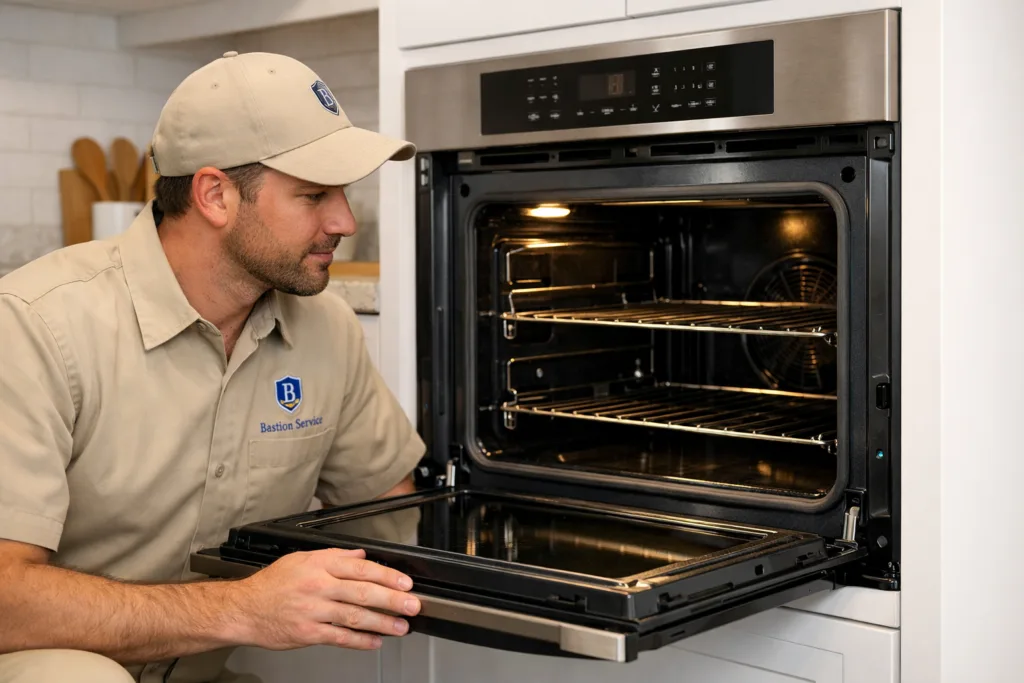
Cooking problems often show up gradually with a wall oven. A roast takes longer than usual, one rack browns faster than the other, or the oven seems hot one day and cool the next. With Whirlpool wall ovens, those patterns usually point to a specific failure in the heating, sensing, latch, or control system rather than a general “old oven” problem.
Common Whirlpool wall oven symptoms in Rancho Park homes
Many wall oven complaints sound similar at first, but the details matter. Whether the oven misses temperature by a little or fails to heat at all can change the repair path completely.
Not heating or barely heating
If the display powers on and the oven appears to start, but the cavity never gets hot enough, the issue may involve the bake element, broil element, temperature sensor, relay, wiring, or electronic control. In some cases, one heating circuit works while the other does not, which can make the oven seem partly functional even though it cannot cook correctly.
Homeowners sometimes notice this when preheat seems to run forever, frozen foods stay pale, or dishes finish unevenly. A wall oven that warms slightly but never reaches the set temperature often needs more than a simple reset.
Uneven baking and hot spots
When cookies brown too fast on one side, casseroles stay cool in the center, or recipes that used to be reliable suddenly become inconsistent, the oven may be cycling incorrectly. Sensor drift, weak element output, calibration errors, or airflow-related heat distribution problems can all create this pattern.
Uneven results are especially frustrating because the oven may still appear to work. The clock, lights, and controls can all seem normal while temperature performance is off enough to affect everyday cooking.
Slow preheat
Slow preheating is one of the most common complaints with built-in ovens. Sometimes the oven does eventually reach temperature, but only after an unusually long wait. That can happen when an element is failing, the sensor is reading inaccurately, or the control is not energizing the heating system properly.
If preheat time keeps getting worse over weeks or months, that usually suggests a part is weakening rather than a one-time glitch.
Temperature swings during cooking
Some temperature variation is normal during oven cycling, but wide swings are not. If baked goods come out different from one day to the next, or if the oven seems to overshoot and then cool too far before reheating, the sensor or control may not be regulating heat correctly.
This kind of problem can be hard to judge without testing because the oven may sometimes perform normally. Intermittent symptoms are still important, especially when they start affecting routine meals.
Error codes, shutdowns, or tripped power
A Whirlpool wall oven that flashes an error code, stops mid-cycle, or interrupts power should be checked before continued use. These symptoms can point to overheating protection, a control fault, a shorted component, door lock trouble, or an electrical issue within the unit.
Repeated shutdowns are not just inconvenient. They can also be a sign that another component is being stressed each time the oven runs.
Door and self-clean issues that can disable the oven
Not every wall oven repair starts with a heating complaint. On many Whirlpool models, the door latch and self-clean system can prevent normal operation when something goes wrong.
Door will not unlock
If the oven stays locked after self-clean, the cause may be a stuck latch motor, switch problem, control failure, or heat-related issue that kept the lock from resetting. Even when the heating system is fine, the appliance may be unusable until the lock system is corrected.
Door does not close properly
Loose hinges, a worn gasket, alignment problems, or latch interference can let heat escape. That often leads to longer cook times, poor temperature stability, and edges of food cooking differently from the center.
Self-clean starts causing other problems
Some oven failures first appear after a self-clean cycle because high heat puts extra stress on sensors, controls, and latch parts. If a Whirlpool wall oven begins showing errors, locking up, or heating poorly after self-clean, that timing is useful information for diagnosis.
Signs you should stop using the oven for now
Some symptoms are more than performance issues. It is usually wise to stop using the unit until it is checked if you notice:
- A burning smell that does not go away quickly
- Visible sparking or arcing
- Repeated tripped breakers
- The oven shutting off in the middle of baking
- A door that will not latch or unlock correctly
- Error codes that return after resetting power
Continuing to run the oven under these conditions can turn a targeted repair into a larger one, especially if excess heat or electrical stress starts affecting additional parts.
What diagnosis should determine
A useful service visit should sort out more than whether the oven turns on. It should identify which system has failed, whether the issue is isolated or connected to a broader control problem, and whether the appliance can be used safely before repair is completed.
That matters because the same symptom can come from different causes. “Not heating” could mean an element problem, a sensor issue, a relay failure, damaged wiring, or a control board fault. Replacing parts by guesswork often leads to extra expense without restoring reliable operation.
When repair usually makes sense
Repair is often reasonable when the fault is limited to a defined component and the rest of the wall oven is in good shape. Common examples include failed heating elements, sensors, latch assemblies, user interface parts, or certain control-related components.
For many Rancho Park households, repair is worth considering when the oven has been cooking well until one specific symptom appeared and there are no signs of major structural wear, severe cavity damage, or multiple unrelated failures at once.
When replacement may be the better choice
Replacement becomes more likely when the wall oven has several systems failing together, has significant wear beyond the current problem, or needs a repair that is disproportionate to the appliance’s overall condition. The decision is usually less about age alone and more about the confirmed failure, parts involved, and how the oven has been performing overall.
If the problem includes both electronic control issues and recurring temperature problems, or if earlier repairs have not restored dependable operation, stepping back to compare repair versus replacement can make sense.
Helpful details to note before service
If possible, write down what the oven is doing before the appointment. Small details can make troubleshooting faster and more accurate, such as:
- Whether the problem happens in bake, broil, convection, or self-clean
- If the display stays on when the oven stops heating
- How long preheat is taking compared with normal
- Whether the issue started suddenly or worsened over time
- Any error code shown on the display
- Whether the trouble began after a power interruption or self-clean cycle
Symptom patterns like these often point the repair in the right direction much faster than a general description like “it isn’t working right.”
Focused help for Whirlpool wall oven problems
Whirlpool wall oven repair in Rancho Park is most effective when the symptom is matched to the actual failed part instead of assumptions. Whether the problem is no heat, uneven baking, slow preheat, temperature instability, or a door lock issue, the goal is to restore safe and predictable cooking without unnecessary parts changes.
For homeowners dealing with an oven that has become unreliable, a clear diagnosis and practical repair guidance can make the next step much easier to judge.