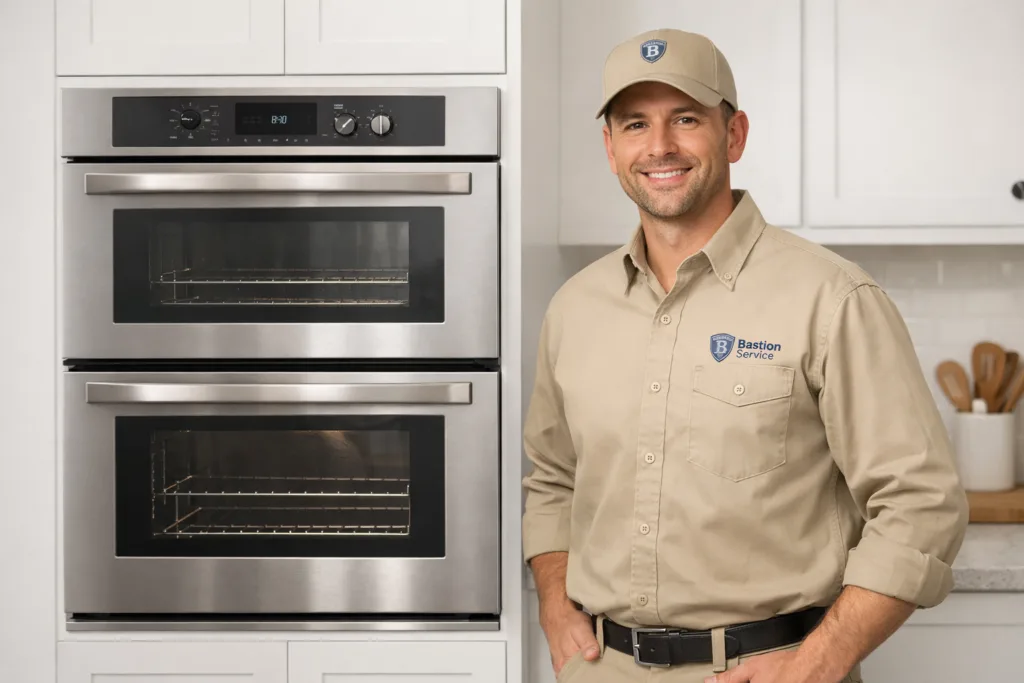
Temperature problems in a GE wall oven rarely mean just one thing. An oven that runs cold, overshoots the set temperature, or preheats far too slowly can be dealing with a weak heating element, a drifting sensor, a control issue, or a wiring fault behind the unit. Because built-in ovens often still light up and appear normal even when a heating circuit is failing, the symptom needs to be traced to the part of the system that is actually causing the problem.
Common GE wall oven symptoms homeowners notice
Most wall oven calls start with a pattern that has become hard to ignore. Sometimes the problem is obvious, like an oven that will not turn on. Other times it shows up in the food itself, with baking results changing from one use to the next.
Not heating at all
If the display comes on but the oven stays cold, the failure may involve the bake element, broil element, thermal protection, control relay, or incoming power. On some GE models, part of the unit can still seem functional even though the heating circuit is not operating correctly. That is why a dead-cold oven should not be judged by the display alone.
Slow preheat
Slow preheat often points to an element that is weak rather than fully failed, but it can also be caused by sensor feedback problems or control trouble. Many homeowners first notice this when weeknight meals begin taking much longer than expected or when the oven never seems ready at the usual point in the cycle.
Uneven baking
When cookies brown unevenly, casseroles finish around the edges first, or one rack cooks differently from another, the cause may be inaccurate temperature sensing, inconsistent heat output, or airflow issues inside the cavity. Uneven results can be especially frustrating because the oven still works enough to create doubt, even though cooking performance is no longer trustworthy.
Temperature swings during cooking
Some fluctuation is normal in electric ovens, but wide swings are not. If food is coming out overcooked one day and underdone the next at the same setting, the oven may be misreading temperature, cycling poorly, or losing stable control of the heating elements.
Control panel or error code issues
Beeping, flashing codes, touchpad problems, or a clock that resets unexpectedly can all affect normal operation. On GE wall ovens, control issues may interrupt preheat, stop a cycle midway, or prevent settings from being entered correctly. When electronic symptoms appear alongside heating problems, the repair path often depends on testing rather than guesswork.
Door and latch problems
A door that does not close firmly or a latch that sticks can interfere with normal operation, especially on models that monitor door position. Problems after a self-clean cycle are also common, since high heat can stress switches, lock components, and controls.
Why the same symptom can have different causes
Wall ovens are one of the easier appliances to misdiagnose because several failures can create nearly identical results. An oven that does not reach temperature might have a bad sensor, a weak bake element, a failing relay, damaged wiring, or a power issue. An oven that shuts off during use may be dealing with overheating protection, a control fault, or an unstable electrical connection.
That overlap matters because replacing the wrong part can leave the original problem untouched. The most helpful service visit is one that identifies the failed component and explains whether the repair is isolated or part of a larger condition inside the oven.
Signs the oven should not keep being used
Some wall oven problems are mostly about convenience, but others justify stopping use until the unit is checked. It is smart to pause use if you notice:
- The oven trips the breaker
- The interior gets excessively hot on the outside of normal cooking behavior
- The unit will not shut off correctly
- Error codes return repeatedly
- Burning smells, arcing sounds, or visible sparking appear
- The temperature is far higher or lower than the setting
These symptoms can turn a manageable repair into a more expensive one if the oven continues operating under stress.
What Rancho Park homeowners should watch before service
If your GE wall oven is still operating part of the time, a few details can make the symptom pattern easier to understand. Notice whether the problem happens only in bake mode, only during broil, after preheat, or during longer cooking cycles. It also helps to know whether the issue began suddenly or gradually.
Useful observations include whether the display stays on, whether the oven ever reaches temperature, whether the cooling fan sounds normal, and whether the door closes securely. In Rancho Park homes where the oven is used frequently for family meals or baking, these patterns usually reveal more than a simple description like “it runs weird” or “it takes too long.”
Repair or replace: what usually drives the decision
Built-in wall ovens are often worth serious repair consideration because replacement is not always simple. Cabinet fit, trim compatibility, electrical requirements, and kitchen layout all matter more with a wall oven than with a freestanding appliance. A repair can make good sense when the issue is limited to a sensor, element, latch, switch, or specific control-related component and the rest of the oven is in solid condition.
Replacement becomes more attractive when the unit has repeated major electronic failures, significant interior wear, door problems combined with control issues, or a repair cost that is high relative to the oven’s condition. For many households in Rancho Park, the decision comes down to whether the problem is isolated and repairable or whether several aging components are beginning to fail together.
What a service appointment should help clarify
A useful appointment should answer a few practical questions: what failed, whether it is safe to continue using the oven, what parts of the system are affected, and whether the repair is a sensible investment. That matters with GE wall ovens because a symptom that looks simple from the front panel may involve more than one component once tested.
If your oven has become unreliable for everyday cooking, accurate temperature control, or normal preheating, the next step is a symptom-based evaluation that turns guesswork into a repair plan. For homeowners in Rancho Park, that is the clearest way to decide whether the appliance should be fixed now or whether replacement deserves a closer look.