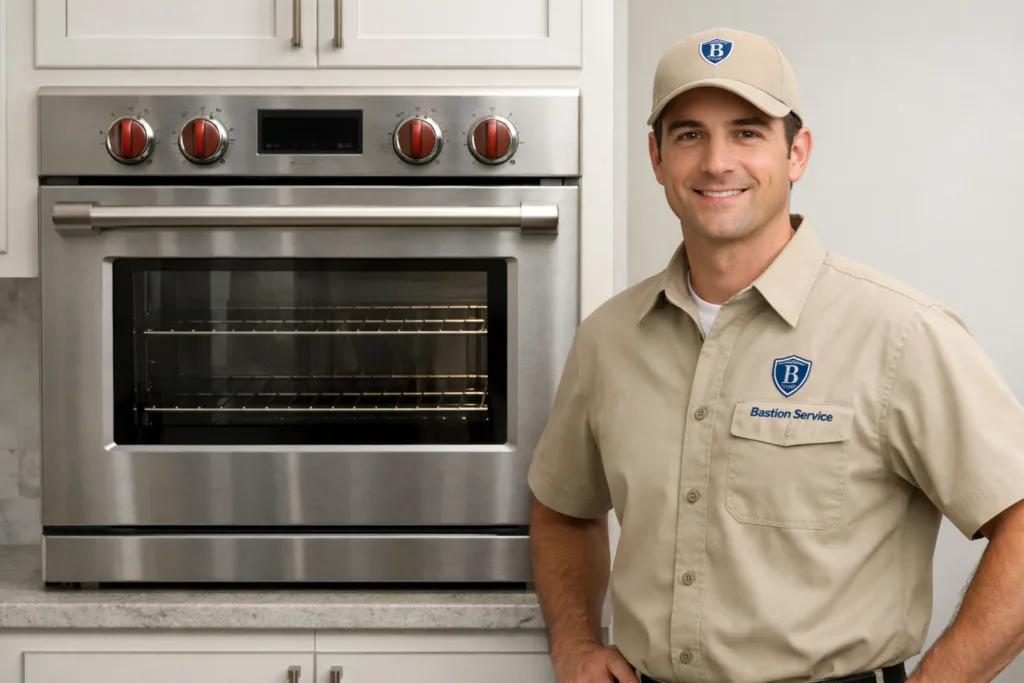
Common Wolf oven problems seen in West Los Angeles homes

Wolf ovens are built for precision, so even small performance changes tend to show up quickly in everyday cooking. A roast that takes too long, cookies that brown unevenly, or a broil cycle that no longer responds properly can all point to a developing fault. In many West Los Angeles kitchens, the first signs are subtle before the problem becomes more obvious.
Because several components affect oven performance at the same time, similar symptoms can come from different causes. A temperature complaint might involve the sensor, heating system, control, relays, wiring, or airflow pattern inside the cavity. That is why symptom-based testing matters more than replacing parts based on assumption alone.
Oven not heating or not reaching the set temperature
If the oven powers on but does not heat, or heats only partially, the issue may involve a failed igniter, a weak bake or broil circuit, a faulty temperature sensor, or an electronic control problem. Some ovens still produce enough heat to seem functional, but they stall far below the selected setting. In day-to-day use, that often shows up as undercooked food, stalled preheat, or recipes taking much longer than expected.
Uneven baking, hot spots, and inconsistent results
When one tray browns faster than another or food comes out overdone on one side and pale on the other, the oven may not be distributing heat properly. Convection issues, sensor drift, element problems, or control-related cycling faults can all create uneven cooking. If the same pattern happens across different dishes and rack positions, the appliance is likely the cause rather than the cookware or recipe.
Slow preheat that keeps getting worse
A longer-than-normal preheat cycle is easy to live with at first, but it often points to declining heating performance. In a Wolf oven, slow preheat can be tied to ignition weakness, partial element failure, inaccurate sensing, or a control system that is no longer managing heat correctly. If preheat keeps stretching out over time, it usually means the underlying issue is progressing.
Temperature swings during cooking
An oven that overshoots, cools too much between cycles, or cannot hold a stable baking temperature can make reliable cooking difficult. Homeowners often notice this when familiar recipes suddenly need constant checking. Temperature swings may be caused by sensor problems, relay faults, control board issues, or components that work intermittently once the oven gets hot.
Error codes and unresponsive controls
Display errors, beeping, reset behavior, or controls that stop responding can indicate communication faults, touch panel trouble, board failure, or power-related issues inside the unit. These symptoms sometimes appear alongside heating complaints, which is why the full symptom pattern matters. If the controls are acting unpredictably, the problem is rarely something that improves on its own.
What specific symptoms can tell you
The way the oven fails often provides useful clues. A complete no-heat condition is different from an oven that heats but cannot maintain temperature. A unit that bakes unevenly but still preheats normally points in a different direction than one that struggles from the first few minutes of operation.
- Preheat starts normally, then stalls: often tied to a heating circuit or sensor issue.
- Food finishes inconsistently from one use to the next: may suggest intermittent control or temperature regulation problems.
- Broil works but bake does not: often indicates a fault isolated to part of the heating system.
- The oven shuts off mid-cycle: can involve overheating protection, electrical faults, or board-related problems.
- Repeated fault codes: usually mean the oven is detecting a condition that needs service rather than a one-time reset.
These distinctions help narrow the repair path and avoid chasing the wrong component.
When continued use can make the issue worse
Some oven problems are more than an inconvenience. If a Wolf oven is overheating, cycling erratically, failing to ignite correctly, or shutting down during cooking, repeated use can put more stress on connected parts. What begins as one failing component may start affecting sensors, wiring, relays, or the electronic control system.
It is usually smart to stop using the appliance and arrange service if you notice any of the following:
- burning smells that are new or persistent
- error codes that return after resetting power
- unexpected shutoffs during baking or broiling
- major temperature swings that ruin meals
- signs of overheating around the control area or door
In those cases, a clear diagnosis and a practical repair plan based on the exact symptom pattern is the safer way to move forward.
Repair or replacement: how West Los Angeles homeowners usually decide
For many households in West Los Angeles, a Wolf oven is part of a built-in kitchen setup, so repair often makes more sense than replacement when the appliance is otherwise in good condition. The right choice depends on the failed component, the oven’s age, its service history, and whether the recommended repair addresses the full problem rather than just the most visible symptom.
Repair is often worth considering when:
- the issue is isolated to one main system or component
- the oven cabinet and overall condition are still solid
- performance was otherwise consistent until the recent symptom appeared
- the repair restores normal temperature control and operation
Replacement becomes more likely when multiple major faults are present, when the oven has a long pattern of repeat problems, or when the cost to restore stable performance no longer fits the household’s plans. A good service visit should help clarify that decision instead of pushing one outcome automatically.
What a focused Wolf oven service visit should determine
A useful oven diagnosis should do more than confirm that something feels off. It should identify whether the problem is in the heating system, temperature sensing, control response, power delivery, or another part of the oven’s operation. For homeowners, that means getting a realistic explanation of what failed, what needs to be corrected, and whether the repair is likely to return the oven to reliable use.
On an intermittent complaint, this is especially important. An oven that works one day and struggles the next often leaves a pattern behind, whether in temperature behavior, stored faults, or control response. Those details are what separate a targeted repair from repeated guesswork.
Signs it is time to schedule service
If one or more of these symptoms keeps showing up, it is usually time to have the oven checked:
- preheat takes much longer than it used to
- the oven does not hold a steady temperature
- meals are undercooked even though the display shows the correct setting
- food browns unevenly on repeated bakes
- broil or bake no longer works the way it should
- the control panel behaves inconsistently or shows errors
- the oven shuts off before cooking is finished
When those problems repeat, home adjustments rarely solve the root cause. Consistent cooking depends on accurate heating, stable controls, and proper temperature regulation, and once one of those systems starts failing, the appliance usually needs proper testing rather than more trial and error.
Why symptom-based repair matters with a premium oven
Wolf ovens are expected to deliver repeatable cooking performance, so diagnosis should be tied closely to what the appliance is actually doing in the kitchen. A household that mainly notices slow preheat may need a different repair path than one dealing with runaway heat or fault codes during self-clean or normal baking. The symptom pattern is what helps determine whether the repair is straightforward, whether related parts should be checked, and whether the fix is likely to hold up.
For West Los Angeles homeowners, the goal is simple: restore reliable oven performance without replacing parts that do not solve the real problem. When the appliance is tested carefully and the symptom pattern is taken seriously, the repair decision becomes much more straightforward.