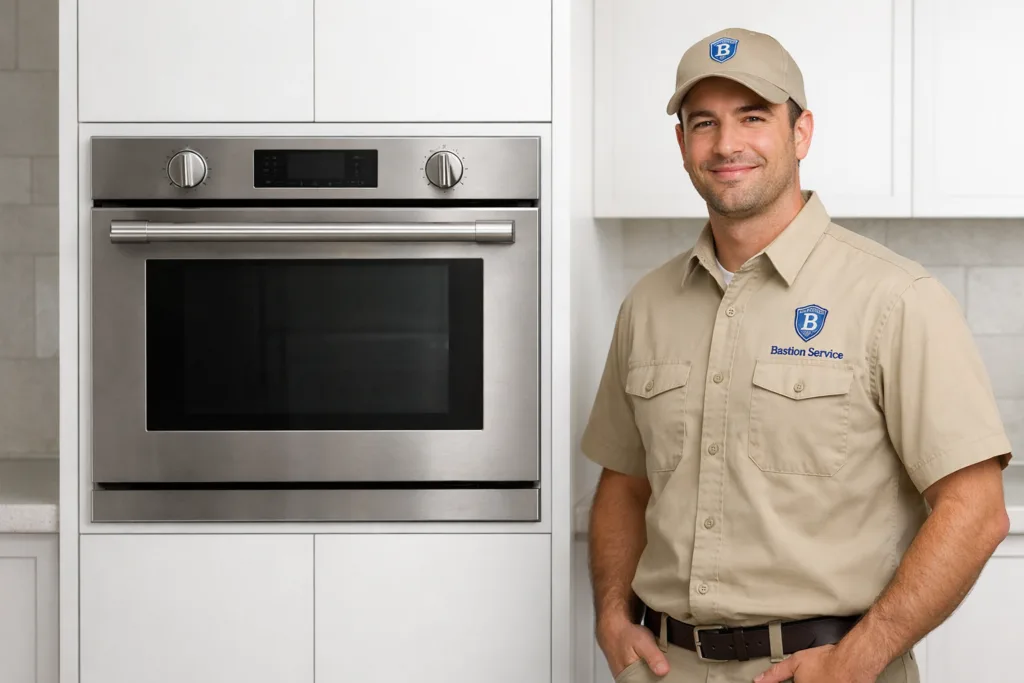
Cooking problems with a built-in oven often show up before the appliance fails completely. You may notice longer preheat times, baking results that suddenly change, or a control panel that behaves inconsistently from one cycle to the next. With a Wolf wall oven, those early signs are worth paying attention to because the same symptom can come from a sensor issue, a heating circuit fault, a door-seal problem, or an electronic control failure.
How symptom patterns help narrow the problem
A helpful diagnosis usually starts with what the oven is doing during real use. If it struggles only in bake mode, that points in a different direction than an oven that also has trouble broiling or holding temperature in convection mode. If the display works normally but the cavity never gets hot enough, the likely causes are different from a unit that beeps, resets, or shuts off in the middle of a cycle.
For homeowners in West Los Angeles, the most useful details are often the simplest ones:
- Whether the oven preheats at all
- Whether it reaches the set temperature and then drops off
- Whether the issue affects one cooking mode or all of them
- Whether an error code appears
- Whether the problem started suddenly or gradually
- Whether self-clean was used shortly before the issue began
Those details help separate a control-related issue from a heating, sensor, latch, or airflow problem.
Common Wolf wall oven problems and what they may mean
Oven not heating
If the oven turns on but stays cool, takes an unusually long time to warm up, or never gets near the selected temperature, the fault may involve a failed bake or broil element, a temperature sensor that is reading incorrectly, a relay problem on the control board, or an electrical supply issue. In some cases, the oven appears to begin preheating normally but cannot sustain heat through the full cycle.
This symptom matters because “not heating” does not always mean the same part has failed. A proper test should confirm whether the problem is in the heating circuit itself or in the control system that is supposed to send power to it.
Slow preheat
Slow preheat is easy to ignore at first, but it often signals a component that is weakening rather than working correctly. A partially failed element, inaccurate sensor feedback, or a control issue can all make preheat drag on much longer than usual. If recipes that used to work now need added time just to get started, the oven may not be reaching the temperature shown on the display.
In day-to-day use, this often shows up as dinner taking longer than expected, baked goods rising poorly, or food browning late and unevenly.
Uneven baking or roasting
When one rack cooks faster than another, one side of a dish browns more heavily, or the center stays underdone while the edges overcook, the cause may be temperature drift, weak heating performance, convection fan issues, or poor heat retention from a door-seal problem. These issues can be frustrating because the oven still seems operational, yet results become unreliable.
Repeated uneven baking is usually a sign that the appliance is no longer controlling heat the way it should. On a premium wall oven, that kind of inconsistency is often repairable once the failing part or system is identified.
Temperature swings during cooking
All ovens cycle heat on and off, but large or erratic temperature swings can lead to scorched exteriors, undercooked centers, and inconsistent roasting results. If the cavity seems excessively hot one day and too cool the next, the oven may be struggling with sensor feedback, control response, or heat retention.
Homeowners sometimes describe this as an oven that “used to be accurate” but now requires constant adjustment. That change is important because it often points to a fault that is affecting temperature regulation rather than simple calibration preference.
Control panel problems and error codes
A flashing display, unresponsive touch controls, repeated beeping, or a unit that resets during operation can indicate an electronic control issue, communication fault, or unstable power delivery inside the oven system. Even if the heating problem seems minor, control symptoms should not be dismissed. Intermittent electronics faults can become more disruptive over time and may eventually prevent the oven from starting or finishing a cycle.
If an error code appears repeatedly, it is helpful to note the code exactly as shown and whether it clears on its own or returns after power is restored.
Door, latch, and seal issues
A door that does not close evenly can cause major cooking performance problems. Heat escapes, preheat takes longer, and temperature stability suffers. In some cases, homeowners notice that pans near the front of the oven cook differently or that the kitchen gets unusually warm during use. Worn hinges, gasket wear, latch problems, or door alignment issues can all contribute.
If the problem starts during or after a self-clean cycle, heat stress on related components may also be part of the repair path.
Signs you should stop using the oven for now
Some issues are more than just an inconvenience. It makes sense to stop using the wall oven until it is checked if you notice any of the following:
- The oven trips a breaker
- The display cuts out or resets during cooking
- The oven overheats or burns food unexpectedly at normal settings
- The door will not latch or seal properly
- There is a burning smell that does not clear after normal use
- Error codes return repeatedly
- The unit shuts off mid-cycle
Continued use under those conditions can sometimes worsen damage to heating components or electronic controls, especially if the underlying problem is electrical.
What to check before scheduling Wolf wall oven repair
Before service, it helps to write down the exact behavior rather than relying on a general description like “it is not working right.” A few notes can make the issue easier to pinpoint:
- The selected mode when the problem happens: bake, broil, convection, or multiple modes
- Approximate preheat time compared with normal use
- Whether the display says preheat is complete before the oven is actually hot
- Any unusual fan noise, clicking, or beeping
- Whether the problem is constant or intermittent
- Whether the issue began after a power interruption or self-clean cycle
That information is often more useful than guessing which part has failed. It also helps determine whether the problem appears isolated or part of a larger control or wiring issue.
Repair versus replacement for a Wolf wall oven
Replacement is not always the best first move, especially with a built-in premium appliance. Many wall oven problems involve individual serviceable parts, and a targeted repair can restore normal cooking performance if the rest of the appliance is in good condition. This is often the case with sensor problems, heating faults, door hardware issues, and certain control-related failures.
Replacement becomes a more serious consideration when there are multiple major failures at once, repeated breakdowns over time, or broader age-related deterioration affecting several systems together. The right choice depends on the exact fault, the condition of the oven overall, and the expected repair path.
For many households in West Los Angeles, the better decision comes after the cause is confirmed rather than after one frustrating meal or a single error code.
Why accurate diagnosis matters on built-in cooking appliances
Wall ovens are integrated into the kitchen and depend on several systems working together: heating components, sensor feedback, electronic controls, airflow, and proper door sealing. When one part starts failing, the symptom can look deceptively simple. An oven that seems “too cold” might actually be overheating and shutting down early. An oven that appears to have a bad element may instead be losing heat through a door problem or getting incorrect temperature information from the sensor.
That is why repair decisions should be based on testing rather than assumption. Correctly identifying the fault helps avoid unnecessary parts replacement and gives a clearer picture of whether the oven is a strong repair candidate.
Household impact in West Los Angeles
When a wall oven becomes unreliable, the disruption is immediate. Weeknight cooking takes longer, baking becomes guesswork, and meal planning gets harder when you cannot trust temperature or timing. In homes that use the oven regularly, even a “small” issue like slow preheat or uneven roasting can quickly turn into a daily inconvenience.
Addressing the problem early is often the best way to prevent a manageable repair from turning into a larger one. If your Wolf wall oven has started showing a clear pattern of heating, temperature, or control trouble, the next step is to identify the fault and determine whether a focused repair makes sense for the appliance’s condition.