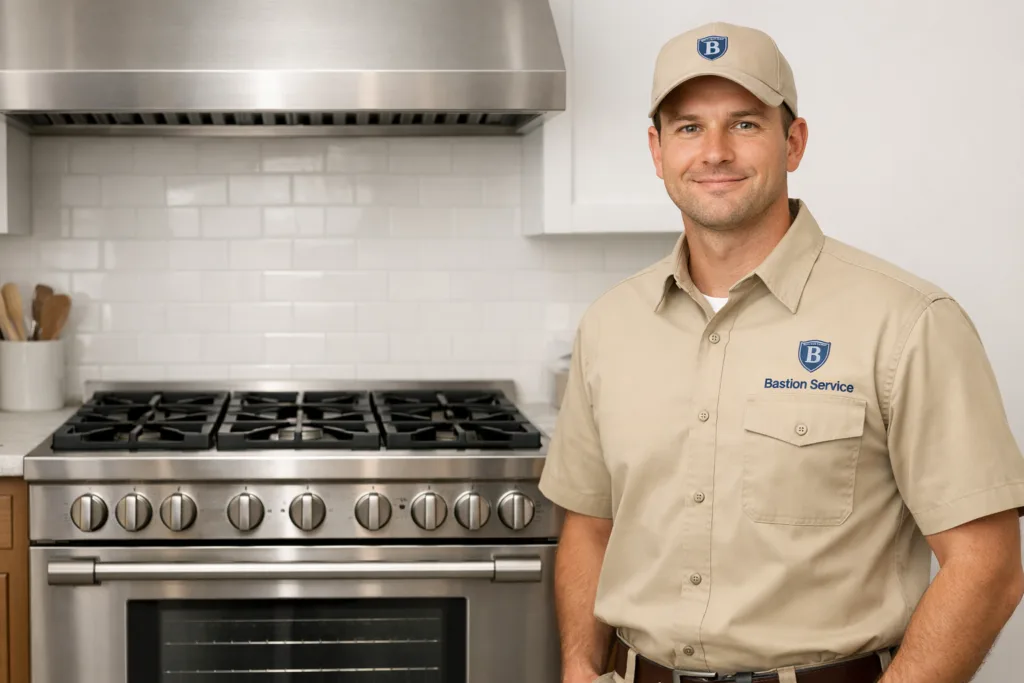
Wolf ranges are built for precise cooking, so even a small change in ignition, flame pattern, or oven temperature can be noticeable right away. In many homes, the first signs are practical ones: a burner that takes several tries to light, an oven that needs longer than usual to preheat, or controls that respond inconsistently during normal meal prep. Those details matter because they help narrow the repair path much faster than a general complaint that the unit is “not working right.”
Start with the exact symptom, not the part name
With a premium range, different faults can produce similar results. A burner that will not light may be caused by moisture after cleaning, burner cap misalignment, a worn igniter, a failing switch, or another issue in the ignition system. An oven that seems too cool might involve the igniter, sensor, control, or a heating-related component depending on the model and configuration.
That is why the most useful information is often symptom-based:
- Does the problem affect one burner or several?
- Is the clicking constant, delayed, or random?
- Does the oven miss the set temperature by a little or by a lot?
- Did the issue begin after cleaning, a power interruption, or gradual performance changes?
- Is the failure constant, or does it appear only sometimes?
These patterns help distinguish a simple correction from a deeper electrical, gas, or control problem.
Common Wolf range problems in Santa Monica homes
Burner clicks but does not ignite
This is one of the most common service concerns. In some cases, the burner cap is slightly out of position or the ports are obstructed by residue. In others, the issue is tied to the spark ignition system itself. If the clicking continues but the flame does not establish properly, the problem should not be ignored, especially if ignition becomes delayed or inconsistent.
Repeated clicking after the burner is lit
Persistent clicking can point to moisture around the igniter area, a switch problem, or a fault within the ignition circuit. If the clicking continues after cleaning or returns repeatedly, the range may need a closer inspection. What seems minor at first can become more disruptive over time.
Weak flame or uneven heating on the cooktop
When a burner lights but does not heat evenly, the issue may be related to clogged ports, burner wear, alignment problems, or gas flow irregularities. Homeowners usually notice this during everyday cooking when pans heat unevenly or simmer control becomes unpredictable.
Oven slow to preheat
A long preheat time can be more than an inconvenience. On a Wolf range, it may signal a weakening igniter, sensor drift, or another heating-system issue. If the oven eventually reaches temperature but takes much longer than it used to, that change is often worth addressing before complete failure occurs.
Oven temperature runs hot, cool, or inconsistent
Temperature inconsistency often shows up as undercooked centers, overbrowned tops, or baking results that vary from one use to the next. Possible causes include sensor faults, control issues, calibration problems, or components that are degrading rather than fully failed. Intermittent temperature drift can be especially frustrating because it may not happen during every cycle.
Error codes or control problems
If the display shows an error, the controls freeze, or settings do not respond correctly, the problem may involve the interface, electronic control, or power-related components. Control issues can affect both the oven and surface functions, so a complete check is often more helpful than focusing on a single symptom.
Why intermittent problems are often the hardest ones
A range that fails every time is usually easier to diagnose than one that acts up only occasionally. Some Santa Monica homeowners describe a burner that works in the morning but not at dinner, or an oven that preheats correctly one day and struggles the next. Intermittent faults can involve heat-sensitive components, inconsistent switch behavior, loose connections, or early-stage control failures.
These problems are worth taking seriously because they tend to become more frequent, not less. If the symptom is sporadic, it helps to note when it happens, which function was being used, and whether there were any display errors, unusual sounds, or delays in response.
When to stop using the range until it is checked
Not every performance issue means the appliance must be shut down immediately, but some conditions do call for caution. It is wise to pause normal use if you notice:
- Delayed ignition
- Repeated clicking that does not stop
- Unstable or unusual flame appearance
- Burners that do not respond normally to control changes
- Persistent overheating or major temperature swings in the oven
- Controls that fail, lock up, or behave unpredictably
- Recurring error codes or power-related interruptions
Continued use under these conditions can affect cooking results and may place added stress on related parts. A problem that begins in one area of the range can sometimes create additional wear elsewhere if left unresolved.
Repair or replace a Wolf range?
For many households, repair is still the sensible choice when the issue is limited to ignition components, sensors, switches, controls, or other serviceable parts. Wolf ranges are often worth evaluating carefully because a targeted repair can restore normal performance without the cost and disruption of full replacement.
Replacement becomes a more serious consideration when the unit has multiple major failures, severe cosmetic or structural damage, or a long pattern of overlapping breakdowns. Age alone is not the only factor. The more important question is whether the range can return to stable, consistent operation without chasing repeated problems from one visit to the next.
What helps speed up diagnosis
Before service, homeowners can make the visit more productive by noting a few simple details:
- Which burner or oven function is affected
- Whether the issue is constant or intermittent
- If the problem started suddenly or worsened gradually
- Any recent cleaning, spills, or power interruptions
- Whether the display showed a code or the controls behaved unusually
This kind of information is often more useful than trying to identify a failed part in advance. It creates a more direct path to the cause of the problem and helps determine whether the issue is isolated or part of a broader wear pattern.
What Santa Monica homeowners usually want from a service visit
Most people are not looking for a technical lecture. They want to know what is wrong, whether the range should keep being used, and whether repair makes sense. A good appointment answers those questions by checking real operating symptoms across the cooktop and oven functions instead of making assumptions based on one complaint alone.
For a Wolf range in Santa Monica, the most practical next step is usually straightforward: document the symptom, avoid forcing operation when performance is clearly abnormal, and base the repair decision on verified testing rather than guesswork.