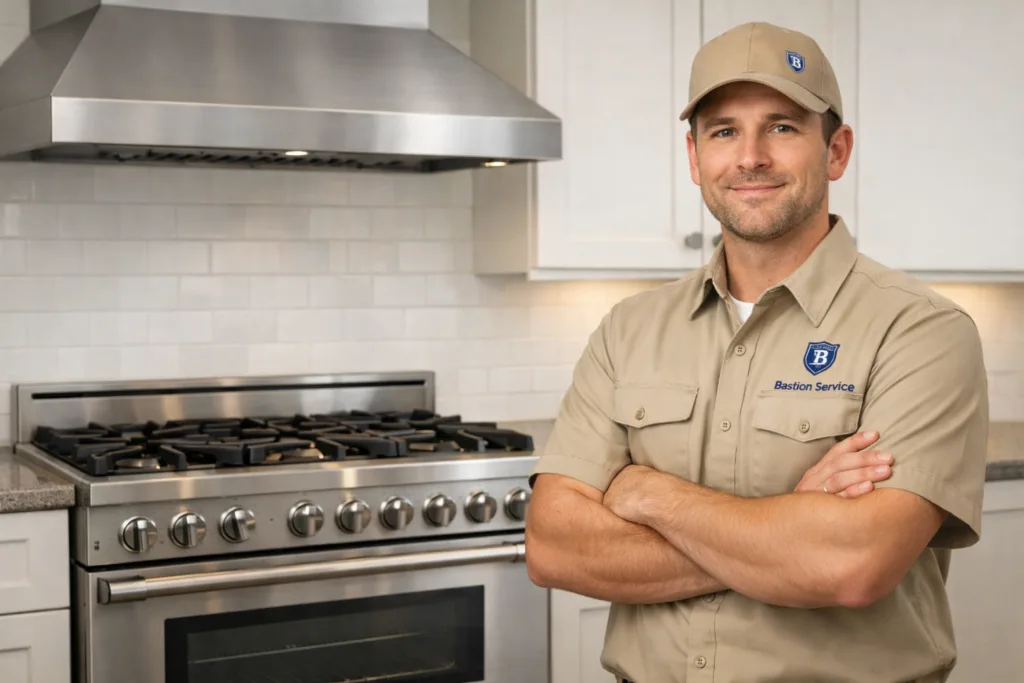
Cooking problems tend to show up first in everyday ways: a burner that takes several tries to light, an oven that suddenly needs extra time, or a control panel that responds inconsistently. On a Viking range, those symptoms can come from ignition components, temperature sensing parts, gas flow issues, wiring faults, or electronic controls, so the most useful next step is to match the repair path to the exact behavior of the appliance.
Common Viking range problems and what they often mean
Burner clicks but does not light
One of the most common complaints is repeated clicking with no flame. In many cases, the cause is fairly localized: a misaligned burner cap, food residue around the burner head, moisture in the ignition area, a weak spark, or an igniter issue. If only one burner is affected, the problem may be limited to that burner assembly. If several burners behave the same way, the fault may involve a broader ignition or power-related issue.
It also matters what happens after ignition. If the burner lights but the clicking continues, the switch or ignition system may still need attention even though flame is present. That is usually a sign the range is not operating normally and should not just be ignored because it eventually lights.
Oven is not heating properly
When the oven will not preheat, preheats too slowly, or bakes unevenly, homeowners often assume the entire oven has failed. In reality, the issue may be a weak igniter, a faulty temperature sensor, a control problem, a damaged heating component on electric sections, or heat escaping through a worn gasket or door fit problem.
These problems often show up through cooking results rather than an obvious breakdown. Cookies brown unevenly, casseroles need extra time, or one rack cooks much faster than another. That kind of pattern is important because it helps narrow the diagnosis and avoids replacing the wrong part.
Flame is too low, uneven, or unstable
A Viking range that no longer delivers consistent burner performance can be frustrating for simple tasks like simmering, boiling, or searing. Low flame, uneven heating, or burners that seem weaker than usual may point to blocked ports, burner wear, valve trouble, regulator-related problems, or electrical issues affecting how the range manages ignition and operation.
When the flame quality changes gradually, people often adapt to it without realizing performance has drifted. If cooking times are longer than they used to be or heat control feels less precise, the range may already be showing signs that service is needed.
Display or controls are not responding
Blank displays, beeping errors, touchpad problems, or intermittent operation can all trace back to a control board fault, damaged wiring, interface failure, or incoming power issue. Intermittent symptoms are especially important to take seriously because they can appear random while still following a real failure pattern behind the scenes.
If the range turns off unexpectedly, loses settings, or works normally one day and not the next, continued use can sometimes make diagnosis harder if the fault progresses. Electrical control issues are usually best addressed before they affect additional functions.
Symptoms that should not be ignored
Some range problems are inconvenient. Others can become safety concerns or lead to larger repairs if the appliance keeps being used in a fault condition. It is generally smart to stop putting off service when you notice:
- Burners that repeatedly fail to ignite
- Continuous clicking after a burner lights
- Oven temperatures that are consistently inaccurate
- Error codes or control failures
- Power loss, tripping, or intermittent shutdowns
- Unusual heat escaping around the oven door
If there is a persistent or strong gas smell, that is not a normal appliance repair situation to troubleshoot through continued use. Stop using the range and address the gas safety concern first before arranging appliance service.
Why the same symptom can have different causes
Ranges are combination appliances, which means one complaint can have several possible sources. An oven that seems too cool may have a sensor issue, but it could also have an ignition weakness that prevents proper heat, a control that is reading incorrectly, or a door seal problem that lets heat escape. A burner that will not light might be a simple alignment issue, or it may be connected to a failing ignition component.
That is why symptom-based diagnosis matters so much with Viking range repair in Santa Monica. The goal is not just to restore operation temporarily, but to identify the failed part or system accurately enough that the repair actually solves the problem.
Repair or replace: how homeowners usually decide
For many households in Santa Monica, repair is the better choice when the range is otherwise in good condition, the problem is isolated, and the fix returns stable day-to-day performance. A high-end range often remains worth repairing when the issue is limited to a burner assembly, igniter, sensor, control component, or other serviceable part.
Replacement becomes more likely when several major systems are failing at once, the unit has a long recent repair history, or the overall condition of the appliance no longer supports a sensible investment. Age alone does not make the decision. What matters more is whether the current fault is contained and whether the repair is likely to restore reliable cooking without chasing one issue after another.
What to notice before service is scheduled
Homeowners can make the repair process more efficient by paying attention to the pattern of failure. A few details are especially helpful:
- Whether the problem affects one burner or multiple burners
- Whether the oven fails completely or simply heats inaccurately
- Whether the issue happens every time or only intermittently
- Whether error codes appear on the display
- Whether the problem began suddenly or worsened over time
Even small observations can help separate a localized component failure from a broader control, ignition, or power issue. That makes it easier to determine whether the repair is straightforward or whether the range may have multiple overlapping problems.
What homeowners in Santa Monica usually want from the repair visit
Most people are trying to answer a few practical questions: Is the range safe to use right now? Is the failure limited to one part, or is it part of a larger problem? Will the repair restore dependable oven and burner performance, or is the appliance starting to become costly to keep going?
Those answers usually come from how the range is behaving, not from the symptom name alone. A proper evaluation helps determine whether the issue is minor, whether continued use risks more damage, and whether repair is the sensible path for the home. For a kitchen appliance used daily, that kind of practical repair guidance is often what matters most.