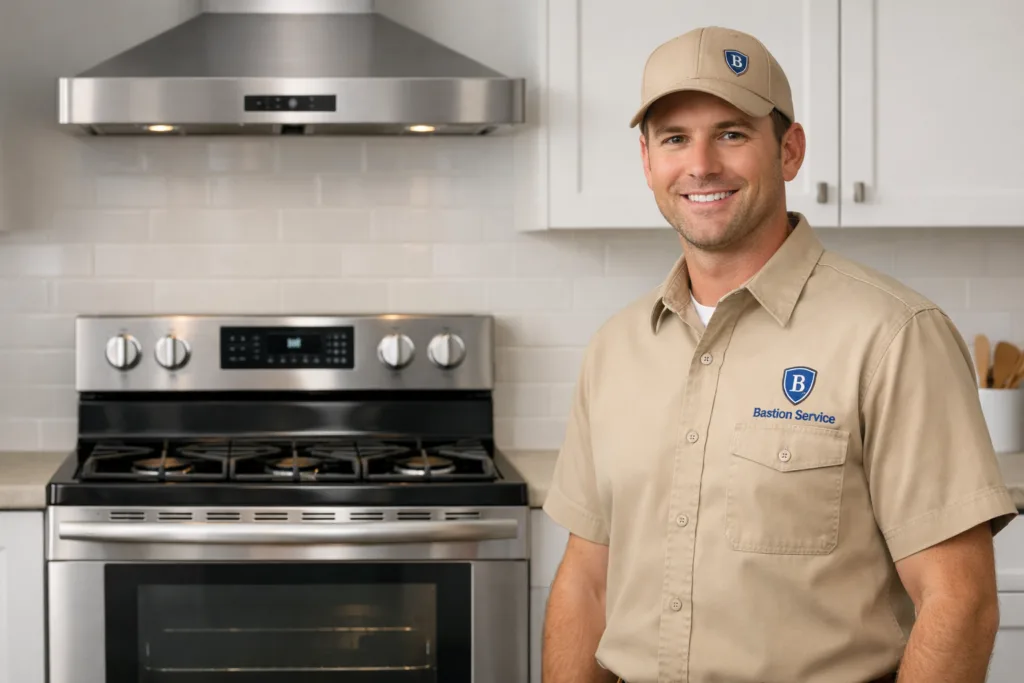
Range problems rarely stay small for long. A burner that clicks once in a while can turn into a burner that will not light at all, and an oven that runs a little cool can start ruining meals with uneven baking or long preheat times. For homeowners in Santa Monica, the most useful place to begin is with the exact symptom pattern, because that usually points toward whether the issue is in the ignition system, heating circuit, sensor, controls, or incoming power.
Start with what the range is actually doing
Samsung ranges can fail in ways that look similar at first. An oven that will not heat may have a bad igniter on a gas model, a failed bake element on an electric model, a sensor problem, or a control issue that is not sending power where it should. A surface burner that seems weak may be dealing with clogged ports, a failing switch, damaged wiring, or a worn element. Looking at when the problem happens, whether it is consistent, and whether other functions are affected helps narrow the repair path.
That matters because replacing parts based on guesswork can get expensive fast. If the symptom is tied to a single failed component, repair is often straightforward. If several systems are acting up at once, the diagnosis may point to a larger electrical or control problem.
Oven heating issues and what they usually suggest
When the oven is the main problem, most homeowners notice it through cooking results first. Food may take much longer than normal, baked dishes may come out unevenly, or the oven may never seem to reach the set temperature.
Slow preheating
Slow preheating often points to a weak igniter on gas ranges or a failing bake or broil element on electric models. In some cases, the oven still heats, but not efficiently enough to maintain normal cooking performance. A temperature sensor that is reading incorrectly can also confuse the control and cause long, inconsistent heat-up times.
Uneven baking or roasting
If one side of a pan browns faster than the other, or the top cooks while the center stays underdone, the issue may involve the bake element, convection components, sensor accuracy, or a control relay problem. Uneven heating is especially noticeable with cookies, casseroles, and sheet-pan meals that used to cook normally.
Oven will not heat at all
A no-heat condition usually means the problem is no longer minor. Gas models may have a failed igniter or gas valve-related issue. Electric models may have an open element, wiring damage, or a control failure. If the display appears normal but the oven never warms up, the fault can still be internal and not obvious from the front panel.
Cooktop burner problems that deserve attention
Cooktop trouble tends to interrupt daily use faster than almost any other range issue. Whether the range is gas or electric, burner symptoms usually become more frequent over time rather than resolving on their own.
Burner clicking but not lighting
On gas models, repeated clicking may come from moisture around the igniter, debris in the burner head, a misaligned cap, or a failing ignition switch. If the clicking continues after the burner is lit, that often suggests the ignition system needs closer inspection. Delayed ignition should not be ignored, especially if lighting becomes inconsistent.
Weak flame or uneven flame
A weak or patchy flame can be caused by blocked burner ports, burner assembly issues, or problems affecting gas flow and ignition. If one burner behaves differently from the others, that can help isolate whether the issue is local to that burner or tied to a shared component.
Electric burner not heating properly
On electric ranges, a burner that stays too cool, heats only partway, or cycles strangely may have a failing radiant element, switch, or wiring connection. If a burner only works on certain settings, the control side of the circuit is often part of the diagnosis.
Burner stuck on high or will not turn off
This is one of the more urgent symptoms. A burner that overheats or keeps heating after the control is turned down may indicate a failed switch or control fault. Continued use can create a safety issue and may damage cookware or the cooktop surface.
Control panel and error code problems
Modern Samsung ranges rely on electronic controls for temperature regulation, timers, safety functions, and sometimes convection features. When the display flashes, buttons stop responding, or error codes appear, the failure is not always limited to the panel itself.
Some codes point to sensor readings that are out of range. Others may relate to door latch problems, cooling fan issues, communication faults, or power interruptions. A keypad that works intermittently may have a touch panel problem, but it can also reflect a deeper control board issue. That is why the code alone is only part of the story.
Signs the range should not keep being used normally
Some symptoms mean it is better to pause regular use until the appliance is checked. That includes:
- A burner that will not shut off or runs much hotter than expected
- Repeated sparking or clicking that does not stop
- Delayed ignition on a gas burner or in the oven
- Burning smells, visible arcing, or tripped breakers
- An oven that overheats far beyond the set temperature
- Controls that change settings on their own or stop responding mid-cycle
Even when the range still works part of the time, those warning signs can point to faults that worsen with continued operation.
Repair or replace: how homeowners usually decide
In many cases, repair makes sense when the problem is isolated to one serviceable part such as an igniter, sensor, switch, or element. If the range is otherwise in good condition and the issue has a clear source, fixing it is often the more practical option.
Replacement becomes more worth discussing when there are repeated electronic failures, major wiring damage, multiple systems failing at once, or a history of recurring problems that keep adding up. Age matters, but condition matters more. A newer range with a single bad component may be an easy repair, while an older unit with several unresolved issues may not be the best long-term investment.
What helps speed up the diagnosis
If you are arranging service, a few details can make troubleshooting easier from the start:
- Whether the problem affects the oven, the cooktop, or both
- Whether the failure is constant or intermittent
- Any error code shown on the display
- Whether the issue started after a power outage, cleaning, spill, or self-clean cycle
- Whether one burner is affected or multiple burners are involved
- Whether the oven heats at all, heats slowly, or overheats
Those details can help separate a likely ignition problem from a control issue, or a heating failure from a sensor-related complaint.
What homeowners in Santa Monica usually want to know
Most people want straightforward answers: is the range safe to use, what component is most likely causing the problem, and is the repair worth doing? With Samsung range repair in Santa Monica, the best outcomes usually come from symptom-based troubleshooting rather than assumptions. Once the actual fault is identified, it becomes much easier to decide on the next step with confidence.