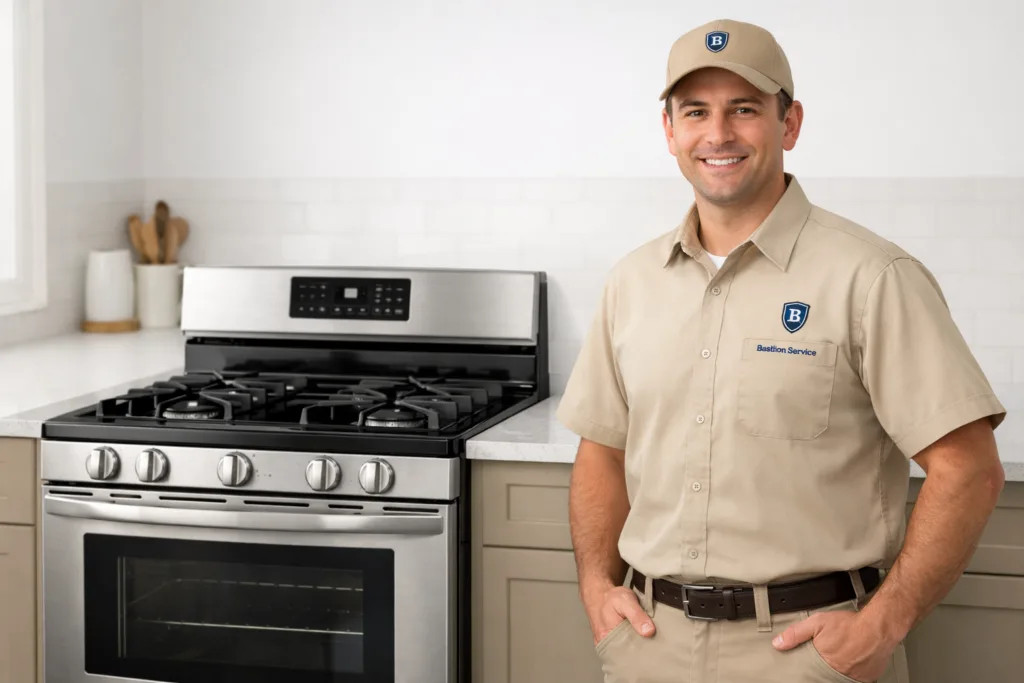
Range problems rarely stay small for long. A burner that lights on the second or third try can turn into a burner that will not light at all, and an oven that takes a little too long to preheat can eventually stop reaching cooking temperature. With Kenmore range repair in Santa Monica, the most useful approach is to match the repair path to the exact symptom instead of assuming every heating problem has the same cause.
Why symptom patterns matter with Kenmore ranges
A range combines several systems in one appliance: surface burners, oven heat, ignition, temperature sensing, electronic controls, and door-related components that affect cooking performance. Two ranges can show the same basic complaint while needing completely different repairs. For example, poor baking results might come from a weak igniter, a failing bake element, a drifting sensor, a control issue, or even a door that is not sealing well.
That is why homeowners in Santa Monica often get better results by paying attention to what happens before, during, and after the problem appears. Does the issue affect only the cooktop, only the oven, or both? Is it constant or intermittent? Does it happen more often after cleaning, after a spill, or during preheat? Those details help narrow the fault faster.
Common Kenmore range problems and what they may mean
Burner clicks but does not ignite
If a gas surface burner clicks repeatedly without lighting, the cause may be as simple as moisture or debris around the burner head, or as involved as an ignition component problem. Misaligned burner caps, blocked burner ports, worn switches, and ignition wiring issues can all create similar behavior.
If only one burner is acting up, the problem is often isolated to that burner area. If several burners show the same symptom, the issue may involve a shared ignition system or an electrical problem affecting multiple functions.
Burner lights slowly or flame looks uneven
A delayed flame or uneven flame pattern often points to restricted gas flow through clogged burner openings, poor burner cap alignment, or residue buildup from cooking spills. In daily use, this can show up as cookware heating unevenly, simmer settings becoming unreliable, or flame spreading to one side instead of around the full burner.
This type of issue may seem minor at first, but inconsistent flame can affect cooking results and make routine stovetop use frustrating.
Oven will not heat
When the oven does not heat at all, likely causes depend on whether the range is gas or electric. On gas models, a weak or failed igniter is a common reason the oven will not start heating properly. On electric models, a damaged bake or broil element may be the main fault. Sensor, wiring, and control failures can also prevent startup.
Homeowners sometimes notice that the display appears normal and the oven seems to start, but no actual heat develops inside the cavity. That is a strong sign the issue is beyond a simple settings mistake.
Oven heats, but food cooks unevenly
If casseroles come out underdone in the center, cookies brown more on one side, or roasting times suddenly change, the oven may be heating unevenly. This can happen when the bake system is weak, temperature feedback is inaccurate, or heat circulation is disrupted.
In some cases, the oven eventually reaches temperature but takes so long that cooking times become unreliable. In others, it cycles incorrectly and drifts above or below the set point enough to affect results.
Slow preheating
Slow preheat is one of the most common warning signs that a larger oven heating issue is developing. A weak igniter, a tired heating element, or a component that works only intermittently can all stretch preheat times. Many households first notice this when weeknight meals start taking longer even though cooking habits have not changed.
If preheating has become noticeably slower than normal, it is worth addressing before the oven stops heating fully.
Temperature swings during baking
All ovens cycle on and off to maintain temperature, but excessive swings are different from normal cycling. If one batch bakes fine and the next does not, or if recipes that used to be routine suddenly feel unpredictable, the temperature sensor, calibration, control relay, or related wiring may be at fault.
When this symptom is ignored, households often compensate by changing cook times and temperatures, which can make the real problem harder to track.
Display, keypad, or control problems
A blank display, error code, unresponsive keypad, or oven settings that do not register correctly can point to control board issues, interface faults, or power-supply problems within the range. These problems may affect more than convenience. They can prevent the oven from starting, interrupt a cooking cycle, or make temperature selection unreliable.
If the control panel behaves inconsistently rather than failing completely, that still deserves attention. Intermittent electronic faults often become more frequent over time.
Door not closing properly
An oven door that does not shut firmly can leak heat and throw off baking performance. Worn hinges, gasket wear, or alignment problems may lead to longer cook times, excess heat escaping into the kitchen, and difficulty maintaining steady internal temperature.
This type of repair is easy to overlook because the oven still produces heat, but poor sealing can create cooking complaints that look like a sensor or heating problem.
Signs the problem may be getting worse
Some range issues become more obvious gradually rather than all at once. Watch for changes such as:
- Preheat times getting longer from week to week
- A burner needing multiple attempts to light
- Clicking that continues after ignition
- Food browning unevenly in the same pan position
- The oven overshooting or undershooting the selected temperature
- Controls that respond only sometimes
- Error messages that appear, clear, and then return
These patterns usually mean the problem is developing, not resolving on its own.
When to stop using the range
If the range is tripping breakers, failing to regulate heat, or showing repeated control faults, it is usually best to pause use until the unit can be checked. Continued operation can increase wear on related components and sometimes turn a single-part failure into a broader repair.
For gas models, repeated clicking without normal burner ignition should not be treated as routine. If you notice a strong or persistent gas odor, stop using the appliance immediately and follow gas safety procedures before arranging service.
Repair or replacement: what usually makes sense
Many Kenmore range problems are worth repairing when the issue is isolated to one main system such as ignition, an element, a sensor, a switch, or a specific control-related part. If the range otherwise fits the kitchen well and the rest of the appliance is in solid condition, repair is often the more sensible option.
Replacement becomes more likely when the range has several failing systems at once, significant wear across the cooktop and oven, or repeated electronic problems that make future reliability uncertain. The key is comparing the specific fault, the overall condition of the appliance, and the expected repair path.
What to note before scheduling service
A few details can make diagnosis much more efficient. Before service, it helps to note:
- Whether the problem affects the oven, cooktop, or both
- Whether the issue happens every time or only occasionally
- Any error codes shown on the display
- Whether one burner is affected or several
- Whether the oven eventually heats or stays cold
- Any recent spills, cleaning, power interruptions, or unusual noises
Those observations often help separate an ignition issue from a control issue, or a temperature complaint from a door-seal problem.
Kenmore range repair for everyday cooking problems in Santa Monica
Most households do not call for service because of a technical diagnosis. They call because dinner takes too long, pans heat unevenly, baking results are off, or the range no longer feels safe to rely on. Focusing on those real-world symptoms is often the fastest way to identify whether the problem is minor, developing, or serious enough to stop using the appliance.
For homeowners in Santa Monica, a practical repair decision usually comes down to one question: is the problem isolated and fixable, or is it part of broader wear across the range? Once that is answered, the next step becomes much easier.