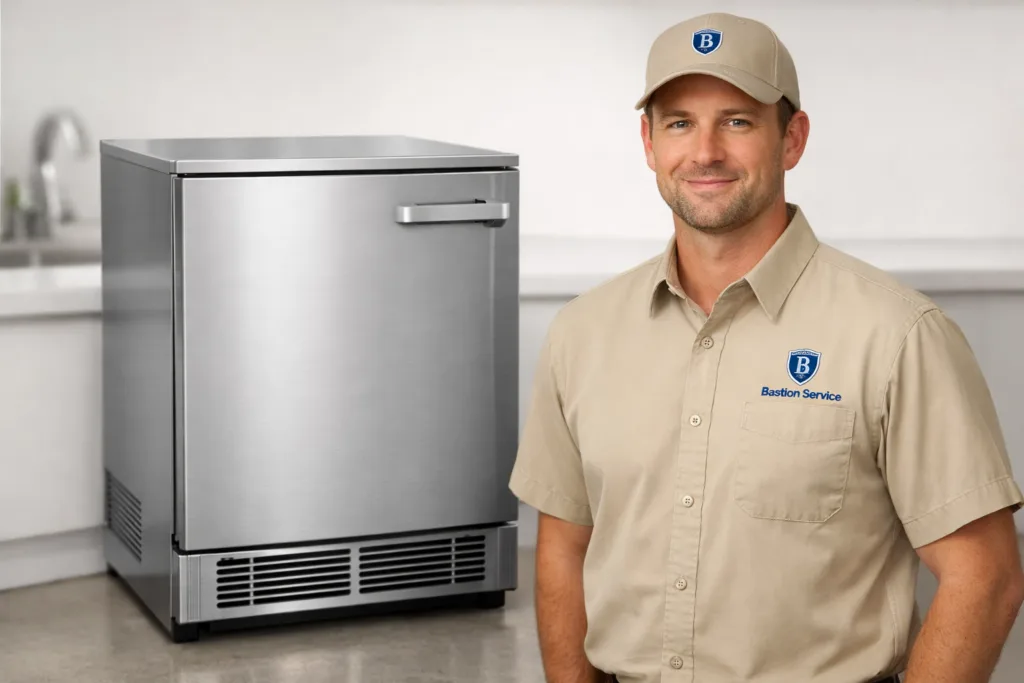
Ice maker failures are often easier to describe by symptom than by cause, and that is exactly why the symptom pattern matters. A True unit that makes no ice at all can have a very different fault from one that still produces a few batches a day, leaks during fill, or drops cubes that melt together in the bin. Looking at what the machine is doing before it fails completely usually points the repair in the right direction faster.
Start with what the ice maker is doing
Most household ice maker problems show up in stages. Production may slow before it stops. Cubes may become smaller, wetter, or hollow before the machine starts missing cycles. A unit that seems to run normally may still have a water, temperature, sensor, or control issue that prevents a full freeze-and-harvest sequence.
For homeowners in Santa Monica, the most useful information to note before service is whether the machine is making no ice, too little ice, leaking water, making unusual sounds, or producing poor-quality cubes. Those details help narrow down whether the issue is in water delivery, cooling performance, drainage, or the harvest system.
No ice at all
If the unit has power but the bin stays empty, the cause may be a failed inlet valve, low or blocked water flow, a temperature problem, a faulty sensor, or a control issue that stops the cycle before ice is formed or released. In some cases, the machine appears active but never completes the process needed to refill the bin.
Slow ice production
Reduced output often starts subtly. You may notice the machine taking longer between batches, struggling to keep up during normal household use, or producing less ice overnight than it used to. This can point to weak water delivery, restricted airflow, scale buildup, temperature instability, or a component beginning to fail under load.
Leaks or water around the appliance
Water around an ice maker should not be ignored. The source can be a loose connection, a fill problem, a drain issue, cracked tubing, or moisture related to incomplete freezing or melting ice. Even a small leak can affect nearby flooring and cabinetry if it continues unnoticed.
Clumped, hollow, or misshapen ice
When ice quality changes, the machine is often telling you something important. Hollow cubes can suggest inconsistent water fill. Wet or clumped ice may mean the freeze cycle is weak or the bin is warming up between cycles. Irregular shapes can point to water distribution problems or trouble harvesting cleanly from the mold or plate.
Clicking, buzzing, grinding, or repeated cycling
Unusual sounds do not always mean the entire appliance is failing, but they do suggest that a part is struggling. Buzzing can be related to a valve issue. Clicking may indicate a control or relay problem. Grinding or repeated restart behavior can happen when a motor, fan, or mechanical part is not moving through its normal cycle correctly.
Common repair paths for True ice makers
A True ice maker depends on several systems working together: water supply, freezing performance, sensors, controls, and the harvest mechanism. Repair recommendations often depend on which of those systems is breaking the cycle.
- Water supply faults: restricted lines, weak fill, inlet valve problems, or blockage affecting proper cube formation.
- Temperature-related issues: cooling that is slightly off can prevent normal freezing, delay harvest, or cause soft or melting ice.
- Sensor or control problems: the unit may stop cycling correctly, overrun, or fail to recognize when to fill, freeze, or release ice.
- Drainage or moisture issues: poor water management can lead to leaks, slushy ice, or excess frost and melt patterns.
- Mechanical wear: motors, fans, pumps, and moving parts can weaken over time and affect performance before they fail completely.
Why symptom-based diagnosis matters
Two ice makers can look like they have the same problem and need entirely different repairs. A “no ice” complaint might come from a water issue on one machine and a cooling issue on another. A leak during operation may come from a fill problem, while a different leak may be caused by drainage or melting inside the unit.
That is why replacing parts based on guesswork tends to be expensive and frustrating. A good repair plan starts with identifying where the cycle is breaking down and whether the issue is isolated to one component or reflects a broader condition inside the appliance.
Signs it is time to stop waiting
Some ice maker problems seem manageable because the machine still works a little. But partial operation can still point to a growing failure. It makes sense to schedule service when you notice any of the following:
- the bin stays empty for long periods
- ice production drops noticeably from normal use
- cubes come out hollow, thin, or stuck together
- water appears under or around the appliance
- the machine runs longer than usual or restarts repeatedly
- new clicking, buzzing, or grinding sounds develop
These are the moments when an early repair may be simpler than waiting for a complete shutdown or secondary damage nearby.
When continued use can cause extra damage
Leaks are the clearest example. Even a slow drip can affect flooring, trim, or cabinet bases over time. But other symptoms matter too. A unit with unstable cooling may force key components to run longer than they should. Repeated failed harvest attempts can add wear to motors or controls. Poor ice quality may also reflect conditions that lead to frost buildup, melt-back, or unnecessary strain inside the system.
If the appliance is clearly not cycling normally, continued use is not always harmless just because some ice is still being produced.
Repair or replacement?
Many True ice maker problems are repairable when the fault is limited to a valve, sensor, line, fan, pump, or control-related part and the rest of the appliance remains in solid condition. Repair usually makes sense when the issue is contained and the expected result is stable performance afterward.
Replacement becomes a more realistic conversation when the machine has multiple failures at once, major cooling-system trouble, extensive wear, or a repair need that outweighs the condition of the appliance as a whole. Age alone does not answer the question; the better measure is how broad the problem is and what the machine is likely to do after service.
What homeowners in Santa Monica can expect from a focused service visit
A useful visit should center on how the unit behaves in the home: fill pattern, freeze performance, harvest timing, drainage, and overall consistency. That process helps determine whether the issue is a straightforward component failure or something larger affecting the machine’s operation.
For a True ice maker in Santa Monica, that symptom-first approach helps homeowners make a better decision about next steps, whether the goal is restoring normal ice production, stopping a leak, or understanding when repair is still the sensible option.