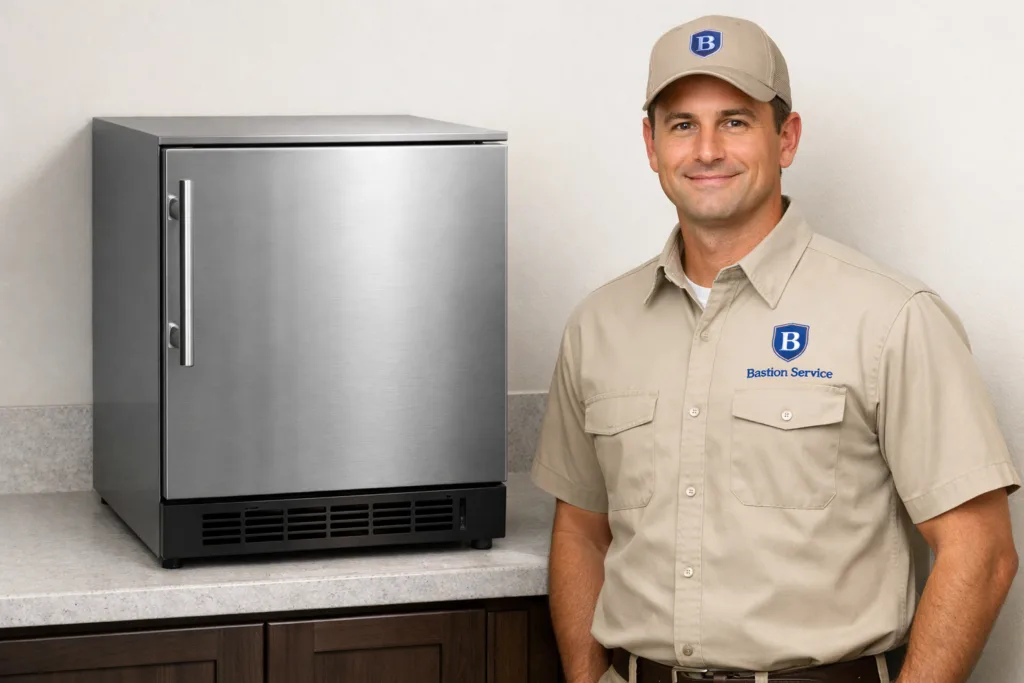
Ice maker trouble usually shows up as a pattern rather than a single failure. One day the bin is only half full, the next day the cubes are hollow, and soon after you may notice water near the appliance or a loud click during the harvest cycle. With a True ice maker, those clues matter because the problem may involve water fill, freezing temperature, cube release, or the controls that coordinate each step.
Common symptom patterns homeowners notice
Most household ice maker issues fall into a few recognizable categories. Paying attention to the exact symptom can help narrow down whether the problem is likely tied to supply, temperature, or a failing component.
No ice at all
When the unit stops producing ice completely, the cause can range from a simple interruption in water supply to a failed inlet valve, sensor, thermostat, or control issue. In some cases, the ice maker appears powered on but never begins a normal cycle. In others, it may try to cycle without filling properly or without releasing the finished cubes.
If there has been a gradual drop in production before the complete stoppage, that often points to an underlying issue that has been developing for some time rather than a sudden one-time event.
Slow ice production
Reduced output is one of the most common complaints. A True ice maker that still makes ice, but not enough for normal household use, may be dealing with restricted water flow, temperature instability, partial freezing problems, or buildup that interferes with normal operation. Slow production can also happen when the unit takes too long to complete each batch.
This is easy to ignore at first because some ice still appears in the bin. The problem is that delayed service can allow a minor issue to turn into full loss of ice production.
Small, hollow, or misshapen cubes
Cube quality says a lot about what is happening inside the machine. Hollow or undersized cubes often suggest low water fill. Irregular shape may point to incomplete freezing, poor fill timing, or a condition that interrupts the normal cycle. Cloudy cubes can sometimes be related to water quality, but repeated changes in cube size and consistency usually deserve closer inspection.
Clumped ice in the bin
When cubes stick together or melt and refreeze, the issue may involve temperature fluctuation, delayed harvest, poor sealing, or ice sitting too long because production is inconsistent. Clumping can also happen after partial melting caused by an interrupted cycle. Even if the machine is technically making ice, the result is often inconvenient and a sign that performance is no longer normal.
Leaks or water around the appliance
Water near a residential ice maker should be addressed promptly. The source could be an overfill condition, a loose fitting, a drain problem, a cracked line, or ice buildup redirecting meltwater. Moisture around the unit is not just an appliance issue. It can also affect nearby cabinetry, flooring, and the area around the installation.
Noise during cycling
Buzzing, clicking, grinding, or repeated attempts to release ice can point to a jammed mechanism, a motor problem, ice stuck in the mold, or a control problem during harvest. Unusual sounds matter most when they repeat in the same part of the cycle or happen together with low output, leaking, or incomplete cubes.
What these symptoms can mean
Ice makers depend on several systems working together in the right sequence. Water has to enter at the correct volume, the mold has to reach the right temperature, the ice has to release cleanly, and the controls have to advance the cycle at the proper time. A problem in any one of those steps can create symptoms that look similar from the outside.
For example, no ice can be caused by a water delivery issue, but it can also happen when the unit is not getting cold enough to complete the freeze stage. Clumped ice may look like a bin problem, yet the real cause may be temperature fluctuation or a failed harvest step. That is why symptom-based testing matters more than guessing based on a single visible complaint.
When the issue may involve more than the ice maker itself
Sometimes the ice maker is not the only part involved. In certain homes in Hawthorne, poor ice production is tied to surrounding refrigeration conditions such as unstable freezer temperatures, airflow restrictions, or door sealing problems that affect the freezing cycle. In other cases, the refrigeration system is fine and the fault is isolated to the ice maker assembly, valve, sensor, or control.
Separating those two situations is important. It helps avoid replacing an ice maker component when the real issue is elsewhere, and it also prevents unnecessary work on the larger refrigeration system when the failure is actually confined to the ice maker.
Signs you should schedule service soon
- The bin stays empty or fills much more slowly than usual.
- Cubes are consistently small, hollow, wet, or fused together.
- You notice water under the appliance or around the ice maker area.
- The unit makes new noises during fill, freeze, or harvest.
- Resetting the appliance only helps for a short time.
- The same symptom keeps returning after the bin is emptied or the unit is restarted.
Recurring symptoms usually mean the machine needs proper testing, not repeated temporary workarounds.
When continued use can cause added damage
If the appliance is leaking, overfilling, or repeatedly jamming during harvest, continued use can make the situation worse. Water can spread beyond the unit, ice can build up in places it should not, and repeated failed cycles can add strain to moving or electrical parts. If the ice maker is making harsh mechanical noise or the cubes are melting and refreezing in the bin, it is usually best to stop relying on that function until the cause is identified.
Repair or replacement?
Many True ice maker issues are repairable, especially when the failure is limited to water delivery, sensing, harvest components, or an individual electrical part. Repair becomes less attractive when there are repeated breakdowns, major internal wear, poor overall appliance condition, or multiple issues affecting reliability at the same time.
For homeowners in Hawthorne, the decision usually comes down to four factors:
- The age and overall condition of the appliance
- Whether the fault is isolated or part of a broader cooling problem
- The expected cost of the repair path
- The likelihood of stable performance after the repair is completed
A practical repair plan should be based on the actual condition of the machine, not just the most visible symptom.
What to do before your appointment
A few observations can make service more efficient. Note whether the problem began suddenly or gradually, whether the machine is making any unusual sounds, and whether the issue affects all ice production or only certain batches. If you have seen leaking, try to identify when it happens, such as during fill, after a harvest, or after long periods of nonuse.
It also helps to avoid repeatedly resetting the appliance if the same problem returns. That can mask the symptom pattern and make the issue harder to track.
Service focused on the exact problem
The most useful approach is to match the repair to the specific symptom your household is seeing, whether that is no ice, low output, leaks, clumped cubes, or a failed harvest cycle. For True ice makers in Hawthorne, a good service call should determine where the cycle is breaking down and whether the issue is isolated, repairable, and worth correcting based on the appliance’s overall condition.