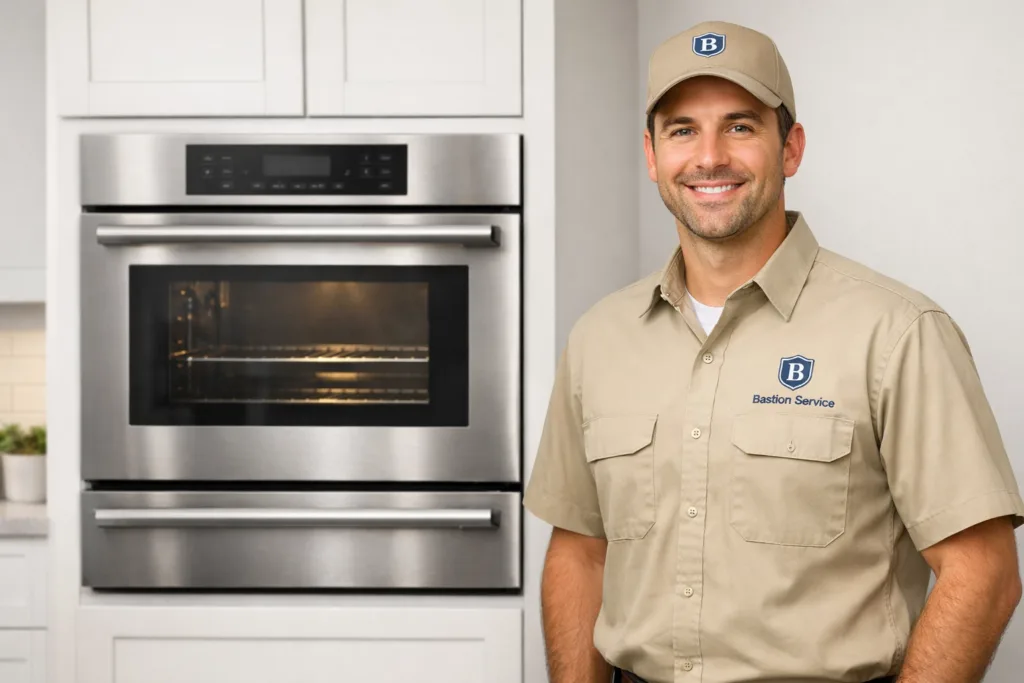
Built-in ovens tend to show trouble in small ways before they fail completely. A longer preheat, a temperature that seems slightly off, or a control panel that works only some of the time can all point to a component beginning to break down. With a Thermador wall oven, it helps to match the symptom to the system involved rather than assuming every heating problem has the same cause.
How Thermador wall oven problems usually show up
Most service calls start with one of a few patterns: the oven does not heat, it heats unevenly, it takes too long to preheat, the temperature swings during cooking, or the controls display an error or stop responding. In Playa Vista homes, these symptoms can affect everyday baking, roasting, and meal prep long before the oven stops working altogether.
Because wall ovens combine heating components, sensors, control boards, fans, latches, and wiring in a compact built-in design, one visible symptom can come from several different faults. That is why symptom details matter. Knowing whether the oven fails immediately, struggles only after warming up, or behaves differently in bake versus broil helps narrow the repair path.
Common symptoms and what they may indicate
Not heating at all
If the display turns on but the oven cavity stays cold, the problem may involve a failed bake element, broil element, temperature sensor, relay, thermal protection component, or electronic control issue. On some units, the oven may appear to start normally but never generate usable heat. That often shows up as food remaining raw even after a full cycle.
Slow preheat
A wall oven that eventually reaches temperature but takes much longer than usual may have a weak heating element, sensor drift, relay trouble, or a control issue affecting how heat is cycled. Slow preheat is easy to ignore at first, but it often signals a part that is no longer performing correctly.
Uneven baking or roasting
When one side browns faster, the top cooks differently from the bottom, or familiar recipes suddenly become inconsistent, the cause may be inaccurate temperature feedback, partial element failure, or a heat circulation problem. In a Thermador wall oven, even a modest temperature imbalance can lead to noticeably uneven results.
Temperature swings
Some cycling is normal, but wide swings that lead to overcooking, undercooking, or unpredictable bake times may point to a faulty sensor, calibration problem, relay fault, or control board issue. Homeowners often notice this when dishes that used to be reliable begin coming out differently from one use to the next.
Error codes or unresponsive controls
Flashing codes, random beeping, buttons that do not respond, or a display that cuts in and out can indicate communication faults, sensor circuit problems, latch issues, or electronic control failure. Repeated resets may temporarily clear the display, but recurring control errors usually mean the underlying fault is still present.
Door or self-clean issues
If the door will not close properly, will not lock, or stays locked after a cycle, the trouble may involve the latch assembly, switch, hinges, seal, or control system. A door that does not seal correctly can also affect heating performance by allowing heat to escape during cooking.
Shutting off during use or tripping power
An oven that loses power mid-cycle or trips the breaker should not be brushed off as a minor nuisance. Possible causes include wiring problems, internal shorts, fan issues, or failing controls. Since wall ovens operate on higher-voltage power, repeated use after this starts can increase the chance of additional damage.
Why the same symptom can have different causes
Two ovens can show the same complaint and need very different repairs. For example, poor baking results might come from a sensor reading incorrectly, from one heating circuit not engaging properly, or from a control board that is no longer regulating heat the way it should. Likewise, a unit that will not start a cycle could have a latch-related problem, an interface issue, or an electrical fault elsewhere in the oven.
That is especially important with built-in appliances, where replacement decisions are more involved than they are with freestanding models. Before replacing parts or considering a new unit, it makes sense to determine whether the problem is isolated and serviceable or part of a broader pattern of failure.
Signs it is time to stop using the oven until service
- The oven overheats or burns food unexpectedly.
- The breaker trips during preheat or cooking.
- The display shows repeated error codes.
- The oven shuts off in the middle of a cycle.
- There is a burning smell that does not seem related to normal cooking residue.
- The door will not latch, unlock, or seal properly.
When these symptoms appear, continued use can turn a single failing part into multiple damaged components. It can also make the final repair more expensive than it needed to be.
When repair usually makes sense
Repair is often the better option when the oven is otherwise in good condition, the issue is limited to a specific component, and the appliance still fits the kitchen well. In many Playa Vista homes, keeping the existing built-in unit is simpler than replacing it, especially when cabinet fit, trim, and overall kitchen layout are factors.
Service also tends to make sense when the complaint is clear and recent, such as a new heating failure, a sensor-related temperature issue, or a control problem that has not yet caused broader electrical damage. In those cases, correcting the failed part can restore normal cooking performance without the disruption of replacement.
When replacement becomes more realistic
Replacement enters the conversation when the oven has multiple major faults, recurring electronic problems, extensive wear, or repair costs that are no longer justified by its condition. If one issue has led to others, or if the oven has become unreliable across several functions, investing in further repairs may not be the best long-term value.
The key is knowing what has actually failed. Once the fault path is identified, it becomes easier to weigh repair cost against the age, condition, and expected remaining life of the appliance.
What homeowners should expect from a service visit
A useful service appointment should do more than confirm that the oven is malfunctioning. It should identify whether the problem is tied to heat production, temperature feedback, controls, airflow, latching, or power delivery, and whether the failure appears isolated or connected to a larger issue. That gives you a practical repair plan based on the exact symptom pattern.
For Thermador wall oven repair in Playa Vista, the goal is straightforward: understand what failed, determine whether repair is worthwhile, and restore consistent oven performance when the fix makes sense. Whether the solution involves a sensor, heating component, latch assembly, or electronic control repair, a symptom-based explanation helps homeowners decide on the next step with confidence.