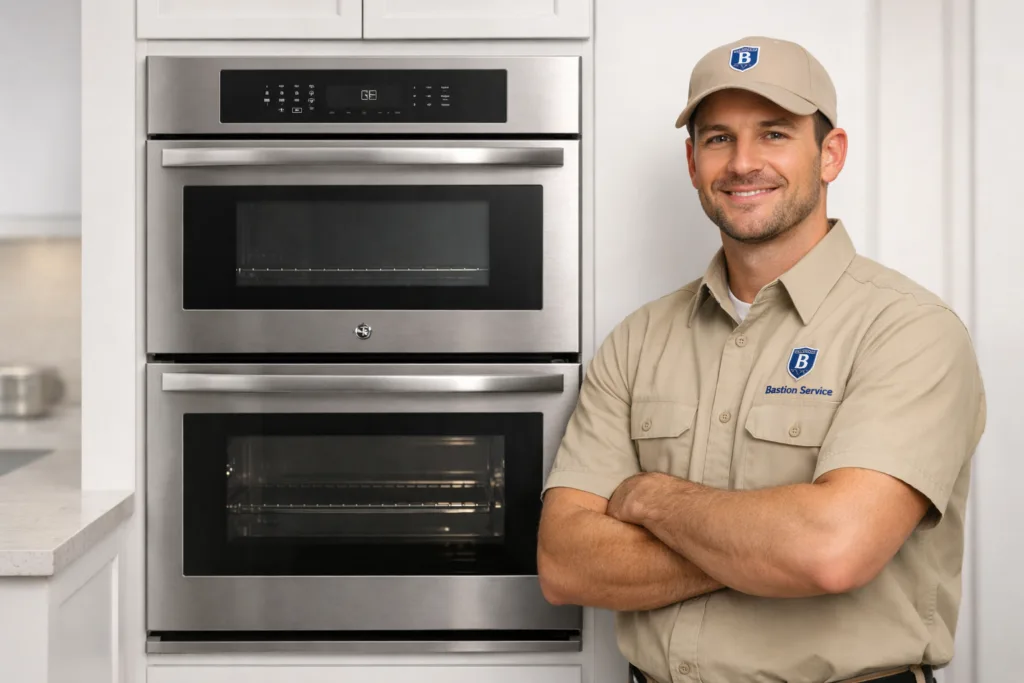
Built-in ovens tend to fail in ways that are easy to notice but not always easy to diagnose. One household may see long preheat times and assume the heating element is bad, while another may get an error code and think the control board has failed. In reality, GE wall oven problems often overlap, and the most useful repair decisions come from matching the exact symptom pattern to the component or circuit involved.
How common GE wall oven problems usually show up
A wall oven does not have to stop working completely to need service. Many repairs start with performance issues that gradually become more disruptive during everyday cooking in Playa Vista homes. Meals take longer, baking becomes less predictable, or the oven seems to behave differently from one cycle to the next.
Common signs include:
- Oven not heating in bake or broil mode
- Slow preheat that adds significant time before cooking can start
- Uneven baking, hot spots, or inconsistent browning
- Temperature swings during longer cook cycles
- Display or keypad problems
- Error codes that keep returning after a reset
- Door lock problems, especially after self-clean
- Breaker trips, sudden shutdowns, or intermittent power loss
These symptoms may come from an element, sensor, relay, control issue, latch assembly, wiring fault, or power-related problem. Because several of those failures can create similar cooking results, replacing parts by guesswork often leads to wasted time and repeat service.
Not heating, underheating, or heating too slowly
If the oven turns on but never reaches the selected temperature, the cause may be more than one failed part. A weak bake element, faulty temperature sensor, damaged wiring, or control problem can all affect heat production. In some GE wall ovens, the broil function may still appear to work while bake does not, which can make the problem seem smaller than it is.
Slow preheat is another common complaint. An oven that eventually gets hot but takes far longer than normal may be operating with reduced heating output or poor temperature feedback. That can show up first in weeknight cooking, when a routine meal suddenly takes much longer than expected. Over time, the same issue can lead to uneven doneness and unreliable cooking results.
Typical clues in this category include:
- Preheat taking much longer than it used to
- Food staying pale or undercooked even after extra time
- Broil working better than bake
- Preheat tone sounding, but the cavity still feeling too cool
- Oven struggling more on higher temperature settings
Uneven baking and temperature swings
When cookies brown differently from one rack position to another or casseroles come out overdone on the edges and cool in the center, the issue may involve temperature regulation rather than total heat loss. GE wall ovens with sensor drift, relay trouble, or airflow-related issues can still produce heat while failing to hold it evenly.
Homeowners often notice this problem before they notice a total breakdown. The oven may seem usable, but favorite recipes stop turning out the same way. If one day food runs behind schedule and the next day it cooks too fast, that inconsistency is often a sign that the oven is no longer cycling heat properly.
Symptoms that point toward regulation problems include:
- Food overcooking on one side
- Baked goods finishing unevenly
- Recipes requiring constant adjustment
- Temperature that seems hotter or cooler than the display setting
- Performance changing noticeably between uses
Display, keypad, and control panel issues
A GE wall oven may have full power to the unit and still fail at the control level. Blank displays, unresponsive buttons, random beeping, or a clock that resets can all point to an electronic issue. In some cases, the oven will power up but will not start a cycle. In others, it may begin cooking and then shut off unexpectedly.
Control problems can be especially frustrating because they interrupt normal use without always affecting every function at once. For example, the interior light may still work, or the display may illuminate while bake and broil remain unavailable. That kind of partial operation can make the appliance seem unpredictable from day to day.
It is also worth paying attention to repeated shutdowns during cooking. If the oven stops mid-cycle, loses settings, or restarts on its own, the underlying fault should be checked before regular use continues.
Error codes and post self-clean failures
Error codes can be helpful, but they are only a starting point. A code may indicate a sensor, latch, communication, or control problem, yet further testing is still needed to confirm which component actually failed. Repeated resets without correcting the root issue usually result in the same code returning.
Self-clean cycles are another common trigger for wall oven service. The extreme heat involved can expose weak parts that were already close to failure. After self-clean, some GE wall ovens may stop heating, keep the door locked, show a fault code, or develop control issues that were not obvious beforehand.
Problems in this category often include:
- Door stuck locked after the cycle ends
- Oven no longer heating after self-clean
- Fault code appearing immediately after high-heat cleaning
- Buttons or display acting erratically after the cycle
- Latching or unlocking noises without the door releasing properly
Power loss, breaker trips, and safety-related symptoms
If a wall oven trips the breaker, sparks, gives off a burning smell, or loses power while heating, the issue should be treated more seriously than a routine temperature complaint. These symptoms can indicate a problem in the heating circuit, wiring, terminal connections, or another electrical component that should be inspected before the oven is put back into service.
Even intermittent power loss matters. A breaker that trips only occasionally or a unit that shuts off only during preheat can still point to a developing fault. Continuing to use the appliance may increase damage or make the eventual repair more involved.
Higher-priority warning signs include:
- Repeated breaker trips
- Visible arcing or sparking
- Burning or melting odors
- Oven shutting down during high-heat cooking
- Control panel flickering when heat is engaged
When repair usually makes sense
Many GE wall oven issues are repairable when the problem is limited to a specific component and the rest of the appliance is in solid condition. Heating elements, sensors, some latch parts, and certain control-related failures can often be addressed without replacing the entire built-in unit.
Repair tends to make sense when:
- The oven has one clear primary failure
- The cabinet fit and overall installation are still working well
- The appliance has been reliable until the recent issue
- The cost of repair is reasonable compared with replacement
Replacement becomes a bigger consideration when there are multiple major failures, recurring electronic issues, or age-related wear across several systems at once. Because wall ovens are built into the kitchen, replacement is not always a simple swap. Fit, trim, electrical setup, and installation details can all affect the real cost and disruption of replacing the unit.
What to do before service
Before scheduling a repair, it helps to note exactly how the oven is behaving. A few details can make the problem easier to pinpoint:
- Whether bake, broil, or both are affected
- If the issue started suddenly or gradually
- Any fault codes shown on the display
- Whether the problem began after self-clean or a power interruption
- If the oven trips power only at certain temperatures or modes
It is also helpful to avoid repeated test cycles if the oven is showing electrical symptoms. A unit that smells hot, trips the breaker, or shuts down unpredictably is better left off until it can be evaluated.
What homeowners in Playa Vista usually want from a repair visit
Most people are trying to answer a few basic questions: what failed, is the oven safe to use, and is repair worth it. For a built-in GE unit, those answers matter because the kitchen routine often depends on that appliance working consistently. A focused inspection helps narrow the issue to the actual failed part or system instead of treating every symptom as a separate problem.
For households in Playa Vista, that means less guesswork around whether the oven can be trusted for daily cooking, whether the problem is likely to get worse, and whether the next step should be repair or replacement. When the symptom is identified correctly, the path forward is usually much clearer.