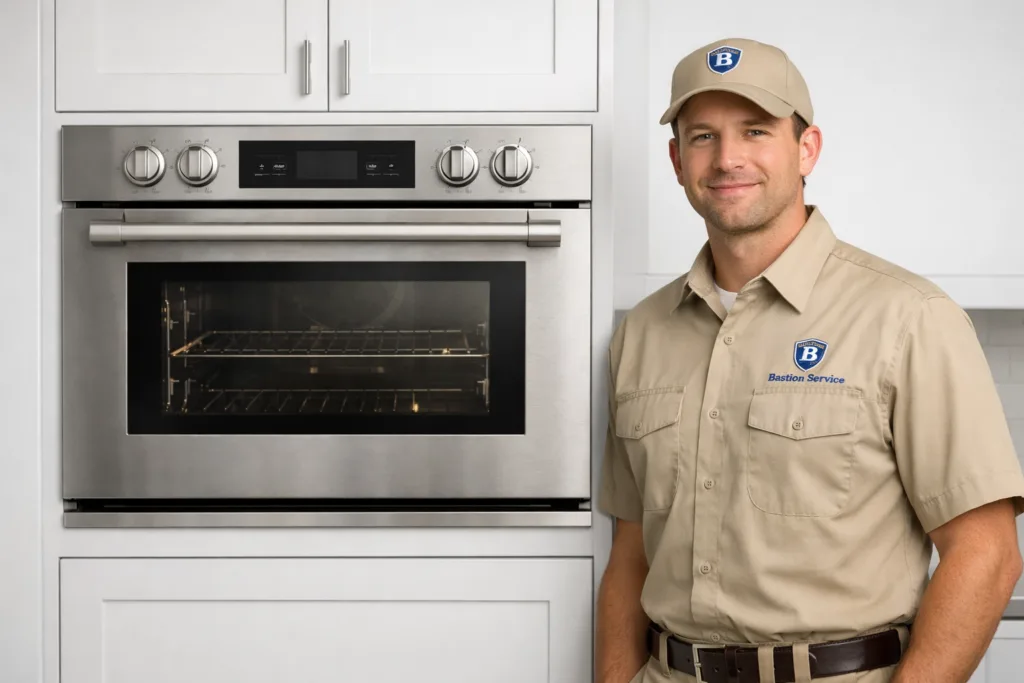
Cooking problems often show up before an oven fully fails. A Thermador oven may still turn on, light up, and appear to run normally while meals come out uneven, preheat drags on, or the cavity temperature swings more than it should. Those patterns usually point to a specific heating, sensing, airflow, door, or control problem rather than a vague “bad oven” issue.
Common Thermador oven symptoms in Playa Vista homes
Symptom-based diagnosis is the fastest way to sort out what is going wrong. Two ovens can seem to have the same complaint from the outside, but the repair path can be very different once testing begins.
Oven will not heat
If the oven stays cold, only warms slightly, or shuts down before reaching cooking temperature, likely causes depend on the model and fuel type. Electric units may have a problem with a heating element, temperature sensor, relay, or power supply issue. Gas models may be dealing with an igniter that is too weak to open the gas valve consistently, even if it glows.
Homeowners sometimes notice this after longer cook times, underdone casseroles, or repeated preheat failures. If the display appears normal but the cavity never gets hot enough, the fault is often deeper than a simple settings problem.
Slow preheating
A Thermador oven that eventually heats but takes too long can be affected by a weakening bake or broil circuit, sensor drift, door seal leakage, or a convection-related issue. Slow preheat is easy to overlook because the oven still works, just poorly. Over time, though, it becomes harder to trust cook times and results.
This symptom is especially important when it starts suddenly rather than gradually. A noticeable change from the oven’s normal behavior usually means a component is no longer performing within range.
Uneven baking or roasting
Uneven results often show up as burned edges, pale centers, inconsistent browning, or one rack cooking much faster than another. In many Thermador ovens, this can point to temperature sensor errors, weak heat production, convection fan trouble, or heat escaping around the door.
Home bakers may see it first with cookies or cakes, while everyday cooking may reveal it through roasted vegetables, sheet-pan meals, or dishes that need frequent turning just to cook evenly.
Temperature swings during cooking
Some cycling is normal, but wide temperature swings are not. If the oven overshoots, drops too low, or struggles to hold a stable average temperature, the cause may involve the sensor, control board, relay function, or a heating circuit that is cutting in and out.
These problems can be frustrating because the oven may pass a quick check yet still ruin longer recipes. That is why repeat behavior matters more than a single disappointing meal.
Control panel issues and error codes
Flashing codes, random beeping, unresponsive buttons, or a display that works only part of the time usually point toward an electronic control, interface, connection, or wiring issue. In some cases, a code narrows the problem quickly. In others, the code only tells you which system noticed a fault, not which part actually failed.
If the oven resets and works briefly after power is cycled, that does not necessarily mean the issue is resolved. Intermittent electronic faults often return once the appliance heats up again.
Door, hinge, or latch problems
A door that does not close tightly can affect far more than convenience. Heat loss at the front of the oven can cause long preheat times, unstable temperatures, and uneven cooking. Worn hinges, damaged seals, and latch problems may also become more noticeable after heavy use or a self-clean cycle.
If the door feels crooked, does not stay aligned, or will not unlock properly, the issue should be addressed before it begins affecting nearby components or cooking performance.
What these symptoms can indicate
One reason oven diagnosis can be tricky is that different failures create similar complaints. A unit that is not heating may have a failed element, a weak igniter, a bad sensor reading, a relay problem, or a power issue. An oven that bakes unevenly may have an airflow problem instead of a temperature problem. A display error may be caused by a control fault, but it may also be the control reacting to another failed part.
That is why testing matters more than guessing. Replacing parts based only on online symptom lists can waste money and leave the original issue untouched. On premium appliances, overlapping symptoms are common, so the most useful approach is to confirm which system is failing and whether any secondary wear is already developing around it.
Signs the problem is getting worse
Some oven issues stay inconvenient for a while before turning into a complete breakdown. Others can escalate quickly. It is smart to stop treating the problem as minor if you notice any of the following:
- Preheat times keep getting longer
- The oven temperature becomes less predictable from week to week
- Error codes appear more often or clear only temporarily
- The oven shuts off during a cooking cycle
- The door no longer seals well or must be pushed closed
- Burning electrical smells appear during use
- The appliance trips a breaker or loses power while heating
These patterns usually mean the underlying fault is no longer isolated to normal wear or minor calibration drift. Continued use may increase repair cost if overheating, arcing, or repeated failed starts begin stressing nearby components.
Gas and electrical safety concerns
If you have a gas Thermador oven and notice a strong or persistent gas smell, stop using the appliance immediately. Leave the area if needed and contact the gas utility or emergency service before arranging appliance repair. Delayed ignition, repeated clicking, or a burner that struggles to light should also be evaluated before normal use continues.
For electric models, breaker trips, visible sparking, or a sharp burning odor should be treated as more than a nuisance. Those symptoms can indicate an unsafe heating or wiring problem and should not be ignored.
When repair usually makes sense
Many Thermador oven problems are repairable when the issue is limited to a specific component or system. That often includes temperature sensors, igniters, heating elements, convection fans, door hardware, latches, and some control-related failures. If the appliance is otherwise in good condition and has been cooking reliably until this issue, repair is often the sensible path.
Repair decisions become less straightforward when several problems appear together. For example, if an older oven has ongoing electronic issues, poor temperature control, and a worn door assembly at the same time, the total cost and long-term reliability picture may be less favorable.
How to think about repair versus replacement
For households in Playa Vista, the better choice usually comes down to four factors: the oven’s age, the number of systems affected, the condition of the appliance overall, and the cost of restoring dependable performance. A single failed part in an otherwise healthy oven is very different from a pattern of repeated heating and control failures.
It also helps to consider how the oven is used. If it is part of daily meal prep, reliability matters more than simply getting it to work once. A lasting repair should restore normal heating behavior, not just temporarily get the oven running again.
What a service visit should clarify
A worthwhile service appointment should answer a few practical questions clearly: what system failed, whether continued use is safe, what repair is recommended, and whether the appliance is a good candidate for continued service life. That kind of explanation helps homeowners make a decision without guessing.
With Thermador oven repair in Playa Vista, the goal is not just replacing a part. It is identifying why the oven is misbehaving, matching the fault to the symptom pattern, and determining whether the fix will return the appliance to stable everyday use. When that is done well, homeowners get a realistic next step instead of more uncertainty.