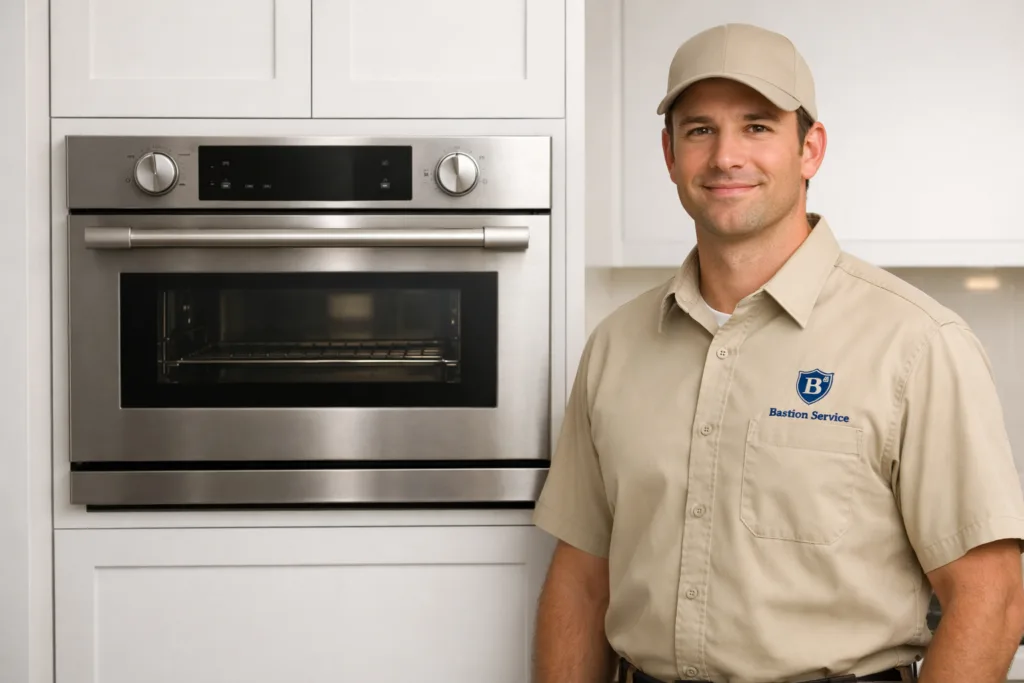
Cooking problems in a wall oven rarely stay isolated to one meal. If a Monogram unit is underheating, overbaking, shutting off mid-cycle, or showing control errors, the most important step is to match the symptom to the system that is actually failing. Similar complaints can come from very different causes, including a weak heating element, inaccurate temperature sensing, a control issue, a convection fault, or a door that is leaking heat.
What the symptom usually tells you
Wall ovens are built around a few key functions: creating heat, reading temperature accurately, circulating heat correctly when convection is involved, and maintaining stable communication between the controls and the cooking components. When one of those functions starts drifting, the first sign is often inconsistent cooking rather than a complete breakdown.
That is why a symptom-based evaluation matters. An oven that seems “a little off” may be dealing with a sensor problem, while one that will not preheat at all may be missing part of the heating circuit. In Playa Vista homes, catching that difference early can prevent wasted time, unnecessary part replacement, and more disruptive failures later.
Common Monogram wall oven problems
Not heating at all
If the display powers on but the cavity stays cold, the issue may involve the bake element, broil element, thermal protection components, wiring, or the electronic control that sends power to the heating circuit. In some cases, the oven appears to start normally, but no usable heat is produced.
This symptom is usually more than a convenience issue. If the oven is repeatedly commanded to heat without doing so correctly, related components can continue cycling under fault conditions.
Slow preheating
Long preheat times often point to partial heating failure rather than a complete loss of heat. One element may be weak, the sensor may be reading incorrectly, or the oven may be struggling to reach target temperature because heat is escaping through a worn door gasket or poor door alignment.
Homeowners often notice this first when recipes that used to be reliable suddenly require extra time. If preheat becomes consistently slower, the oven should be checked before performance declines further.
Uneven baking
When cookies brown more on one side, casseroles finish unevenly, or one rack cooks faster than another, the problem is usually tied to temperature regulation or airflow. A drifting sensor, faulty convection fan, calibration issue, or heat loss around the door can all produce uneven results.
Because uneven baking can develop gradually, many households compensate without realizing the appliance is no longer operating correctly. Rotating pans more often or extending cook times may mask the issue, but it does not solve it.
Temperature swings or overheating
If the oven seems too hot one day and too cool the next, or if food burns even when the set temperature looks normal, the sensor and control system should be evaluated. Temperature instability can come from inaccurate feedback to the control board, relay problems, or calibration drift.
Overheating deserves prompt attention. Excess heat can damage food, interior surfaces, and nearby components if the oven is allowed to continue operating with poor regulation.
Error codes and unresponsive controls
Flashing displays, repeated beeping, frozen touch controls, or fault codes usually indicate a communication problem between the user interface, sensor circuit, latch system, or main control. Some Monogram wall oven issues begin intermittently, with the panel working normally one day and failing the next.
Intermittent electronics problems are easy to dismiss at first, but they tend to become more frequent. If the controls are no longer responding reliably, the oven should not be trusted for routine cooking or timed operation.
Door problems and self-clean related failures
A door that will not close tightly can cause heat loss, longer cook times, uneven baking, and excessive heat around the frame. Hinges, gaskets, and latch components all affect how the oven seals and performs.
Problems that appear after a self-clean cycle often involve heat-stressed electronics, latch faults, sensor issues, or wiring damage. If a Monogram wall oven in Playa Vista becomes unreliable immediately after self-cleaning, stopping use until it is inspected is usually the safest move.
Signs the problem is getting worse
Some oven issues stay stable for a short time, but others progress quickly. These signs usually mean the condition is worsening:
- Preheat keeps taking longer each week
- Cooking results vary even when using the same settings
- The oven shuts off during baking or broiling
- Error codes appear more often or clear only temporarily
- The door no longer seals the way it used to
- The breaker trips when the oven is in use
If the oven still “sort of works,” it can be tempting to continue using it. But partial failure often puts extra strain on controls, relays, and heating components. Continued operation can turn a focused repair into a more involved one.
When to stop using the oven
Discontinue use if you notice a burning odor that does not go away, visible sparking, repeated breaker trips, harsh overheating, or a door that will not stay closed. These are not symptoms to test repeatedly at home.
You should also stop using the unit if it loses power during cooking cycles or if the controls begin acting unpredictably. A wall oven that cannot maintain safe and stable operation should be evaluated before it is used again.
Repair or replacement for a Monogram wall oven
Many problems affecting a Monogram wall oven are repairable, especially when the failure is isolated to a heating element, sensor, fan motor, latch assembly, or a specific control-related component. In those cases, repair can restore normal cooking performance without replacing the appliance.
Replacement becomes a more serious consideration when the oven has multiple failing systems, recurring electronic problems, or broader age-related wear that affects long-term reliability. The right decision depends on what has failed, how the appliance has been performing overall, and whether the repair addresses the root problem rather than a temporary symptom.
For households in Playa Vista, the most useful question is whether the oven will return to predictable everyday use after repair. If the answer is yes, repair often makes sense. If several systems are declining at once, replacement may be the better long-term path.
What a service visit should clarify
A well-run appointment should determine which system is failing, explain why the symptom is happening, and identify whether the repair path is straightforward or more extensive. That means testing how the oven heats, how it senses temperature, how the controls respond, and whether the door and related components are allowing the appliance to operate properly.
For a Monogram wall oven repair in Playa Vista, that kind of targeted assessment gives homeowners something more useful than a guess: a practical repair plan based on the actual condition of the oven and the way the problem is showing up in daily use.