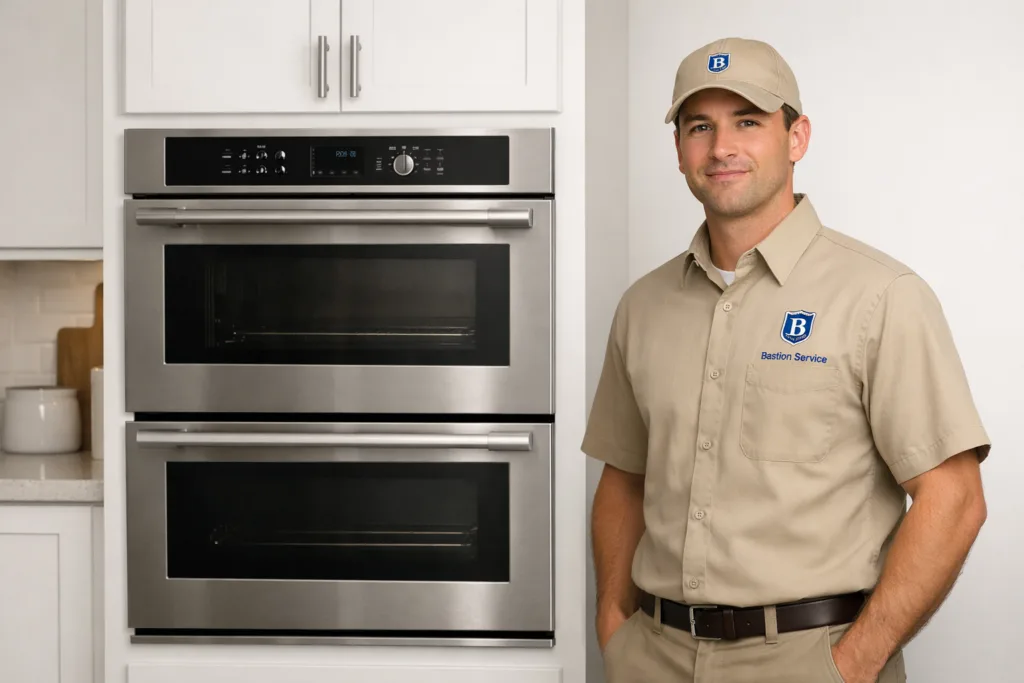
Built-in wall ovens tend to fail in ways that are frustratingly inconsistent. One day preheat feels normal, and the next day dinner takes twice as long, the display starts beeping, or the oven shuts off before the food is done. With KitchenAid models, those symptoms can come from several different components, so it helps to look at the full pattern before assuming the cause.
How KitchenAid wall oven problems usually show up
Many service calls start with a simple complaint such as “it is not heating right,” but the details matter. An oven that does not heat at all is different from one that heats a little, overheats, or struggles only during preheat. In Playa Vista homes, those symptom differences often point toward an element problem, a temperature sensor issue, a control fault, a door-lock problem, or a power-related failure.
Because a wall oven is built into cabinetry and tied into a dedicated electrical connection, repeated trial-and-error use is rarely the best next step. If the appliance is cooking unpredictably, the real goal is to identify whether the failure is isolated and repairable or part of a larger pattern.
Common symptoms and what they can mean
Oven will not heat
If the display appears normal but the cavity stays cold, the failure may involve the bake element, broil element, sensor circuit, thermal protection component, control relay, or wiring. In some cases, one heating function fails while the other still works, which can make the oven seem partially operational even though cooking results are poor.
This is especially noticeable when the oven says it has preheated but food remains undercooked. That often means the target temperature was never truly reached.
Slow preheat
Slow preheat is a common early warning sign. A weakened element, inaccurate sensor reading, or control issue can stretch preheat times without causing a complete loss of heat. Homeowners often notice this first with weeknight meals, frozen foods, or baking that suddenly takes longer than expected.
If preheat keeps getting slower, the issue usually does not correct itself. Continued use may also place extra stress on heating components that are already failing.
Uneven baking or roasting
When one rack browns faster than another, cookies come out inconsistent, or roasts cook unevenly, temperature regulation is usually the problem. That can be caused by a drifting sensor, weak bake performance, poor heat cycling, or airflow issues on convection-equipped units.
These problems can feel subtle at first. A household may assume recipes changed or pans are the issue, but repeated inconsistency often points back to the oven.
Temperature swings
Some temperature fluctuation is normal during operation, but wide swings are not. If the oven overshoots, drops too low, or seems unable to hold a stable cooking temperature, the sensor and control system become primary suspects. In practical terms, that leads to overbaked edges, underdone centers, and unreliable results from meals that used to cook normally.
Control panel problems
A KitchenAid wall oven that beeps unexpectedly, shows an error code, ignores keypad input, or turns off mid-cycle may have a user interface or main control problem. Sometimes the display remains lit while heating functions stop responding. Other times, the unit may restart after a power interruption and then fail again during use.
Intermittent electrical symptoms should be taken seriously, especially if the oven trips a breaker, loses power under load, or behaves differently from one cycle to the next.
Door lock and self-clean issues
On models with self-clean, a stuck door latch or lock-related fault can prevent the oven from starting or can leave the door locked after the cycle should be complete. Forcing the door open can damage the latch assembly or trim components, so it is better to stop and have the lock system checked.
Signs the problem is getting worse
Some oven issues begin as annoyances and turn into full failures later. Scheduling service makes sense when the symptom is repeating rather than appearing once and disappearing. Warning signs include:
- preheat takes longer than it used to
- set temperature and actual cooking results do not match
- error codes return after resetting power
- the oven shuts off during baking or roasting
- the door will not lock, unlock, or close properly
- there is a persistent burning smell, smoke unrelated to food, or visible sparking
Those patterns usually indicate more than a one-time glitch. Waiting can turn a manageable repair into a larger parts and labor issue.
When to stop using the oven right away
It is best to stop using the appliance until it is inspected if you notice breaker trips, electrical odor, visible arcing, repeated shutdowns, or heat that seems uncontrolled. A built-in wall oven draws significant power, and symptoms involving wiring, overheating, or unstable operation should not be brushed aside.
The same applies if the oven is smoking without a clear food spill, or if the cabinet area around the unit feels unusually hot during normal cooking.
Repair versus replacement for a built-in wall oven
Many KitchenAid wall oven problems are worth repairing when the issue is limited to a sensor, heating element, latch assembly, fuse, or a specific control-related failure. Built-in appliances are different from freestanding units because replacement can involve cabinet fit, cutout dimensions, trim alignment, and finish matching within the kitchen.
Replacement starts to make more sense when there are multiple failing systems, recurring electronic problems, or a repair cost that is hard to justify against the oven’s overall age and condition. The most useful service visit is one that helps you weigh the exact failed part against the long-term reliability you can expect afterward.
What homeowners in Playa Vista usually want to know
Most households are trying to answer four practical questions: what failed, is the oven safe to use, what repair is recommended, and is the fix worth doing. That is where accurate testing matters more than guesswork. A symptom like uneven baking may trace back to a relatively contained part failure, while a no-start condition may involve a broader control or power issue.
For Playa Vista homeowners, the value of service is not just restoring heat. It is understanding whether the appliance can return to normal daily cooking without ongoing uncertainty.
A focused approach to KitchenAid wall oven service
KitchenAid Wall Oven Repair in Playa Vista is most useful when it is based on the exact symptom pattern rather than a generic parts swap. Whether the complaint is no heat, slow preheat, temperature swings, or control trouble, the right repair path starts with identifying which component has actually failed and whether the rest of the oven remains in solid condition.
That approach helps avoid unnecessary parts, repeated breakdowns, and the bigger inconvenience of losing a built-in cooking appliance for longer than necessary.