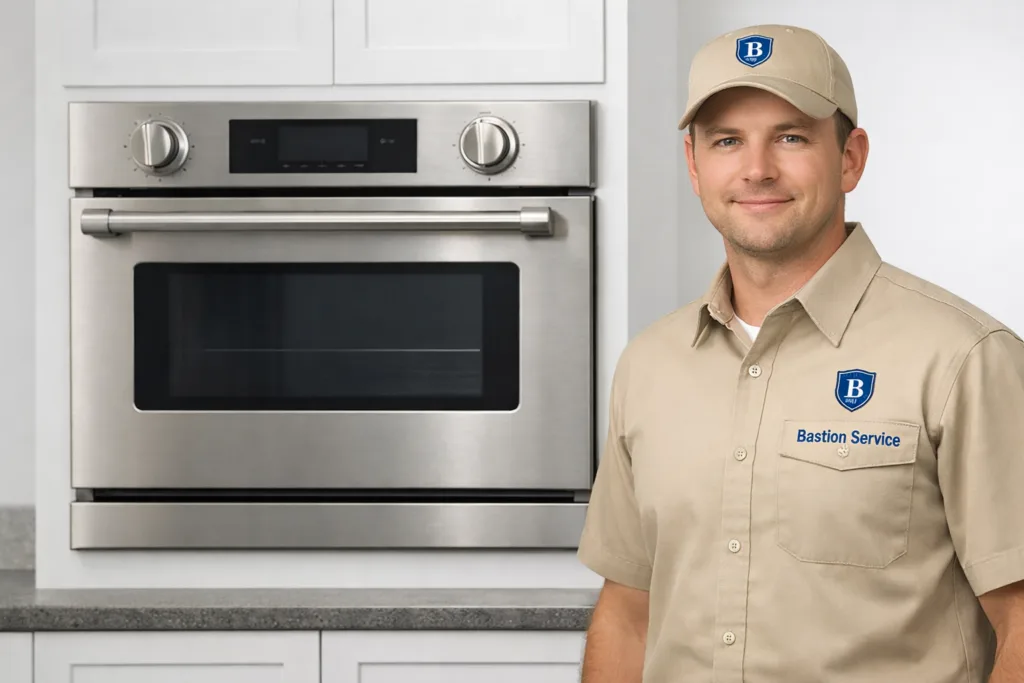
Temperature problems in a built-in oven rarely come from just one cause. A Viking wall oven may seem like it has a simple heating issue, but the real fault can involve the bake circuit, broil circuit, sensor feedback, control relays, airflow, or even a door seal that is no longer holding heat the way it should. That is why symptom pattern matters so much before any part is replaced.
Common Viking wall oven symptoms and what they can mean
Not heating at all
If the oven powers on but never gets warm, the cause may be a failed heating element, a bad temperature sensor, a control problem, or an electrical issue affecting the unit’s ability to energize the heating circuit. In some homes, this starts as an occasional failure to preheat and then becomes a full no-heat condition.
For a household in Playa Vista, this usually shows up quickly as delayed dinners, unfinished baking, or an oven that appears normal on the display while the cavity stays cold. A no-heat symptom should be checked promptly because repeated attempts to run the oven can sometimes stress other components.
Slow preheat
When preheat takes much longer than usual, the oven may still be working, but not correctly. A weak bake element, partial broil failure, sensor drift, or control issue can all cause slow temperature rise. Some owners first notice this when recipes that used to be reliable suddenly need extra time.
Slow preheat is easy to overlook because the oven still seems usable. The problem is that weak heating often becomes uneven heating next, and then complete failure after that.
Uneven baking or roasting
If cookies brown more on one side, casseroles stay cool in the center, or one rack cooks faster than another, the oven may have a temperature sensing issue, poor convection performance, a damaged gasket, or inconsistent heat cycling. On a Viking wall oven, uneven results are often one of the earliest warnings that the appliance is no longer holding or distributing heat properly.
- Food browns too fast on top but stays pale underneath
- Roasts need far longer than expected
- Baked goods rise unevenly
- Edge burning happens before the center is done
Temperature swings
Some cycling is normal, but wide temperature swings are not. If the oven runs too hot, then too cool, or never seems stable during a cooking cycle, the issue may involve the sensor, control calibration, relay behavior, or a heating component that is dropping out intermittently. This kind of fluctuation can make meal prep frustrating because the oven becomes hard to predict from one use to the next.
Display problems and error codes
A blank display, flashing panel, constant beeping, or recurring error code usually points toward the control system, interface, wiring, or incoming power. Intermittent electronic problems matter because they can affect more than convenience. If the controls misread temperature or fail during a cycle, cooking performance and reliability both suffer.
Shutting off during use
An oven that turns off mid-cycle should not be dismissed as a one-time glitch. Heat-related electrical faults, failing controls, loose connections, or protective shutdown behavior can all be involved. If the shutdown happens more than once, the unit should be inspected before normal use continues.
Door, latch, and self-clean issues
When the door will not close properly, will not unlock, or causes problems during self-clean, the fault may involve hinges, the latch motor, switches, gasket wear, or control logic. A bad seal can also lead to long preheat times and uneven cooking because heat is escaping while the oven tries to maintain temperature.
Symptoms that should not be ignored
Some problems are inconvenient. Others can lead to more damage if the oven keeps being used. It is wise to stop using the unit and have it checked if you notice any of the following:
- Breaker trips when the oven starts or heats
- Burning or sharp electrical odor
- Visible sparking or signs of overheating
- Repeated random shutdowns
- Door not securing during operation
- Controls that freeze, reset, or fail unpredictably
These symptoms can point to faults that go beyond normal wear. Continued operation may worsen wiring damage, shorten the life of control parts, or turn a single-component repair into a larger job.
Why Viking wall ovens can seem functional even when they are not
One of the more confusing things about wall oven problems is that the appliance may still turn on, light up, and respond to commands. That does not mean it is heating accurately. Many owners assume the oven is basically fine because the display works, but cooking performance often reveals the issue first.
If meals are taking longer, browning unevenly, or requiring constant adjustments, the oven may already be operating outside a normal temperature range. Catching that earlier can help avoid repeated failed meals and unnecessary part swapping.
Repair versus replacement
Many Viking wall oven problems are repairable, especially when the issue is limited to a sensor, heating element, fan, latch assembly, control-related fault, or wiring repair. Repair is often the better path when the appliance is otherwise in solid condition and the built-in installation still suits the kitchen well.
Replacement becomes a more serious consideration when multiple major systems have failed, the repair total climbs too close to the cost of replacing the appliance, or the overall condition of the unit suggests more breakdowns are likely. Because wall ovens are built into cabinetry, the decision is usually better made after the exact fault is known rather than from symptoms alone.
What homeowners in Playa Vista usually want to know first
Most households are trying to answer a few practical questions: Is the oven safe to use right now? What is most likely causing the symptom? Is this the kind of problem that is usually worth repairing? Those answers depend less on the model name alone and more on whether the problem is isolated to one system or affecting several at once.
That is where a clear diagnosis and a practical repair plan are most useful. Instead of guessing based on a single symptom, the better approach is to match the repair path to the actual failure pattern and the condition of the appliance.
When to schedule service
It makes sense to schedule service when your wall oven is not heating, preheats slowly, cooks unevenly, shows error codes, shuts off during operation, or has door and latch issues that affect normal use. If the symptom is getting worse from week to week, that is usually a sign the fault is not going to correct itself.
For homeowners in Playa Vista, early attention often helps preserve the chance of a simpler repair. When the oven’s behavior changes in a noticeable way, having it checked sooner is usually easier than waiting for a total breakdown.