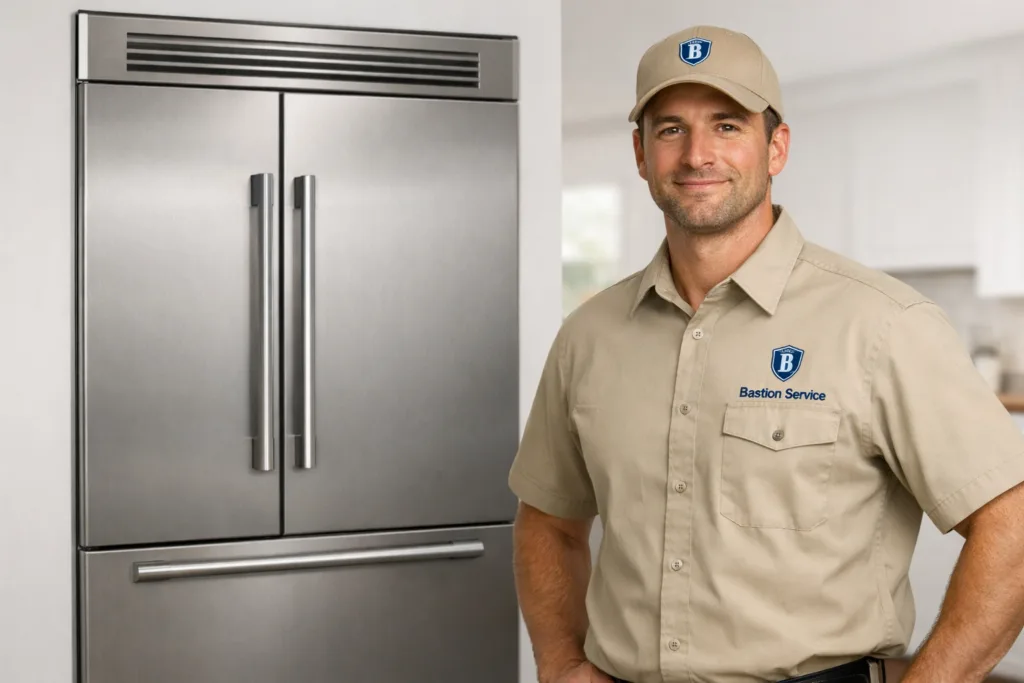
Food storage problems tend to show up before a refrigerator fully fails. You may notice longer run times, warmer shelves, soft ice cream, water collecting under drawers, or a fan sound that suddenly changes. With Thermador refrigeration, those early signs often point to an airflow, defrost, sensor, drain, or control issue that should be checked before the symptom spreads to other parts of the unit.
Common Thermador refrigerator symptoms and what they can mean
One symptom does not always equal one failed part. A refrigerator compartment that feels warm can be caused by restricted airflow, an evaporator fan problem, heavy frost behind panels, a faulty thermistor, a damper issue, or a more serious cooling-system fault. That is why symptom pattern matters more than guessing.
Fresh food section is warm but the freezer still seems cold
This is one of the most common complaint patterns. In many cases, the refrigerator is still producing cold air, but it is not circulating correctly into the fresh food section. Possible causes include:
- Evaporator fan failure or weak airflow
- Blocked vents or ice restricting circulation
- Damper problems between compartments
- Defrost failure causing frost buildup on the evaporator
- Sensor or control issues affecting temperature response
If the freezer is holding better than the refrigerator section, the problem is not always a compressor. Air movement and defrost performance should be considered first.
Temperature swings or food freezing in the wrong area
When produce freezes in a drawer, drinks feel too cold on one shelf, or dairy spoils early even though settings have not changed, the unit may be struggling to regulate temperature evenly. Thermistors, control boards, dampers, and airflow restrictions can all create hot and cold spots. Door sealing problems can also bring in warm air and make the refrigerator overcompensate.
Frost buildup, condensation, or ice where it should not be
Frost on interior panels, moisture on shelves, or ice collecting near vents often indicates a defrost or airflow issue. In some cases, warm air is entering through a worn gasket or a door that is not closing squarely. In others, the defrost system is not clearing normal frost accumulation, which eventually blocks airflow and weakens cooling.
Heavy frost is more than a cosmetic issue. It can interfere with fans, reduce efficiency, and lead to wider temperature instability throughout the cabinet.
Water leaking inside or onto the floor
Leaks often come from a clogged or frozen drain path, excess condensation, or ice melting in the wrong place. A drain blockage can send defrost water under drawers or onto the floor. If water keeps returning, the issue usually needs more than cleanup. The drain route, defrost operation, and door seal condition should all be inspected.
Unusual noises, clicking, buzzing, or alarms
Not every sound means failure, but a noticeable change in operation should not be ignored. Clicking can point to start-related electrical trouble. Loud fan noise may mean a blade is hitting ice or the motor is wearing out. Repeating alarms may be tied to door switch problems, alignment issues, or cooling conditions that prevent the refrigerator from stabilizing.
Why diagnosis matters on Thermador refrigeration
Premium built-in refrigeration can hide the source of a problem well. Two refrigerators may show the same warm-compartment complaint while needing completely different repairs. Replacing a sensor when the actual issue is a frost-packed evaporator, or replacing a fan when the fault is in the control system, only delays the real fix.
A service visit should identify which system is failing:
- Air circulation
- Defrost system
- Temperature sensing
- Drainage and moisture control
- Electrical control components
- Compressor or sealed system performance
When to stop waiting and schedule service
It is usually time to schedule Thermador refrigerator service in Playa Vista when food is no longer staying consistently cold, leaks keep returning, frost is building behind panels, or the unit runs without settling into a normal cycle. Intermittent recovery does not always mean the refrigerator is fine. Many cooling faults come and go before becoming constant.
You should be especially cautious if:
- The fresh food section is clearly above safe temperature
- The freezer is softening or thawing
- The refrigerator runs almost nonstop
- There is standing water near or under the unit
- You hear a fan scraping or repeated clicking on startup
Using the refrigerator in that condition can lead to food loss and may put extra stress on motors, controls, or the cooling system.
Repair or replacement: what usually makes sense
Many Thermador refrigerator problems are repairable when the fault is limited to a fan motor, drain issue, gasket, sensor, ice maker component, defrost part, or another defined electrical problem. Replacement becomes a more serious consideration when there is major sealed system trouble, repeated expensive failures, or overall wear that makes future reliability doubtful.
A useful way to think through the decision is to ask:
- Has the exact failed system been identified?
- Is the refrigerator otherwise in good condition?
- Has the same problem happened before?
- Does the repair cost make sense compared with replacement?
- Is preserving the existing built-in fit and kitchen finish important?
For many Playa Vista homeowners, keeping a built-in Thermador unit in service is worth considering when the cabinet, panels, and kitchen integration are still in strong condition.
What homeowners in Playa Vista should pay attention to before the visit
If you are waiting for service, it helps to note exactly what the refrigerator is doing. Is the freezer holding temperature better than the fresh food section? Is frost visible on a rear panel? Does the noise happen all the time or only when the unit starts? Is leaking tied to a recent defrost cycle or ice maker use? Those details can help narrow down the cause faster.
It is also smart to watch for changes over a 24-hour period rather than relying only on display settings. A refrigerator can show a selected temperature while still struggling to reach it consistently.
Practical next steps for a Thermador refrigerator that is acting up
If the unit is warming, leaking, frosting over, or sounding different than normal, the most helpful next step is to have the symptom traced to the actual failed system. That avoids unnecessary parts replacement and gives you a better basis for deciding whether repair is the right move.
For Thermador refrigerator repair in Playa Vista, the goal is not just to respond to one complaint, but to understand how cooling, airflow, moisture, and control behavior are interacting inside the appliance so the repair path matches the real problem.