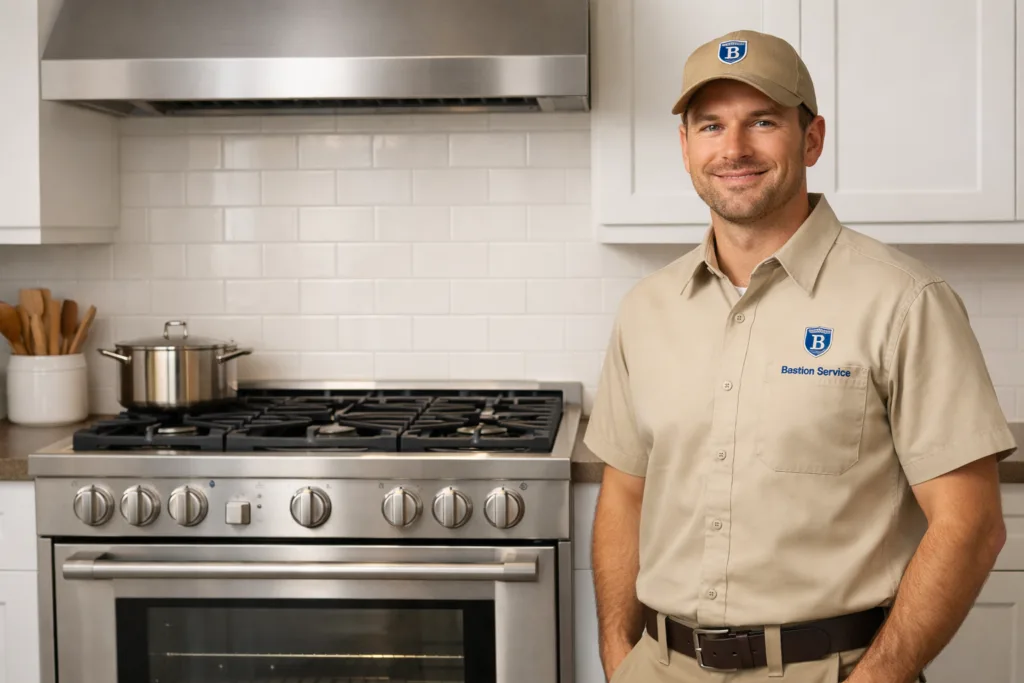
Cooking problems on a Thermador range usually show up in everyday ways first: a burner that clicks too long, an oven that takes much longer to finish a meal, or temperature swings that make recipes unpredictable. Because several different components can create similar symptoms, the most useful approach is to match the repair plan to the exact behavior of the appliance.
Start with the symptom pattern
A range can have ignition, heating, control, or power-related trouble that overlaps in ways that are easy to misread. For example, an oven that seems slow may actually be cycling incorrectly, while a burner that will not light consistently may have a localized burner issue rather than a full ignition system failure. Paying attention to what happens, when it happens, and whether it affects one function or several helps narrow the problem down much faster.
In Pico-Robertson homes, this matters because a repair that makes sense for a single failed igniter is very different from one involving multiple control or wiring faults. Symptom-based diagnosis helps avoid replacing parts that are not actually causing the failure.
Common Thermador range burner problems
Burner will not ignite
If a surface burner does not light at all, possible causes include a blocked burner port, poor cap alignment, a worn igniter, a faulty spark switch, or a wiring problem. On gas models, flame delivery and ignition timing both matter. If gas is present but ignition is delayed, the burner should not be ignored.
Burner clicks continuously
Continuous clicking often points to moisture around the igniter, residue from cleaning, a stuck switch, or a spark module issue. If the clicking stops after the area dries, the problem may be minor. If it returns repeatedly, happens on multiple burners, or continues after ignition, the system should be inspected before regular use continues.
Weak or uneven flame
An uneven flame can affect cooking performance even when the burner technically works. Dirty ports, burner head problems, incorrect cap seating, or gas flow issues can all create weak heating, hot spots, or unstable flame. If one burner behaves differently from the others, that pattern is often useful in isolating the fault.
Oven heating complaints and what they may mean
Oven takes too long to preheat
Slow preheating can come from a weak igniter, a temperature sensor drifting out of range, a bake or broil heating issue, or a control problem that affects the heating cycle. On some Thermador ranges, the oven may still reach temperature eventually, but not with the consistency needed for normal cooking.
Food cooks unevenly
When one side browns faster, one rack burns while another stays pale, or baking results suddenly change, the cause may involve heat distribution rather than total heat loss. Convection fan problems, sensor issues, door seal wear, or incomplete heating from one side of the system can all create this kind of complaint.
Oven will not heat at all
A no-heat condition usually calls for service sooner rather than later. Depending on the model, the issue may involve the igniter, bake circuit, broil circuit, control board, safety component, or incoming power. If the oven display appears normal but there is no actual heat, that often points to a failed component deeper in the heating system.
Control and display issues
Some Thermador range problems begin with the interface rather than the burners or oven cavity. A blank display, buttons that do not respond, random beeping, clock resets, or cycle selections that do not start properly may indicate a user interface fault, main control problem, loose connection, or unstable power supply.
These symptoms can also look worse than they are. In some cases, the range itself is not the source of the failure; the issue may be related to a breaker, outlet, terminal block, or power input problem. Separating appliance failure from supply-related issues is an important part of making the right repair decision.
Signs the range should not keep being used
It is usually best to stop using the appliance and schedule service when operation becomes inconsistent enough to affect safety or normal cooking. That includes situations where the range is clearly not controlling ignition or heat the way it should.
- Burners spark repeatedly or ignite with a delay
- The oven overheats, underheats, or will not hold temperature
- Error codes return after being cleared
- The unit shuts off mid-cycle or trips power
- Controls freeze, reset, or stop responding
If there is a persistent gas odor, stop using the range immediately and follow gas safety procedures before arranging appliance service.
When repair is usually worthwhile
Repair is often practical when the problem is tied to a specific part and the rest of the range is still in good condition. Many ignition components, sensors, switches, fans, and certain control-related parts can be addressed effectively when the failure is isolated.
Replacement tends to become a more serious consideration when the range has repeated breakdowns, several major faults at once, or limited parts availability. Cost also matters, but the most important question is whether the current issue is a single repairable defect or part of a larger pattern of decline.
What homeowners can note before a service visit
A few details can make diagnosis much easier. It helps to note whether the problem affects one burner or all burners, whether the oven reaches temperature at all, whether the symptom appears every time, and whether any error codes are displayed. Recent cleaning, unusual sounds, delayed ignition, or sudden cooking changes can also help identify the source of the problem.
For households in Pico-Robertson, the goal is simple: restore safe, predictable cooking performance without unnecessary parts replacement or guesswork.