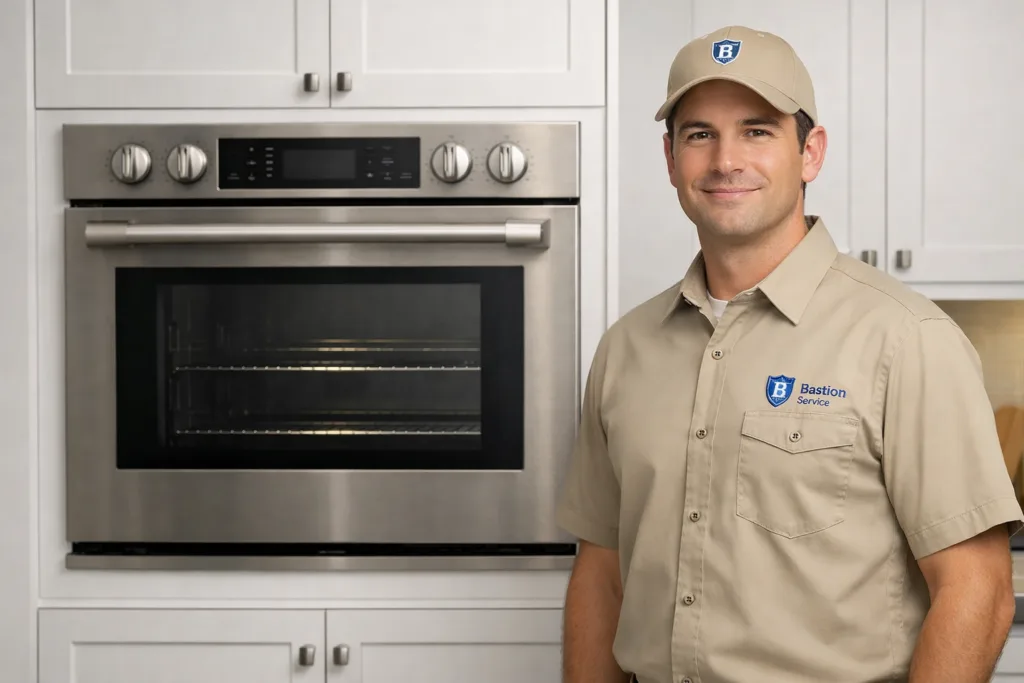
Appliance Repair Service

Thermador Oven Repair in Pico-Robertson

Thermador oven repair in Pico-Robertson for not heating, uneven baking, slow preheat, temperature swings, and control issues.

Local Pico-Robertson service 90-Day warranty Licensed & insured
  • Thermador oven support in Pico-Robertson
  • Clear diagnosis before repair decisions
  • Warranty for labor and parts
  • Fast scheduling based on availability
Thermador Oven Repair

Thermador Oven repair in Pico-Robertson for focused household appliance problems

When a Thermador oven starts acting up in Pico-Robertson, the most helpful first step is a clear diagnosis and a practical repair plan based on the exact symptom pattern.

Bastion Service helps Pico-Robertson homeowners diagnose Thermador oven problems and decide whether repair is practical based on the symptom, appliance condition, and repair path.

Thermador oven repair support for Pico-Robertson homes.

Common Thermador Oven Problems in Pico-Robertson Homes

Thermador ovens are designed for precise cooking, so even a small fault can show up quickly in daily use. A dinner that suddenly takes longer than usual, baked goods that brown unevenly, or a unit that stalls during preheat are all signs that something in the heating, sensing, airflow, or control system is no longer working as intended.

What makes oven issues tricky is that the same symptom can have more than one cause. A Thermador oven that powers on but will not heat may have a failed bake element, a weak igniter on gas models, a temperature sensor problem, a blown thermal protection component, or a control failure. An oven that does heat but cooks poorly may be dealing with calibration drift, relay issues, convection fan trouble, or heat loss through the door.

Symptoms That Usually Point to Service

  • Oven not heating at all: often linked to an igniter, heating element, fuse, sensor, or control issue.
  • Slow preheating: can indicate weak heat output, sensor inaccuracy, or airflow problems.
  • Uneven baking: may come from partial heating failure, convection fan problems, or door seal wear.
  • Temperature swings: recipes overcook or undercook because the oven is not holding a stable temperature.
  • Shutting off mid-cycle: sometimes caused by overheating protection, an electrical fault, or a failing control component.
  • Error codes or unresponsive controls: usually require model-specific testing rather than guesswork.
  • Door not closing properly: worn hinges, latch problems, or gasket damage can affect both safety and performance.

What Uneven Baking Usually Means

Uneven baking is one of the most common complaints because it can begin subtly. You may notice one side of a tray browning faster, casseroles taking longer in the center, or familiar recipes needing repeated extra minutes. In many cases, the oven is still technically heating, but it is no longer distributing or regulating that heat correctly.

On a Thermador oven, uneven results can point to a weakened bake element, inaccurate sensor feedback, convection fan issues, or heat escaping around a worn door seal. If the problem keeps getting worse, the oven is unlikely to correct itself. Continued use usually just makes meal timing less predictable and can hide a part that is degrading further.

Why Slow Preheat Should Not Be Ignored

A long preheat time is often treated as a minor annoyance, but it can be an early warning sign. If your oven used to reach temperature promptly and now seems to lag, one heating source may be underperforming or the control may be getting incorrect temperature feedback. Gas models may show this symptom when the igniter is too weak to light efficiently. Electric models may have an element that is no longer producing full heat.

Slow preheat often shows up before total failure. Catching it early can prevent the situation where the oven starts inconsistently, stalls during cooking, or stops reaching the selected temperature altogether.

Temperature Problems and Inconsistent Results

When an oven runs too hot, too cool, or drifts during cooking, the issue is not always obvious from the display. The set temperature can appear normal while the actual cavity temperature is off enough to ruin baking and roasting results. That is why symptom-based testing matters more than simply resetting the controls and hoping the problem passes.

Common causes include sensor drift, control board faults, relay problems, or an oven that cycles heat incorrectly. Homeowners in Pico-Robertson often first notice this when recipes they make regularly start coming out differently for no clear reason. If cooking outcomes have changed and cookware, rack position, and recipe timing have not, the oven itself may be the source of the problem.

Control Panel, Error Code, and Shutdown Issues

Modern Thermador ovens depend heavily on electronic controls, so display and keypad issues can affect more than convenience. A flashing error code, a panel that stops responding, or an oven that turns off during operation can indicate a communication problem between control components, a sensor fault, or a board that is failing under heat.

Intermittent behavior is especially important to pay attention to. If the oven works normally one day and misbehaves the next, the fault may be progressing. Problems that appear only after the oven heats up are often harder on surrounding components because repeated cycles can stress wiring, relays, and sensors before the main failure becomes obvious.

When Continued Use Can Make Things Worse

Some oven problems are inconvenient but manageable for a short time. Others should be addressed before regular cooking continues. If the oven overheats, trips power, shuts off unexpectedly, has delayed ignition, or gives off a hot electrical smell, it is better to stop using it until the cause is identified.

Using an oven with unstable temperature regulation can also create extra wear. Components that are already struggling may be forced to cycle harder or stay energized longer than intended. What begins as a single bad part can sometimes lead to added stress on the control system or other heating components.

Repair or Replace: How to Think About the Decision

For many households, the right choice comes down to the exact failure and the overall condition of the oven. Repair is often the sensible option when the issue is isolated and the rest of the appliance is in good shape. That includes many cases involving igniters, sensors, heating elements, door components, and some control-related faults.

Replacement becomes more worth considering when there are multiple major issues, recurring electronic problems, or signs of broader wear that make future repairs less predictable. The goal is not simply to get the oven running again for a few days, but to understand whether the repair path supports reliable use going forward.

Why Thermador-Specific Service Matters

Thermador wall ovens and built-in cooking units are not generic appliances. Heating systems, control layouts, and diagnostic patterns can differ by model and configuration. A symptom that seems straightforward on one oven may point somewhere else entirely on another.

That is why Thermador Oven Repair in Pico-Robertson works best when it is based on the unit’s exact behavior rather than trial-and-error part replacement. For homeowners dealing with poor heating, uneven baking, control faults, or an oven that has stopped working entirely, the most useful next step is service built around the symptom pattern and the condition of the appliance.

Service options

Thermador appliances we service in Pico-Robertson

Choose the Thermador appliance type you need serviced in Pico-Robertson.

Customer reviews

Real customer feedback

Recent customer feedback for Bastion Service.

A Bouss review profile photo
A Bouss
Google review

“Andrew was very helpful, I highly recommend him. He came in and diagnosed my dryer and fixed it and cleaned it.”

Luise Remington review profile photo
Luise Remington
Google review

“We needed repair on both our dryer and wash machine and are pleased with the outcome of this service call! It was diagnosed quickly and followed with efficiency. Thank you very much! We will keep your contact info handy!”

FAQ

Thermador Oven Repair questions

Answers about diagnosis, repair options, timing, and next steps.

What are the most common reasons a Thermador oven stops heating in Pico-Robertson?

Common causes include a failed igniter, bad heating element, temperature sensor problem, blown fuse, wiring fault, or electronic control issue. A proper diagnosis is important because the same symptom can come from different parts.

Should I keep using my Thermador oven if it is heating unevenly or taking too long to preheat?

Occasional use may still be possible, but continued operation can worsen some faults or lead to total failure. If cooking results are clearly inconsistent or preheat times have changed a lot, service should be scheduled before the problem grows.

When does Thermador oven repair make more sense than replacement?

Repair usually makes sense when the problem is limited to one main component and the oven is otherwise in good condition. Replacement becomes more relevant when there are repeated major issues, multiple failing parts, or the overall condition of the oven no longer supports practical repair.

What should I do if my Thermador oven has delayed ignition or a gas smell?

Stop using the appliance. If the gas smell is persistent or strong, leave the area if needed and contact the gas utility or emergency service before scheduling appliance repair. If there is repeated clicking or ignition trouble without a gas smell, the oven should still be diagnosed before normal use.

Ready to schedule?

Schedule Thermador Oven Repair in Pico-Robertson

Schedule Thermador oven repair in Pico-Robertson with clear diagnosis, practical repair guidance, and dependable local service.

Call (323) 433-6360