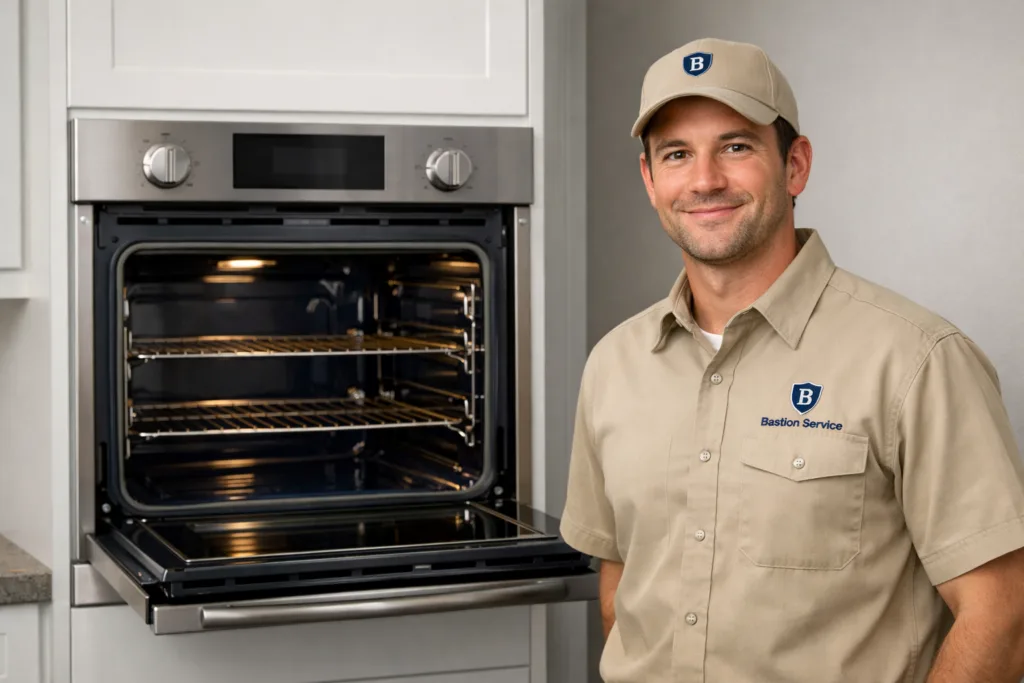
Wall oven problems rarely stay minor for long. A unit that runs cool today may begin overheating tomorrow, and an occasional control glitch can turn into a complete no-start condition with very little warning. For Mid-City homeowners, the most useful first step is to match the symptom to the likely system involved so the repair decision is based on evidence rather than guesswork.
How Thermador wall oven problems usually show up
Most service calls begin with one of a few patterns: the oven does not heat at all, takes too long to preheat, cooks unevenly, shows an error code, or has a door or control issue that affects normal use. While those symptoms sound straightforward, several different parts can produce similar results. A temperature complaint, for example, might involve an element, sensor, relay, wiring issue, or electronic control fault.
That is why symptom-based troubleshooting matters. Thermador wall ovens rely on multiple systems working together, including heating components, temperature feedback, power supply, door sealing, and user interface controls. When one part falls out of range, the oven may still appear to operate while delivering poor cooking performance.
Common symptoms and what they often indicate
Oven will not heat
If the display lights up but the cavity stays cold, the problem may be in the bake circuit, broil circuit, sensor system, or control board. On some models, a failed relay or wiring issue can keep the oven from sending power where it needs to go even though the panel appears normal. If the entire unit seems dead, diagnosis may begin with incoming power, connections, or an internal electrical failure.
Uneven baking or roasting
Food that browns too quickly on one side, stays pale in the center, or comes out inconsistent from rack to rack usually points to heat distribution or temperature regulation problems. A weak element, drifting sensor, damaged door gasket, or cycling issue in the control system can all affect baking results. These problems often become more noticeable during longer cook times or when preparing foods that depend on stable temperatures.
Slow preheat
Long preheat times are often one of the earliest signs that something is wrong. A partially failed element may still produce heat, but not enough to bring the oven up to temperature on schedule. In other cases, the sensor may be misreading the cavity temperature, causing the oven to cycle incorrectly and extend preheat times well beyond normal.
Temperature swings
If the oven runs too hot, too cool, or seems to vary widely from one use to the next, the issue may involve sensor accuracy, control calibration, or heating response. Homeowners sometimes notice this first as recipes that suddenly need different cook times or as baked goods that stop turning out the way they used to.
Error codes or unresponsive controls
Fault codes can help narrow the search, but they are not a final diagnosis by themselves. A code may point toward the sensor circuit, latch system, keypad, or main control, yet the root cause can still be elsewhere in the wiring or related components. If buttons stop responding, the display flickers, or settings will not hold, the control system needs direct testing.
Door not sealing or closing properly
A wall oven door that does not close fully can lead to heat loss, longer cook times, and unreliable temperature performance. Hinges, springs, latch components, and worn gaskets can all contribute. If the issue appears during or after a self-clean cycle, forcing the door or latch can make the repair more complicated.
Why a wall oven may seem to work while still cooking badly
One of the more frustrating issues with a built-in oven is that it can appear functional while delivering poor results. The clock may work, the lights may come on, and the fan may run, yet the unit still may not be heating correctly. That happens because visible power at the control panel does not confirm that the heating system, sensor circuit, and switching components are all operating as they should.
This is especially common with intermittent faults. A relay may fail only after the oven has been running for a while, or a sensor may drift enough to affect baking but not enough to prevent operation entirely. In those cases, the complaint is real even when the oven sometimes seems normal between uses.
When to stop using the oven
It is best to stop using the appliance if it trips the breaker, shuts off during cooking, overheats, shows repeated fault codes, produces a burning electrical smell, or has visible sparking. Continued use under those conditions can damage additional components and make the eventual repair more involved.
If the problem is limited to slow preheating or mild temperature inconsistency, the oven may still operate for a period of time, but performance often declines. Scheduling service sooner can help prevent a manageable repair from becoming a larger electrical or control issue.
Repair or replace: what usually matters most
Many Thermador wall oven problems are repairable when the appliance is otherwise in solid condition and the failure is limited to one main system. Heating elements, temperature sensors, door hardware, igniters on gas models, and many electronic faults can often be addressed without replacing the full unit.
Replacement becomes a more serious consideration when there are multiple major failures, when parts availability creates a poor repair path, or when the cost of restoring the oven approaches the value of keeping it in service. Age matters, but it is only one factor. Condition, service history, and the exact failed components usually tell the more useful story.
What homeowners in Mid-City should expect from a service visit
A worthwhile repair visit should do more than confirm the obvious symptom. It should identify whether the problem is in the heating system, temperature sensing, control operation, door function, or power supply so the next step is clear. That matters most with complaints like uneven baking, intermittent shutdowns, and random fault codes, where the visible symptom does not always reveal the actual cause.
For households in Mid-City, that means the appointment should end with a realistic explanation of what failed, whether the oven is safe to use in the meantime, and whether repair is practical based on the unit’s condition. When the issue is narrowed correctly from the start, it is much easier to avoid unnecessary parts replacement and repeated downtime.
Built-in oven issues are worth addressing early
Because a wall oven is integrated into the kitchen and used regularly for everyday meals, performance problems can be disruptive even before the appliance fully fails. Slow preheat, inaccurate temperatures, and control glitches affect cooking results long before the oven stops working altogether. Addressing those symptoms early usually gives homeowners more options and a smoother repair path.
If your Thermador wall oven has started showing any of these signs in Mid-City, a focused diagnosis is the best way to determine whether the problem is isolated and repairable or part of a larger decline in the appliance.