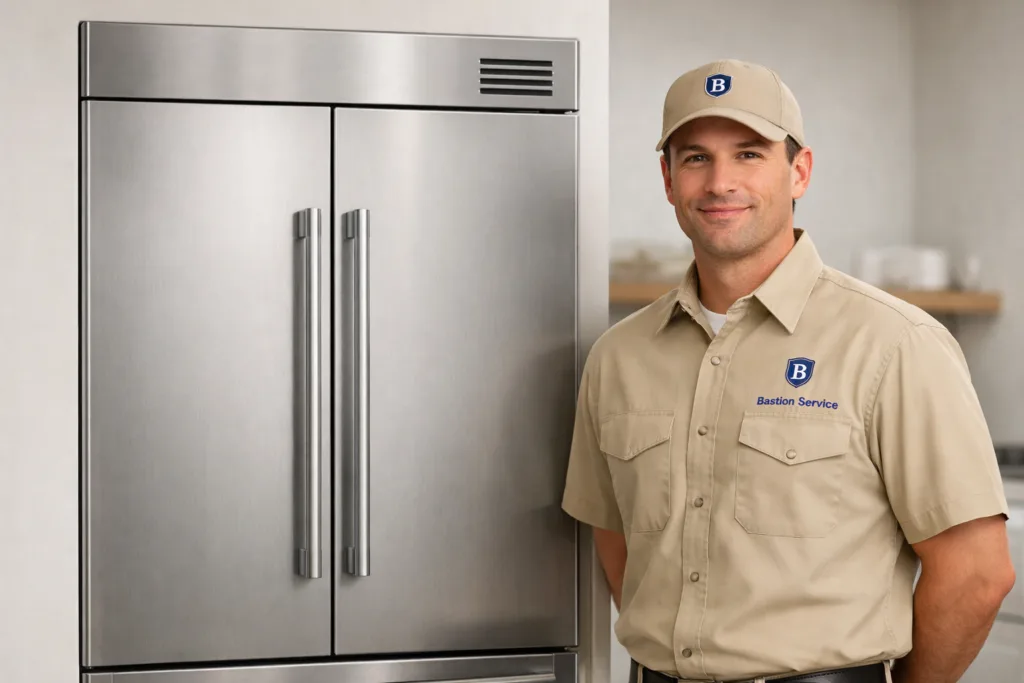
A Thermador refrigerator that starts running warm, leaking, freezing food, or making new noises can interrupt everyday kitchen routines fast. Similar symptoms can come from very different failures, including restricted airflow, fan problems, defrost faults, sensor issues, drain blockages, control failures, or more serious sealed system trouble. Identifying the actual cause first helps avoid wasted time, unnecessary parts replacement, and added food loss.
Common Thermador refrigerator problems in Mid-City homes
Most refrigerator problems begin with a pattern rather than a complete shutdown. You may notice the fresh food section warming up, frost building along the back panel, puddles under drawers, or a unit that seems to run longer than normal. Paying attention to those details often helps narrow down what is happening.
Refrigerator section is warm but the freezer still seems cold
This usually points to an airflow problem inside the cabinet. Cold air may not be moving properly from the freezer side into the refrigerator section because of frost buildup, blocked vents, a failing evaporator fan, or a damper issue. In some cases, the freezer can appear normal at first while the fresh food compartment slowly loses safe temperature control.
If drinks are not staying cold, dairy spoils early, or the top shelves feel warmer than the bottom, the issue should be checked before icing becomes worse.
Both sections are warming up
When the refrigerator and freezer both struggle to stay cold, the problem may involve the compressor, start components, condenser airflow, electronic controls, or the sealed system. This is a more urgent symptom because cooling loss across the whole unit can progress quickly. A refrigerator may still make normal running sounds even while its cooling performance is declining.
Food freezing in the fresh food compartment
If vegetables freeze in drawers or items near the vents become slushy, the cause is not always a setting that is simply too cold. Thermador refrigerators can develop temperature regulation issues related to sensors, dampers, control boards, or uneven airflow. When freezing happens in one area while the rest of the compartment feels normal, that pattern can be especially useful in pinpointing the fault.
Frost buildup or recurring ice inside the unit
Visible frost along interior panels, around vents, or near the freezer drawer often suggests a defrost problem, poor door sealing, or moisture entering where it should not. Frost matters because it can reduce airflow, interfere with fan operation, and eventually cause wider temperature swings throughout the refrigerator.
Water leaking inside or onto the floor
Leaks commonly come from a clogged or frozen defrost drain, a water supply connection issue, a problem around the filter housing, or condensation that is no longer draining correctly. Water under crisper drawers usually points in a different direction than water behind the unit or near the front edge. Because leaks can damage flooring and cabinetry, they are worth addressing promptly.
New noises, clicking, buzzing, or constant running
A change in sound often means something mechanical or airflow-related has changed. Fan motors may become noisy, ice can begin striking a fan blade, start components may click during failed compressor attempts, or the unit may run longer because it is struggling to maintain temperature. Some operating sounds are normal, but a noticeable change paired with poor cooling is a strong sign that service is needed.
What these symptoms often mean
Refrigerator issues are easy to misread because different failures can look alike from the outside. A warm refrigerator compartment might be caused by heavy frost behind a panel rather than a major compressor problem. A leaking unit could be dealing with a simple drain blockage rather than a water line failure. A refrigerator that runs all day may be compensating for dirty condenser airflow, a door seal problem, or a sensor that is no longer reading accurately.
That is why symptom-based explanation matters. The more specific the pattern, the easier it is to determine whether the repair is likely to be relatively contained or whether a larger refrigeration problem may be involved.
When the problem is urgent
Some symptoms should not wait.
- Milk, meat, or leftovers are no longer staying cold
- Frozen food is softening
- Water is leaking repeatedly onto the floor
- Heavy frost keeps returning after you clear it
- The refrigerator is clicking or buzzing without cooling properly
- The unit is running constantly with unstable temperatures
When these signs appear, continued use can make the situation worse. Food spoilage, extra strain on major components, and moisture damage are all common next steps when a refrigerator is left struggling for too long.
What homeowners can check before scheduling service
A few basic checks can help rule out simple causes before repair is scheduled:
- Make sure doors are closing fully and not being pushed open by bins or food containers
- Confirm that interior vents are not blocked by large items
- Check that temperature settings were not changed accidentally
- Look for obvious frost buildup around vents or interior panels
- Inspect visible door gaskets for gaps, tears, or debris
- If accessible, note whether the condenser area appears heavily dusted
These checks are helpful, but they do not replace proper troubleshooting when the same symptom keeps coming back or cooling performance is clearly failing.
Repair or replace a Thermador refrigerator?
In many cases, repair is still worthwhile when the issue is limited to a fan motor, drain problem, valve, sensor, defrost component, gasket, or control-related fault. Those repairs can restore normal use without needing to replace the appliance.
Replacement becomes a more serious consideration when the refrigerator has a major sealed system failure, repeated high-cost breakdowns, or multiple age-related problems happening at once. The right choice depends on the failed component, the overall condition of the refrigerator, and whether the repair is likely to return stable everyday performance.
Why brand-specific service matters
Thermador refrigeration systems often include more advanced controls and integrated design features than a basic refrigerator. That can make guesswork expensive. Replacing the wrong part based on a general symptom alone does not solve the root problem, and it can delay the real fix while temperatures continue to drift.
For homeowners in Mid-City, the best repair path is usually the one built around the actual symptom pattern, the condition of the appliance, and the likely scope of the failure. That gives you a clearer idea of what the repair involves and whether moving forward makes sense for your household.
Choosing the next step
If your Thermador refrigerator is leaking, warming, freezing food, or building frost, it helps to act before the symptom spreads into a larger cooling failure. Even small warning signs often point to issues that do not correct themselves. Early service can prevent food loss, limit secondary damage, and make the repair decision more straightforward.
When a refrigerator in Mid-City is no longer holding a steady temperature, a practical repair plan starts with understanding exactly what the appliance is doing and matching the fix to that behavior.