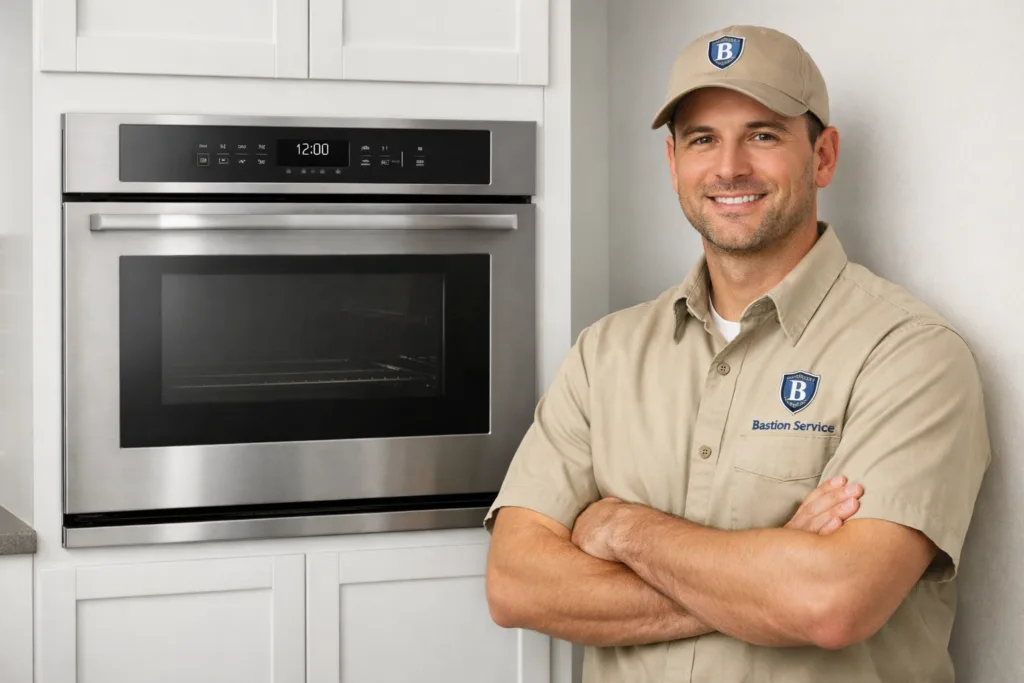
Wall ovens tend to show the same handful of symptoms before a specific failure becomes obvious. If your Frigidaire unit is slow to preheat, bakes unevenly, will not hold temperature, or has a control panel that behaves unpredictably, the symptom pattern usually points the repair in the right direction.
Common Frigidaire wall oven symptoms and what they can mean
Several different parts affect heating performance in a built-in oven, so one complaint can have more than one cause. That is why it helps to focus on what the oven is doing consistently, not just the last time it acted up.
Not heating at all
If the oven appears to start but never produces heat, the issue may involve a failed bake element, a broil element that is not assisting preheat properly, a temperature sensor fault, a control relay problem, or a power supply issue. On some models, the display and light still work even when the heating circuit does not.
If the oven is completely dead, a tripped breaker, wiring problem, terminal issue, or failed electronic control can all be part of the diagnosis. Because wall ovens use higher voltage, a unit that looks partially functional can still have a serious electrical fault.
Slow preheat or weak heating
When preheat starts taking much longer than usual, homeowners often assume the oven is simply aging. In many cases, there is a specific failed component behind the slowdown. A weakened bake element, a broil element that is no longer cycling correctly, or a sensor sending inaccurate temperature readings can all cause long preheat times.
This is also one of the most commonly ignored symptoms. The oven still “works,” but meals take longer, baking becomes inconsistent, and the failure often progresses until the unit no longer reaches set temperature at all.
Uneven baking and temperature swings
If one rack cooks faster than another, the center stays underdone, or food browns too quickly on top, the problem may be tied to temperature regulation, airflow, door sealing, or element performance. Frigidaire wall ovens with convection features can also develop fan-related issues that affect circulation and cooking consistency.
Temperature drift may show up as:
- cookies browning unevenly from one side to the other
- casseroles taking much longer than recipe times
- baked goods rising poorly
- food overcooking even though the set temperature looks correct
- noticeable heat loss after opening the door
Control panel or display problems
A blank screen, beeping without a clear reason, flashing error code, or buttons that respond only sometimes can indicate a failing user interface, damaged ribbon connection, main control board issue, or intermittent power problem. If the display resets during cooking, shuts off after preheat, or becomes unreliable after self-clean, those details are useful when narrowing the fault.
Door, latch, and self-clean issues
Wall oven doors affect more than convenience. A worn hinge, damaged gasket, or latch problem can let heat escape, which changes cooking performance and puts extra strain on the heating system. If the door will not unlock after self-clean, will not close flush, or triggers latch-related errors, the repair may involve more than a simple adjustment.
Why symptom timing matters
Two ovens can show the same complaint for different reasons. For example, an oven that fails only during preheat may point to a different problem than one that loses heat after 20 minutes of baking. An intermittent fault after self-clean can suggest heat stress on controls or wiring, while a problem that appears only at higher temperatures may involve an element or sensor drifting out of range.
Helpful details to note before service include:
- whether the problem happens in bake, broil, convection, or all modes
- if the oven ever reaches the set temperature
- whether the breaker has tripped
- any error code shown on the display
- whether the issue is constant or comes and goes
- if the problem started after a power interruption or self-clean cycle
When to stop using the oven
Some wall oven problems are frustrating but manageable for a short time. Others should be treated as a reason to stop use until the unit is checked. If the oven sparks, smells like burning insulation, overheats, trips the breaker repeatedly, shuts off mid-cycle, or shows visible element damage, continued operation can create a larger repair and may raise safety concerns.
The same is true if the door does not close securely or the latch remains stuck after a cycle. Heat escaping from the cavity can affect nearby cabinetry and make temperature performance worse.
Repair or replace?
For many Mid-City homeowners, repair is worth considering because wall ovens are built into the kitchen and replacement is not always simple. Measurements, trim fit, finish matching, and cabinet compatibility all matter. If the issue is isolated to a sensor, element, latch assembly, fan motor, or control-related component, repair may be the more sensible option.
Replacement becomes more likely when the oven has multiple active problems, significant wiring damage, repeated electronic failures, or age-related parts availability issues. The key is understanding the actual cause first. An oven with one failed component may have years of useful life left, while an oven with several overlapping faults may not justify further investment.
What homeowners in Mid-City can do before scheduling service
You do not need to troubleshoot deeply, but a few observations can make the visit more efficient. Try to note the set temperature, what the oven actually did, how long preheat took, and whether the same problem happened more than once. If baking results changed gradually over time, that is worth mentioning too.
It also helps to avoid guessing by replacing parts without testing. Wall oven symptoms overlap often enough that the wrong part is a common and expensive detour. A thoughtful diagnosis is usually the fastest path to deciding whether the repair makes sense for the appliance and your household.
Built-in oven problems deserve a focused repair approach
Unlike a freestanding range, a wall oven is part of the kitchen layout and daily cooking routine. When it starts failing, the inconvenience is immediate, especially for households that rely on it for regular meals, batch cooking, or holiday use. The best next step is to match the repair plan to the exact symptom pattern, the condition of the unit, and the likely component failure rather than treating every heating problem as the same issue.
If your Frigidaire wall oven in Mid-City is no longer heating correctly, preheating normally, or responding consistently at the controls, a symptom-based evaluation is the right place to start.