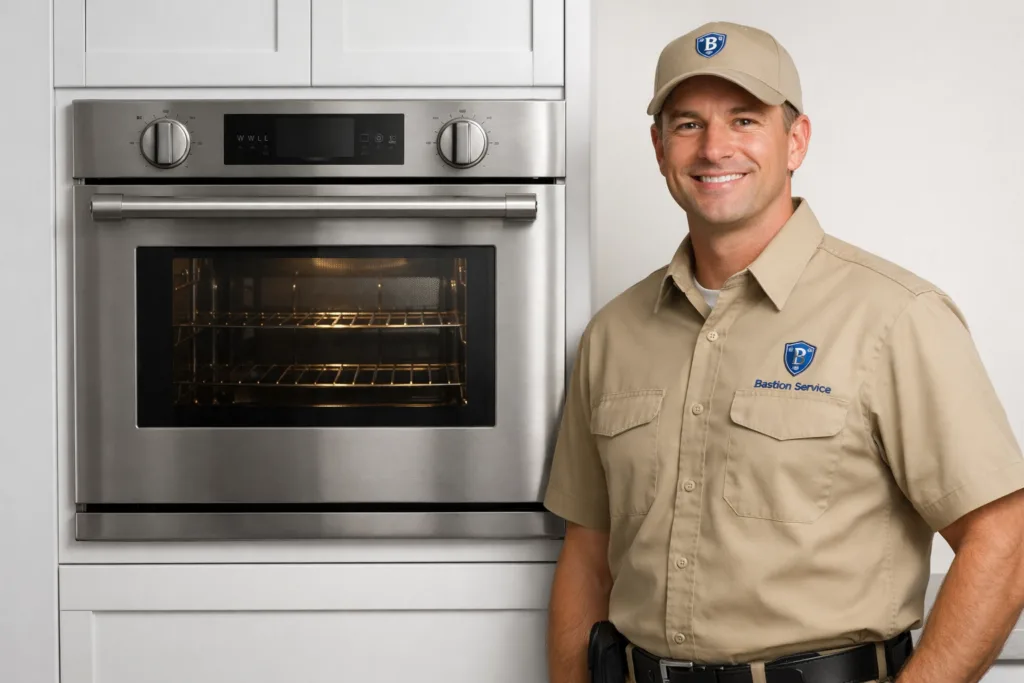
Cooking problems rarely begin with a completely dead oven. More often, a Wolf wall oven starts showing smaller warning signs first: longer preheat times, pans that bake unevenly, a cavity that feels hotter than the display suggests, or a cycle that stops before the food is done. In a built-in appliance, those symptoms usually point to a specific system that needs testing rather than a general “old oven” problem.
What different symptoms can mean
Wolf wall ovens rely on coordinated operation between the temperature sensor, electronic control, heating circuit, cooling system, door components, and incoming power. When one of those parts falls out of range, the oven may still turn on and appear functional while delivering poor cooking results. Looking at the exact symptom pattern is often the fastest way to narrow the issue.
Not heating at all
If the display responds and the oven starts a cycle but no heat develops, the problem may involve a failed bake circuit, a control relay issue, a sensor problem, or an electrical supply condition. Some homeowners notice that the light and clock work normally, which can make the failure seem confusing. That usually means part of the appliance still has power while the heating side does not operate correctly.
Slow preheat or weak heat
An oven that eventually warms up but takes much longer than usual can be dealing with a weak element, inaccurate sensor feedback, or a control problem that is not energizing heat properly. This type of issue often becomes noticeable with everyday meals first, then gets harder to ignore during longer baking or roasting cycles.
Uneven baking or temperature swings
If cookies brown more on one side, casseroles need extra time in the center, or familiar recipes suddenly stop turning out the same way, temperature regulation should be checked. Common causes include sensor drift, inconsistent heating output, airflow problems, or door-seal issues that allow heat loss. These problems may be subtle at first but usually become more obvious over repeated use.
Broil works but bake does not
When one cooking mode works and another does not, that is an important clue. It can point toward a failed component in a specific heating circuit instead of a total appliance failure. For homeowners, this is useful because it often means the repair path is more targeted than it initially appears.
Error codes, beeping, or mid-cycle shutdowns
Repeated faults on the display, unexpected beeping, or a unit that shuts off during preheat or cooking can indicate overheating, fan problems, control-board faults, latch issues, or communication errors between components. A shutdown that happens only after the oven has been running for a while may suggest a heat-related failure rather than a simple startup issue.
Why wall oven problems should not be ignored
A built-in oven can continue operating in a limited way even when something is clearly off. That can lead to wasted food, unreliable meal timing, and extra strain on parts that are still trying to compensate for the failure. Continued use is especially risky when the oven overheats, trips a breaker, locks unexpectedly, or stops regulating temperature.
In Mid-City homes where the wall oven is used regularly, early service can prevent a smaller fault from affecting controls, wiring, or other heat-sensitive components. It also helps avoid the frustration of planning around an appliance that may work one day and fail the next.
Door, latch, and seal issues matter more than many homeowners expect
Not every oven problem begins with the electronics. A door that does not close evenly, a weakened gasket, or a latch that sticks can interfere with heat retention and temperature stability. Homeowners may notice longer cook times, excess heat around the cabinet area, or inconsistent browning from rack to rack.
These problems are easy to dismiss because the oven still turns on, but they can affect both performance and safety. If the unit struggles during self-clean, will not unlock properly, or seems to leak heat during normal baking, the door system deserves attention.
Repair versus replacement for a Wolf wall oven
Most homeowners make this decision based on three things: the exact failed part, the overall condition of the appliance, and whether the problem appears isolated or part of a bigger pattern. A single issue involving a sensor, heating element, latch assembly, or fan motor often supports repair. Repeated control faults, multiple electrical failures, or signs of broader wear can make replacement worth considering.
Built-in appliances also bring cabinet-fit and installation concerns that countertop appliances do not. Because of that, replacement is not always the simplest answer. A thorough diagnosis gives a more realistic basis for choosing the next step.
Helpful details to have ready before service
A few observations can make troubleshooting much more efficient:
- Whether the issue affects bake, broil, convection, or all cooking modes
- If preheat is slow, incomplete, or inconsistent
- Any error code shown on the display
- Whether the problem happens every time or only after the oven has been running for a while
- If the door locks, unlocks, and closes normally
- Whether the issue started suddenly or worsened gradually
For Mid-City homeowners, those details can help separate a temperature-sensing issue from a heating, airflow, or control problem and make the appointment more productive.
When service is the right next step
If your Wolf wall oven is not heating properly, cooking unevenly, showing faults, shutting off mid-cycle, or struggling with door or lock operation, it is time to have it evaluated. Symptom-based testing is the best way to determine whether the problem is confined to one repairable part or signals a larger issue, giving you a clearer path back to a reliable kitchen.