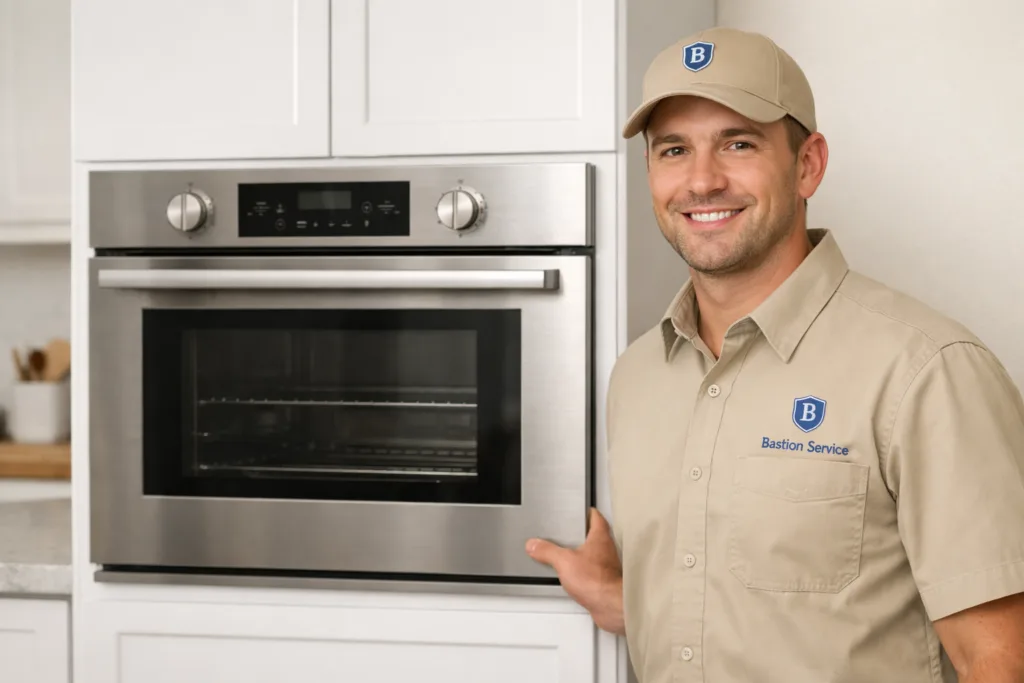
Cooking problems usually show up before a Bosch wall oven fails completely. You may notice longer preheat times, uneven browning, a cavity that never reaches the set temperature, or a control panel that responds inconsistently. Those details matter because the same basic complaint can come from different faults, including a heating circuit problem, sensor drift, airflow issues, door-switch interruptions, or an electronic control failure.
Start with what the oven is actually doing
One of the fastest ways to narrow down a wall oven issue is to look at the exact symptom pattern. An oven that powers on normally but does not heat at all is a different diagnostic path from one that heats sometimes, overshoots temperature, or finishes preheating far too slowly. In Mid-City homes, built-in ovens are often used heavily, so subtle performance changes can be easy to overlook until everyday cooking starts suffering.
Useful diagnosis usually includes checking incoming power, confirming control response, testing the heating system, and comparing sensor readings to actual oven behavior. That process helps separate a single failed component from a broader control or wiring problem.
Common Bosch wall oven symptoms and what they can mean
Not heating or barely heating
If the display appears normal but the oven cavity stays cool, the issue may involve a bake element, broil element, temperature sensor, thermal limiter, relay, or damaged wiring. Some models can also interrupt heating when a door-related safety circuit is not reading correctly.
Homeowners sometimes assume the control panel is the problem because the oven lights up and accepts settings. In reality, the heating circuit itself may be open, weak, or not being energized properly.
Uneven baking
Food that burns on one side, bakes too slowly in the center, or comes out inconsistently from rack to rack can point to sensor inaccuracy, convection fan problems, weak heat output, or poor temperature regulation. This is especially noticeable with baking, roasting, and meals that depend on stable oven temperature over time.
Because the oven still “works,” this symptom often gets delayed. But recurring uneven results usually mean a repairable fault is developing rather than normal appliance aging.
Slow preheat
Long preheat times can happen when one heating component is weak, the sensor is misreading temperature, or the control is not cycling the oven correctly. A Bosch wall oven may eventually reach the target setting, but take far longer than it should and then struggle to maintain that heat during cooking.
- Preheat starts normally but stalls before reaching temperature
- The oven says it is ready before it is actually hot enough
- Preheat time has gradually increased over weeks or months
Temperature swings
When an oven runs too hot, too cool, or drifts far from the selected setting, the cause may be a faulty sensor, calibration issue, relay problem, or electronic control fault. Small cycling changes are normal, but larger swings that affect cooking results are not.
If recipes that used to be reliable now finish early, late, or unpredictably, the oven may be misreading cavity temperature or failing to regulate heat correctly.
Error codes or control problems
A blank display, random beeping, locked functions, or repeated error messages often point to a control board issue, user interface failure, communication problem, or unstable electrical supply. These symptoms should be tested carefully rather than treated as a guessing game, especially on built-in appliances with multiple boards and safety inputs.
Door and self-clean related issues
If the door does not close properly, heat can escape and cooking performance can drop. Problems appearing after a self-clean cycle may involve a latch assembly, thermal fuse, wiring damage, or heat-stressed control components. A door problem can also create secondary heating complaints, so it is important not to treat it as cosmetic if performance has changed too.
Signs you should stop using the oven and schedule service
Some symptoms are more than just inconvenient. Continued use can worsen the problem or affect other components.
- Breaker trips during preheat or normal baking
- Repeated fault codes that return after resetting power
- Burning smell, electrical odor, or signs of overheating
- Sparking, arcing, or visible damage near the cavity or controls
- Door not latching, locking, or sealing correctly
- Major temperature errors that ruin meals regularly
If any of these are happening, it is best to leave the oven off until the cause is identified.
Why Bosch wall oven problems are easy to misread
Modern Bosch wall ovens rely on several systems working together: heating components, temperature sensing, door status inputs, cooling or convection fans, and electronic controls. A symptom that seems straightforward can have more than one possible cause. For example, “not heating” may sound like an element issue, but the actual fault could be a failed relay, sensor, safety cutoff, or wiring connection.
That is why symptom-based diagnosis matters more than replacing the most common part first. It helps avoid unnecessary cost and gets closer to a lasting repair.
Repair or replace: what usually makes sense
For many Mid-City homeowners, repair is still the better choice when the oven is otherwise in solid shape and the issue is limited to a sensor, fan motor, latch assembly, heating component, or an isolated electrical fault. Built-in wall ovens are a major kitchen fixture, so replacement is often a bigger project than it would be for a freestanding appliance.
Replacement becomes more reasonable when there are repeated electronic failures, multiple worn components at once, severe door or cavity damage, or repair costs that no longer make sense for the condition of the appliance. The most helpful first step is a clear diagnosis and a practical repair plan based on the exact symptom pattern.
What homeowners in Mid-City can do before service
There are a few simple observations that can help make service more efficient:
- Note whether the oven powers on normally
- Write down any fault code exactly as shown
- Pay attention to whether the problem happens during bake, broil, convection, or preheat
- Notice if the issue started suddenly or worsened gradually
- Check whether the door closes fully and evenly
These details can help separate a temperature problem from a control, latch, or power-related issue.
Focused help for Bosch wall oven repair in Mid-City
When a wall oven starts behaving unpredictably, the goal is to identify the failed part or circuit without turning a repair into a trial-and-error parts chase. Bastion Service helps Mid-City homeowners evaluate Bosch wall oven problems based on real cooking symptoms, appliance condition, and the likely repair path. That makes it easier to decide whether the oven should stay out of use, what the failure suggests, and whether repair is the right next step.