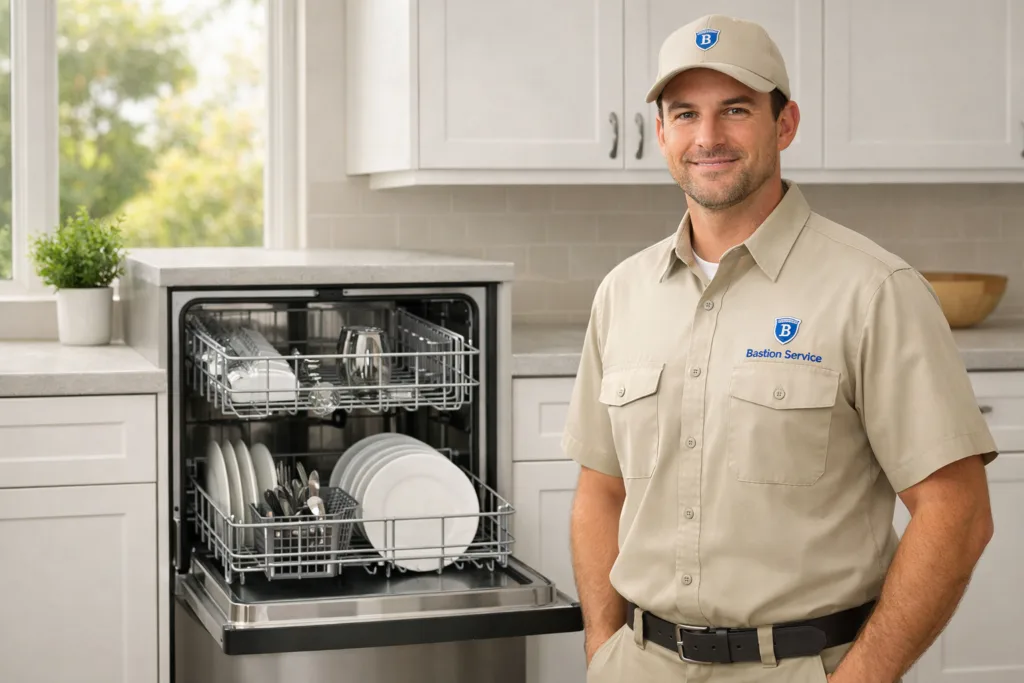
When a dishwasher stops cleaning properly, leaves water sitting in the bottom, or starts leaking onto the kitchen floor, the disruption is immediate. For homeowners scheduling dishwasher repair in Los Angeles, the most important first step is understanding whether the problem is a drain issue, a wash-system failure, a leak source, or an electrical fault, because the right diagnosis determines whether the repair is straightforward, urgent, or no longer worth delaying.
Common dishwasher problems in Los Angeles homes
Most dishwasher calls fall into a few clear symptom groups. The machine may still run but leave dishes dirty, it may fill and never wash, it may stop draining, or it may not power on at all. In some homes, the problem appears gradually with longer cycle times, cloudy residue, or occasional standing water. In others, it shows up all at once as a leak, burning smell, repeated beeping, or a unit that shuts off mid-cycle.
A clear symptom-based approach helps narrow down whether the likely cause is the drain pump, circulation motor, inlet valve, float switch, door latch, control board, spray arm blockage, or a worn seal. That matters because some issues mainly affect performance, while others can lead to water damage or further electrical failure if ignored.
What different symptoms can indicate
Dishwasher not draining
If water remains in the tub after a cycle, the cause may be a clogged filter, blocked drain path, jammed drain pump, kinked hose, or installation issue at the sink connection. A dishwasher that hums without draining can indicate a pump obstruction or pump failure. Continued use often leads to odors, poor cleaning, and the risk of backing dirty water into the tub.
Dishwasher not cleaning dishes well
When dishes come out gritty, greasy, or still coated with food, the issue may involve spray arms, wash motor performance, water inlet problems, detergent dispensing, or internal buildup restricting water flow. If upper racks clean poorly while lower racks do better, that can point to circulation weakness or spray arm blockage rather than a simple loading problem.
Dishwasher leaking water
Leaks can come from the door gasket, lower door seal, cracked hoses, loose clamps, a damaged pump assembly, or overfilling caused by a faulty float or inlet valve. Even a small leak should be taken seriously. Water under or around the dishwasher can damage flooring, cabinetry, and nearby materials long before the source becomes obvious.
Dishwasher not starting
A unit that will not respond at all may have a power supply issue, failed door latch, blown internal component, control fault, or user interface problem. If lights come on but the cycle will not begin, the machine may not be sensing that the door is securely closed, or it may be detecting a fault that prevents operation.
Dishwasher stops mid-cycle
Mid-cycle shutdowns often relate to heating problems, control issues, motor overheating, drainage faults, or intermittent electrical interruptions. If the dishwasher repeatedly pauses at the same point, that pattern can be useful in identifying whether the fault is tied to draining, filling, or heating.
Unusual noises
Grinding, rattling, buzzing, or loud humming can point to debris in the pump, worn motor components, loose spray arms, or objects contacting moving parts. Some sounds are minor and easily corrected. Others indicate wear that tends to worsen with continued use.
When to stop using the dishwasher
Some dishwasher issues are inconvenient but not immediately dangerous. Others should be addressed before the next cycle. It is smart to stop using the unit if you notice leaking, a burning smell, tripped breakers, repeated error codes, smoke, or water that does not drain out. Running the appliance again in these cases can increase floor damage, strain electrical components, or turn a limited repair into a much more expensive one.
If the dishwasher is merely cleaning poorly but not leaking or showing electrical symptoms, the risk is lower, but continued operation can still worsen motor, pump, or heating-related wear. Households often wait too long because the machine is still technically running, even though the underlying problem is already progressing.
Repair considerations for Los Angeles households
In Los Angeles homes, dishwasher problems often become more disruptive because the appliance is part of a busy daily routine. A practical service visit should focus on identifying the failed part, checking for secondary damage, and confirming whether the machine has one isolated fault or several age-related issues at once. That distinction matters. Replacing a drain pump on an otherwise solid dishwasher is very different from dealing with a leaking older unit that also has wash performance problems and control issues.
Good repair guidance should also account for accessibility under the counter, the condition of the water supply and drain connections, signs of recurring leaks, and whether prior installation problems may be contributing to the failure. A proper diagnosis is not just about replacing the first part that seems suspicious. It is about determining what actually caused the symptom and whether the repair is likely to hold.
Repair or replace?
Dishwasher repair is often the sensible option when the issue is limited to a pump, latch, valve, seal, hose, or other single-component failure. Repair also makes sense when the unit has been reliable overall and the cabinet, racks, and major systems are still in good condition.
Replacement becomes more relevant when the dishwasher has multiple failing systems, a history of repeat service, significant rust or rack deterioration, recurring leaks, or a control-related problem on an older machine with other visible wear. If the repair cost starts approaching the value of keeping the appliance only a short time longer, replacement may be the more practical household decision.
What to expect from dishwasher repair service
A useful dishwasher service appointment should begin with symptom confirmation and direct testing rather than guesswork. That usually includes checking drain and wash functions, inspecting seals and connections, verifying fill behavior, and looking for signs of electrical or control failure. Once the fault is identified, the next step is understanding whether the appliance can be repaired reliably and whether using it in the meantime may cause additional damage.
For homeowners in Los Angeles, the goal is not simply getting the machine to run again for one cycle. It is restoring dependable daily use with a repair path that makes sense for the age and condition of the dishwasher. Clear diagnosis, realistic expectations, and timely service are what prevent a minor dishwasher problem from turning into cabinet damage, repeated breakdowns, or a full kitchen disruption.