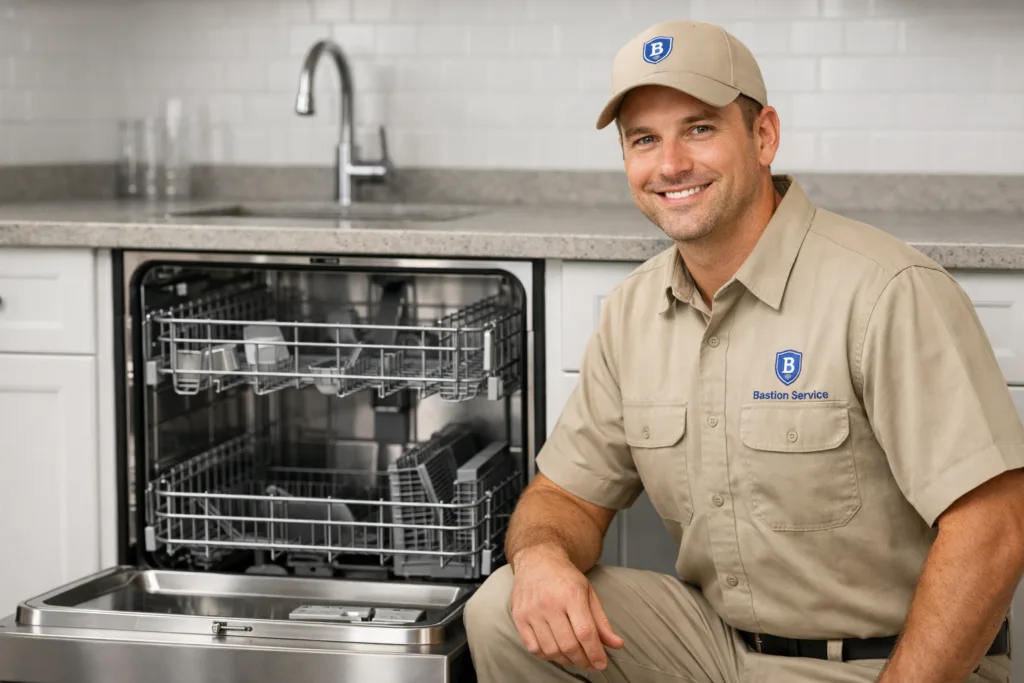
Dishwasher problems rarely stay minor for long. A small drainage issue can turn into odors and standing water, a weak wash system can leave residue on every load, and a door or seal problem can lead to moisture where it does not belong. With GE dishwashers, the most useful starting point is to match the symptom to the part of the machine that is likely failing, then repair only what the appliance actually needs.
Common GE Dishwasher Problems in Los Angeles Homes
Most household calls fall into a handful of patterns. The dishwasher may not start, may stop partway through the cycle, may leave dishes dirty, may not drain fully, or may leak at the front or underneath the unit. GE models can also develop issues with touch controls, door latches, water inlet valves, circulation pumps, drain pumps, heating components, and sensor-related cycle problems.
In daily use, these failures often show up as subtle changes before a complete breakdown. You might notice detergent left in the dispenser, a humming sound without normal spray action, unusually long cycles, cloudy glasses, damp dishes at the end, or water still sitting in the sump after the machine finishes. Those details help narrow down whether the problem is electrical, mechanical, or related to water movement inside the dishwasher.
Dishwasher Not Starting
If the dishwasher does nothing when the cycle is selected, the issue may involve the latch, user interface, incoming power, or the main control. In some cases, the panel lights up but the machine still will not begin because the door is not registering as securely closed. A unit that starts only occasionally can point to an intermittent latch or control problem rather than a full power failure.
Stops Mid-Cycle
A GE dishwasher that begins washing and then stops can be reacting to a drain fault, a sensor problem, overheating, or a control interruption. Homeowners often describe this as a cycle that seems stuck, resets itself, or never reaches the drying stage. If the stop happens at roughly the same point each time, that repeat pattern is often helpful in tracing the failed component.
Dishes Still Dirty After a Full Cycle
When the machine runs but cleaning results are poor, the cause is not always detergent-related. Restricted spray arms, a clogged filter area, low water fill, circulation pump trouble, or weak wash pressure can all leave food residue behind. If the dishwasher sounds quieter than usual during the wash portion, that can suggest the water is not moving through the system with enough force.
Standing Water After the Cycle
Water left in the bottom of the tub usually points to a drainage restriction or a failing drain component. The problem may involve the filter area, drain hose, air gap if present, pump, or a blockage preventing the water from leaving properly. If the machine hums but does not clear the tub, it is best not to keep restarting it, since repeated attempts can strain the pump.
Leaks on the Floor or Around the Cabinet
Leaks should be addressed promptly because even slow seepage can damage nearby flooring, trim, or cabinetry. Water may come from the door gasket, lower door area, inlet connection, sump, pump section, or from oversudsing inside the tub. Where the water appears matters. Moisture at the front corners may suggest a door-related issue, while water beneath the center or side of the unit can point to internal components or hose connections.
Dishes Not Drying Properly
If dishes come out wet, cool, or with a heavy film still on them, the dishwasher may not be heating as it should. Heating problems can affect both drying and wash performance because detergent works better at proper temperatures. A machine that completes the cycle but leaves the tub cool may have an issue with the heating circuit, control response, or related components.
How Specific Symptoms Help Narrow the Repair
Two dishwashers can show the same outward symptom and still need very different repairs. For example, “not cleaning” may be caused by poor water circulation, low fill, spray arm blockage, or heating failure. “Not draining” might come from a clogged path, a seized pump, or a control that never sends the drain command at the right time.
That is why symptom timing matters. It helps to notice:
- Whether the tub fills with water at the beginning
- Whether spray action sounds strong or unusually faint
- Whether the unit drains at all or leaves a full pool behind
- Whether the problem happens on every cycle or only certain selections
- Whether the control panel flashes, beeps, or becomes unresponsive
- Whether the inside of the tub feels hot or cool at the end
These details can separate a wash-system issue from a drain problem, a heating fault, or an electronic control failure.
Signs the Dishwasher Should Not Keep Running
Some problems are inconvenient but manageable for a short time. Others should stop use immediately. Continued operation can spread water damage, overwork the pump, or worsen an electrical fault.
Do not keep running the dishwasher if you notice:
- Active leaking onto the kitchen floor
- Standing water that does not drain out
- A burning smell or signs of overheating
- The breaker tripping during use
- Loud grinding, harsh buzzing, or repeated humming without wash action
- The door failing to latch securely
When these symptoms appear, it is safer to leave the unit off until the cause is identified.
What Often Causes Poor GE Dishwasher Performance
GE dishwashers rely on several systems working in sequence: filling, washing, draining, heating, and drying. When one stage is weak, the entire cycle can suffer. A dishwasher may technically complete the program while still doing a poor job of cleaning or drying.
Common performance-related causes include:
- Restricted spray arms that cannot distribute water evenly
- Filter buildup reducing water movement
- Circulation pump wear affecting wash pressure
- Drain restrictions that leave dirty water behind
- Heating faults that affect both cleaning and drying results
- Control or sensor problems that interrupt cycle progression
For homeowners, the important point is that repeated poor results usually mean more than a one-time loading issue. If multiple loads come out with the same residue, cloudiness, or moisture, the dishwasher is likely no longer operating as intended.
Repair or Replace?
Many GE dishwasher issues are still worth repairing, especially when the problem is limited to a pump, latch, valve, hose, drain component, or a specific electrical part. If the rest of the machine is in good shape and there are no signs of long-term leaking or broad system wear, a targeted repair can restore normal household use.
Replacement becomes more likely when several problems are happening at once, when there is evidence of ongoing water damage, or when a major control failure is combined with age-related wear in other parts of the unit. The better decision usually comes from the condition of the appliance as a whole, not just the symptom that happened to get your attention first.
Helpful Notes to Have Ready Before Service
If possible, make a quick note of what the dishwasher did on the last one or two cycles. Even basic observations can be useful. Examples include whether it filled, whether the soap dispenser opened, whether water remained inside, whether the cycle ended early, or whether the dishes were hot at the end.
You do not need to diagnose the machine yourself. The goal is simply to describe what changed from normal. In many Los Angeles homes, that information helps move the repair faster because the symptom pattern often points to the section of the dishwasher that needs the closest inspection.
GE Dishwasher Service for Everyday Household Problems
A dishwasher does not need to fail completely to deserve attention. If it is leaking, washing poorly, draining slowly, shutting down mid-cycle, or leaving dishes wet every day, the appliance is already affecting the way the kitchen functions. GE Dishwasher Repair in Los Angeles is most effective when the symptom is addressed early, before residue buildup, pump strain, or water exposure creates a larger problem than the original repair.