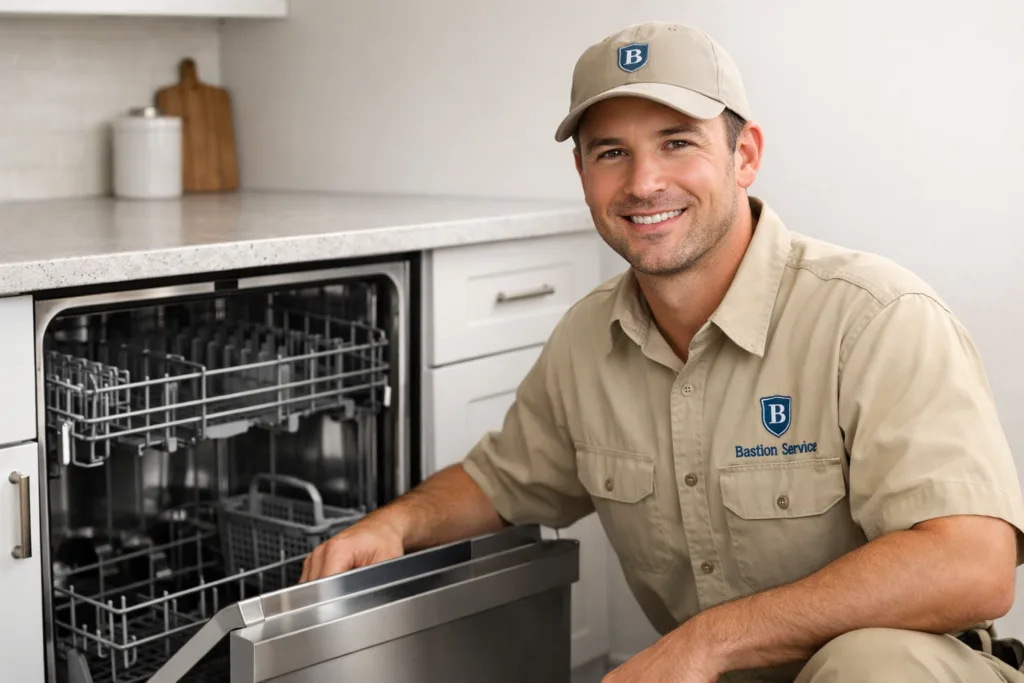
Dishwasher problems rarely stay small for long. If your Kenmore unit is leaving grit on dishes, stopping before the cycle finishes, or collecting water at the bottom of the tub, the smartest next step is to match the symptom to the system that is actually failing. In Los Angeles homes, that often means looking beyond the obvious complaint to check the wash pump, drain path, water fill, heating function, door latch, and controls.
Common Kenmore dishwasher symptoms and what they often point to
Many failures show up in similar ways, which is why symptom-based troubleshooting matters. A machine that seems “dead” may have a latch or power issue, while one that runs for an hour and still leaves dishes dirty may be filling poorly or washing with weak circulation. Looking at when the problem happens—at startup, during wash, during drain, or near the end of the cycle—usually helps narrow the repair path.
Standing water after the cycle
If water is still sitting in the bottom of the tub after the cycle ends, the problem is often somewhere in the drain system. Possible causes include a clogged filter area, a blocked drain hose, pump obstruction, disposal connection issue, or a failing drain pump. In some cases, the dishwasher drains slowly rather than failing completely, which can make the issue easy to ignore until odors or repeat wash problems develop.
Signs that the drain system needs attention include:
- Water remaining after every cycle
- Dirty water flowing back into the tub
- Gurgling or humming during drain
- Bad smells that return quickly after cleaning
Poor wash results or residue on dishes
When a Kenmore dishwasher runs but dishes still come out dirty, cloudy, or greasy, the issue may be poor spray pressure, reduced water fill, blocked spray arms, a weak circulation motor, or heating trouble that keeps detergent from working correctly. This symptom is especially frustrating because the machine appears to be operating normally from the outside.
Watch for patterns such as top rack items staying dirty, detergent not dissolving fully, or heavier residue after longer cycles. Those details can help separate a wash-system problem from a fill or heating problem.
Leaks under the unit or around the door
A leaking dishwasher should be addressed quickly. Water can escape from the door gasket, lower spray area, sump seal, drain connection, inlet valve, or internal hose connections. Some leaks only appear during a certain part of the cycle, which is why homeowners may notice water on the floor without knowing exactly when it happened.
Even a minor leak can damage cabinet bases, flooring, and the area beneath the dishwasher if the appliance continues to run regularly.
Will not start
If the control panel is unresponsive or the machine will not begin a cycle, the cause may involve the door latch, control panel, electronic control board, wiring, or incoming power. A dishwasher that lights up but does nothing after pressing start can point to a different problem than one that has no response at all.
Intermittent startup failures are also worth attention. They may begin as occasional delays and become a complete no-start condition later.
Stops mid-cycle
When the dishwasher begins normally and then shuts down, the fault may be tied to draining, filling, overheating, control interruption, or a failing component that loses function once the machine has been running for a while. Mid-cycle failures are often misread as simple resets, but repeated interruptions usually mean the unit is not moving through one stage of the cycle correctly.
Low rinse temperature or weak drying
If dishes come out wet, cool, or with detergent residue, the heating side of the cycle may not be working as it should. A low rinse temperature can affect sanitation performance, drying quality, and how well detergent dissolves. In practice, this can feel like several different issues at once: cloudy glasses, damp dishes, and a machine that seems to wash without truly cleaning.
Buzzing, grinding, or unusual pump noise
New sounds during wash or drain often point to pump-related trouble, debris in the sump area, spray arm interference, or motor wear. A harsh grinding sound should not be ignored, since continued use can turn a small obstruction into a damaged pump assembly. A loud hum with little action may mean the motor is trying to run without moving water effectively.
When to stop using the dishwasher
Some symptoms are more than routine inconvenience. It is usually best to stop normal use if the dishwasher is leaking, leaving dirty water in the tub, tripping power, producing a burning smell, or making sudden mechanical noise. Continuing to run it can increase the chance of floor damage, pump failure, or electrical component stress.
If the issue is limited to inconsistent cleaning or weaker drying, immediate shutdown may not be necessary, but the problem should still be checked before it becomes more expensive. What starts as reduced wash performance can turn into complete wash motor failure or repeated cycle interruption.
Why the same symptom can have different causes
Dishwashers are good at hiding the real source of a problem. Poor cleaning, for example, may come from weak circulation, but it can also come from low fill, heating failure, or blocked spray arms. A cycle that stops early may be caused by drainage trouble rather than the control board. That is why replacing parts based only on the visible symptom often leads to wasted time and repeat breakdowns.
For homeowners scheduling Kenmore dishwasher repair in Los Angeles, the most useful service call is one that confirms the failed system and checks whether there are related issues nearby, especially with leaks, pump problems, and intermittent cycle failures.
Repair or replace?
Not every dishwasher problem means the appliance is at the end of its life. In many cases, repair makes sense when the issue is limited to one major component or a contained system failure and the rest of the machine is in solid condition. That can be true even when the symptom feels severe, such as a no-drain or no-start complaint.
Replacement becomes more likely when multiple major systems are failing together, the tub or structure is deteriorating, or the dishwasher has had repeated recent repairs with declining performance. The decision usually depends on:
- Age of the dishwasher
- Overall condition of racks, tub, seals, and controls
- Whether the current problem is isolated or part of a pattern
- Cost of the failed part relative to the condition of the machine
A good diagnosis helps separate a manageable repair from a unit that is likely to keep having problems.
What homeowners in Los Angeles should note before service
A few details can make the symptom easier to identify. It helps to note whether the problem happens on every cycle or only sometimes, whether the dishwasher fills with water, whether it drains at all, and whether the issue changed gradually or appeared suddenly. If there is leaking, note whether it appears early in the cycle, during heavy wash action, or near the end.
Useful observations include:
- Error lights or flashing indicators
- Whether the unit hums, clicks, or stays silent
- If dishes are dirty everywhere or only on one rack
- Whether detergent remains in the dispenser
- If the tub feels hot or stays cool at the end of the cycle
What a proper repair visit should accomplish
A worthwhile service visit should do more than get the dishwasher to run once. It should identify the failing system, check for signs of related wear, and explain whether the repair is likely to solve the problem without immediate follow-up work. That matters most with pump issues, leaks, poor cleaning complaints, and low rinse temperature concerns, where one symptom can overlap with another.
For households dealing with unreliable cleaning or repeated cycle trouble, Bastion Service helps evaluate the exact fault pattern so you can decide whether repair is the sensible next step for your Kenmore dishwasher in Los Angeles.