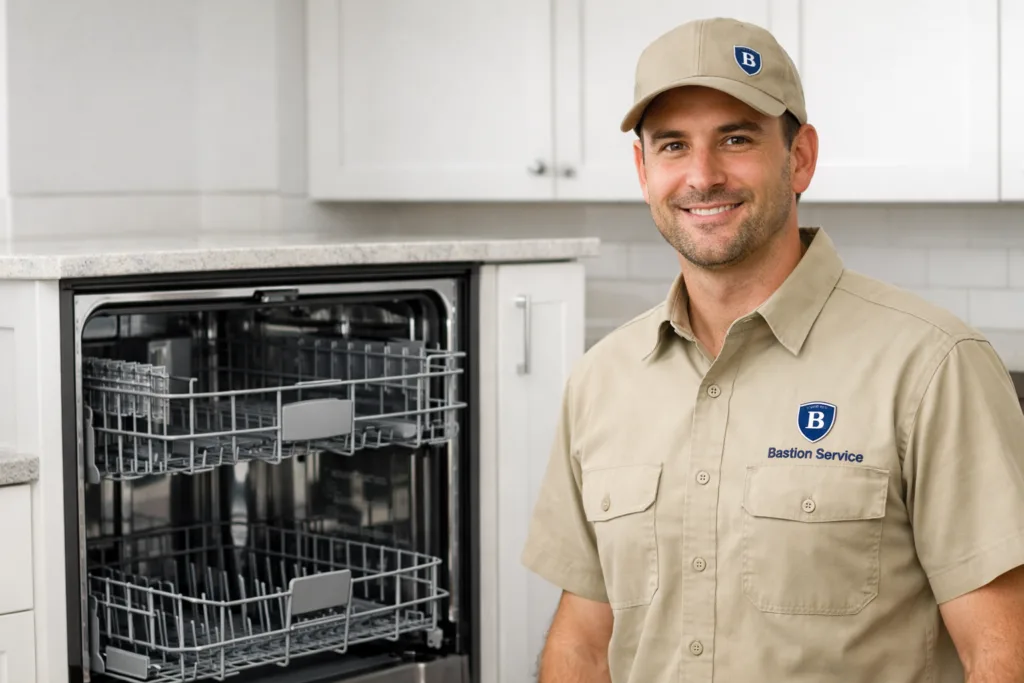
Electrolux dishwashers are designed to run quietly and consistently, so changes in draining, cleaning, or cycle behavior usually point to a specific fault rather than a random one-off issue. In a busy household, even a minor dishwasher problem can quickly turn into standing water, repeat washing, or cabinet and floor moisture if it is ignored too long.
Common Electrolux dishwasher symptoms and what they often mean
Many dishwasher complaints sound simple at first, but the source is not always obvious without testing. A single symptom can be tied to more than one part, which is why symptom-based troubleshooting matters.
Water left in the bottom of the tub
If the dishwasher finishes a cycle and dirty water remains inside, the issue may involve the filter system, drain hose, sink connection, drain pump, or a blockage in the drain path. In some cases, a control or sensor issue can also interrupt proper draining. Standing water should not be treated as a normal slowdown, especially if it keeps returning after the filter has been cleaned.
Dishes come out dirty, gritty, or cloudy
When wash results decline, the problem may be tied to poor water circulation, restricted spray arms, low fill, detergent dispenser trouble, heating problems, or internal buildup. Homeowners often notice this first on glasses, bowls, and items placed on the top rack. If the same loads come out poorly cleaned again and again, the machine is usually telling you that wash pressure or water delivery is not working as intended.
Leaks under the dishwasher or around the door
Leaks can come from a worn door gasket, loose fittings, overfilling, a cracked sump or pump housing, or a problem inside the wash system that sends water where it should not go. A small leak can still cause major trouble over time, especially with wood flooring, toe-kick areas, and cabinets around the appliance.
The dishwasher will not start
If the display powers on but the cycle will not begin, the cause may be a door latch problem, user interface issue, wiring fault, or main control failure. In other cases, the dishwasher may refuse to start because it is stuck trying to drain, sensing an incomplete cycle, or failing a safety check before operation.
Grinding, buzzing, or sudden loud noise
Noise often points to something physical: debris in the pump area, a failing circulation motor, spray arm interference, or worn moving parts. A new grinding sound should not be ignored. Continued use can turn a limited repair into a larger one if internal parts begin wearing against each other.
Error codes or cycles that stop midway
Repeated interruptions usually indicate a problem with draining, filling, heating, circulation, or electronic communication between components. An error code can narrow the direction of the diagnosis, but it does not automatically confirm which part has failed. Replacing parts based only on the code often leads to wasted time and unnecessary expense.
Problems that homeowners can check before scheduling repair
There are a few simple things worth checking first, especially when the machine still powers on and the issue seems limited to performance.
- Clean the filter if food debris has collected heavily.
- Inspect spray arms for blockage from seeds, labels, or mineral buildup.
- Make sure dishes are not blocking spray arm movement.
- Confirm the detergent is fresh and being used in the correct amount.
- Check for visible kinks in the drain hose area if accessible.
If these basic steps do not change the result, the problem is likely beyond routine care. Repeatedly rerunning the dishwasher rarely fixes the cause and can place extra strain on the pump, motor, and heater.
When the issue is more than routine maintenance
Some signs usually mean the dishwasher needs service rather than another cleaning cycle or reset attempt. These include water that will not drain out, leaking during operation, a door that will not latch correctly, repeated fault codes, a dead control panel, or a machine that hums without washing properly.
It is also a good idea to stop using the unit if you notice a burning smell, frequent breaker trips, or water appearing beneath the appliance after every cycle. Those conditions can lead to larger electrical or moisture-related damage if the dishwasher keeps running.
Why the same symptom can have different causes
One reason dishwasher repairs are often misdiagnosed is that similar symptoms can come from very different failures. Poor cleaning may be caused by low water fill in one machine and a weak circulation pump in another. A no-start complaint might be a latch issue, but it could also be a control problem or a drain condition preventing the cycle from advancing.
That is why part-swapping is rarely the best first move. The useful question is not just what the dishwasher is doing, but what it is failing to do during the cycle: fill, circulate, heat, drain, or respond to the door and controls.
Electrolux dishwasher issues that deserve prompt attention
In Los Angeles homes, dishwashers often see frequent use, which makes small faults show up fast. The most urgent problems are the ones that can affect the surrounding kitchen or damage the appliance further if left alone.
- Leaks that reach the floor or cabinet base
- Drain failures that leave dirty water in the tub
- Electrical symptoms such as flashing panels, non-response, or tripped breakers
- Cycles that stop before rinsing or drying completes
- Persistent noise from the pump or motor area
Addressing these symptoms early often helps limit secondary wear on other components and avoids the frustration of unreliable daily use.
Repair or replace: how to make the call
Repair is often worthwhile when the fault is isolated to a component such as a pump, inlet valve, latch, seal, drain part, or electronic control issue and the rest of the dishwasher is in solid condition. For many households, restoring the machine makes more sense than replacing it when the cabinet, racks, and major systems are otherwise in good shape.
Replacement becomes a more serious consideration when the dishwasher has multiple active problems, extensive leak-related damage, recurring control failures, or repair costs that begin to approach the value of a new unit. Age matters, but condition matters more. A focused diagnosis helps determine whether the problem is contained or part of a broader decline.
What a productive service visit should help clarify
Most homeowners want straightforward answers: what failed, whether the dishwasher is safe to use, what repair path makes sense, and whether the cost is justified. For an Electrolux dishwasher, that usually means identifying whether the fault is mechanical, electrical, drainage-related, or tied to wash performance.
If your dishwasher is leaking, not draining, not starting, washing poorly, or stopping mid-cycle, the next useful step is a clear diagnosis that matches the symptom to the actual cause instead of guessing based on appearance alone.