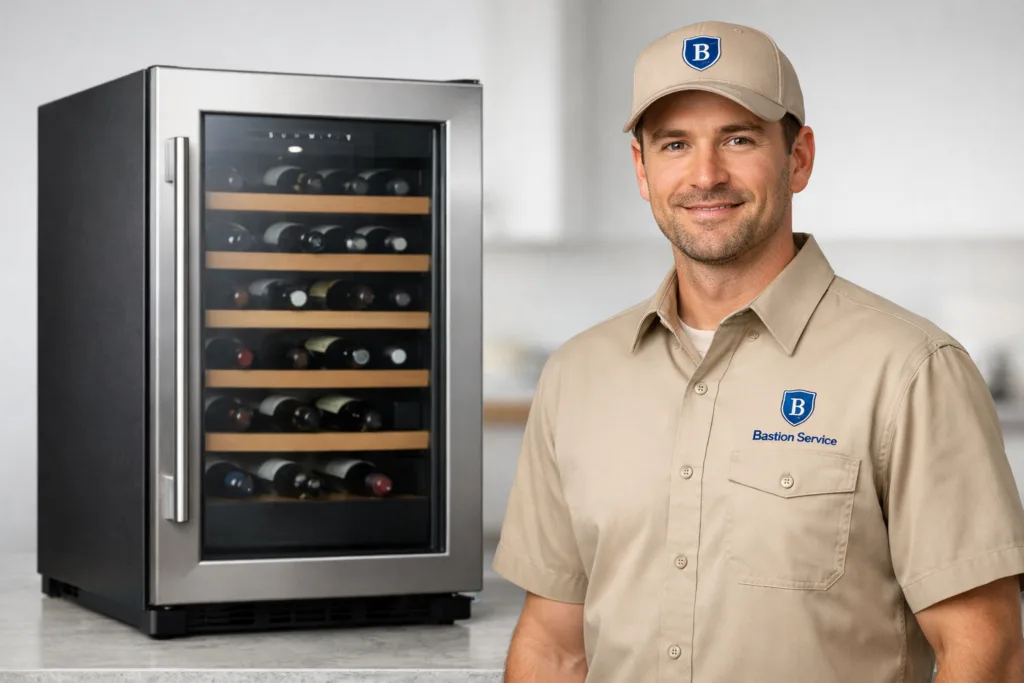
A Summit wine cooler that runs warm, collects moisture, or suddenly gets louder can put stored bottles at risk long before the appliance fully stops working. The most useful next step is to match the symptom to the likely failure point, because the same temperature complaint can come from a door seal leak, a fan problem, a bad sensor, a control issue, or a more serious refrigeration fault.
Start with the symptom, not the guess
Wine coolers are built to hold a steady environment, so even small changes matter. If a unit in Manhattan Beach starts drifting above the set temperature, freezing certain shelves, or cycling in a way that seems unusual, the pattern usually tells you more than the display alone. A cooler that is warm all the time points to a different repair path than one that cools for a while and then loses temperature later in the day.
That is why symptom-based diagnosis matters. Looking at airflow, compressor behavior, control response, gasket condition, and moisture patterns usually reveals whether the problem is minor and repairable or whether the unit is developing a larger system issue.
Common Summit wine cooler problems and what they often mean
Not cooling enough
If bottles feel warmer than expected or the interior never reaches the selected setting, several faults are possible. A failed evaporator fan can prevent cold air from moving through the cabinet. A sensor or thermostat problem can cause the unit to misread temperature. A weak compressor start component may keep the cooling system from running properly. In some cases, poor heat removal, restricted airflow, or a sealed-system problem is responsible.
When only part of the cooler seems warm, the issue is often more localized. Uneven temperatures from top to bottom or side to side can point to airflow problems rather than a total cooling failure.
Too cold or freezing in spots
A wine cooler that overcools can be just as concerning as one that runs warm. Freezing near the back wall, frost buildup in one area, or bottles getting much colder than the setting suggests a control or sensing problem in many cases. It can also happen when internal airflow is not moving correctly and one section gets too much direct cold air.
This symptom should not be ignored. Overcooling can affect wine storage conditions and may be the first sign that the unit is no longer regulating temperature accurately.
Water inside the cabinet or on the floor
Moisture complaints usually come from one of a few places: a blocked drain path, excess warm air entering through a worn gasket, leveling issues, or frost melt that is not draining as intended. Condensation around the door opening may indicate that the seal is no longer tight. Water under the unit can also mean the cooler is cycling abnormally and creating more moisture than it should.
Even when the cooling still seems acceptable, recurring water buildup is worth addressing early to avoid flooring damage, cabinet staining, or corrosion around the appliance.
New buzzing, rattling, or fan noise
Most wine coolers produce some normal operating sound, but a noticeable change is different. A rattle may come from vibration or a loose mounting point. A scraping or repeating tick can suggest fan blade interference. Louder humming can mean the compressor is under strain or running longer than normal. Clicking without proper cooling may point to a start problem.
Noise changes are often early warnings. When they show up together with temperature swings or long run times, the repair should be scheduled sooner rather than later.
Running constantly or turning on and off too often
A Summit wine cooler that rarely shuts off may be losing cooling efficiency, pulling in warm air through the door, or struggling with airflow or control accuracy. A unit that short cycles may have a sensor problem, electrical fault, or start component issue. Either pattern creates unnecessary wear and usually gets worse with time.
Signs the issue is getting more serious
Some symptoms point to a problem that should not be monitored for long. These include a cabinet that feels warm while the display still looks normal, repeated resets that only help briefly, heavy condensation, obvious frost in the wrong area, or a compressor that seems to be running without restoring temperature.
- The displayed temperature does not match actual interior conditions.
- The cooler becomes much louder than usual.
- Water returns after being cleaned up.
- The door does not close or seal as firmly as before.
- One zone works while another does not on a dual-zone model.
- The unit starts and stops repeatedly without stabilizing.
These symptoms usually mean the problem is functional, not cosmetic. Continued operation can increase wear on fans, controls, and compressor components.
What to check before scheduling repair
There are a few basic homeowner checks that can help rule out simple causes. Make sure the settings were not changed accidentally, confirm the door is fully closing, and look for anything blocking interior airflow. If the unit is built in, make sure surrounding vents are not obstructed. Also check for visible gasket gaps, standing water, or frost patterns that seem abnormal.
If the symptom returns after those basic checks, the issue is likely beyond a settings correction. Repeatedly resetting the unit or changing the temperature control usually does not solve failing sensors, fan motors, control boards, or refrigeration-related faults.
Repair or replace?
Many Summit wine cooler problems are worth repairing, especially when the issue is limited to a fan, sensor, control, drain, gasket, or startup component. If the cabinet is in good shape and the failure is isolated, repair is often the more sensible household decision.
Replacement becomes more likely when the unit has major sealed-system trouble, repeated cooling failures, extensive internal corrosion, or a repair cost that approaches the value of the appliance. Built-in models also require consideration of fit and finish, so the decision is not only about mechanical condition.
What a residential service visit should evaluate
For homeowners in Manhattan Beach, a worthwhile diagnosis should go beyond confirming that the cooler is warm. It should identify whether the problem is tied to airflow, controls, drainage, door sealing, electrical startup, or the refrigeration system itself. That includes checking actual temperature behavior inside the cabinet, fan operation, compressor response, sensor readings, and visible signs of frost or moisture.
Once the fault is narrowed down, it becomes easier to decide whether repair is practical, whether parts replacement is likely to solve the problem, or whether replacement makes more sense. That kind of repair guidance helps protect both the appliance and the bottles stored inside it.