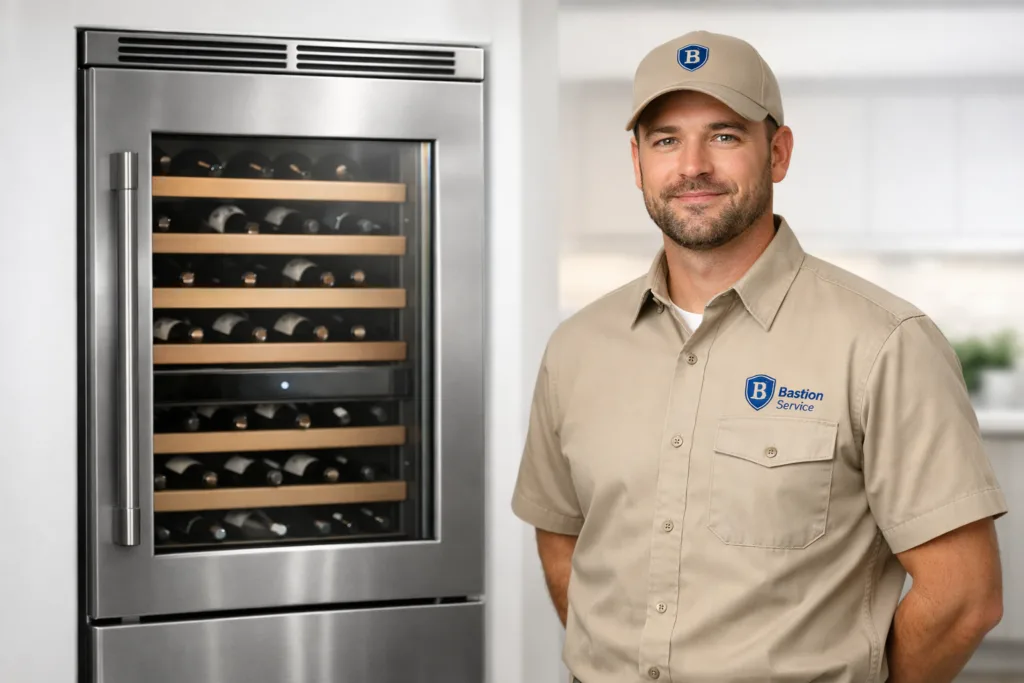
A Viking wine cooler that runs warm, cycles constantly, or starts collecting moisture can put an entire collection at risk quickly. In many Manhattan Beach homes, the most useful next step is figuring out which component path fits the symptom, because similar problems can come from airflow restrictions, sensor drift, door seal failure, fan trouble, electronic control issues, or a more serious sealed-system problem.
What different wine cooler symptoms usually mean
Temperature inconsistency is one of the clearest signs that service is needed. If bottles feel warmer than expected, or the cabinet temperature does not match the display, the issue may involve a thermistor, control response problem, evaporator fan failure, dirty condenser components, or weakening cooling performance. On dual-zone units, one section drifting while the other seems normal often points to a zone-specific control or airflow issue rather than a single obvious failed part.
Noise changes are another important clue. A louder fan, intermittent buzzing, clicking at startup, rattling shelves, or vibration from the cabinet can all point to different causes. Some noises come from loose panels or leveling issues, while others suggest ice buildup, a worn fan motor, or strain in the cooling system. The key is whether the sound is new, getting worse, or appearing alongside temperature problems.
Moisture problems usually need a different type of diagnosis than cooling complaints. Water under the unit, condensation on the glass, damp shelving, or recurring frost can be caused by warm air entering through a worn gasket, a blocked drain path, humidity-related moisture, or poor air circulation inside the cabinet. Built-in installations can also develop performance issues if ventilation around the unit is restricted.
Common Viking wine cooler problems homeowners notice
Not cooling enough
If the cooler is running but not holding a stable range, it is best not to assume the thermostat just needs adjustment. Poor cooling can come from airflow failure, sensor error, control faults, condenser buildup, start component issues, or declining sealed-system performance. Continued use during temperature drift can gradually affect the condition of the wine even if the cabinet still feels somewhat cool.
Running constantly
A unit that rarely shuts off is usually compensating for something. Dirty condenser coils, weak door sealing, warm air leaks, failing fans, or loss of cooling efficiency can all cause nonstop operation. Constant running adds wear to major components and typically means the appliance is working harder without reaching the proper temperature.
Interior lights and display work, but cooling is weak
When the control panel appears normal but the cabinet does not cool properly, the problem is often deeper than a reset or power interruption. Electrical power may still be reaching the display and lighting while cooling-related components are not operating correctly. That symptom often requires checking fans, sensors, relays, compressor start behavior, and actual interior temperatures rather than relying on what the panel shows.
Condensation on the door or cabinet
Some moisture can appear temporarily after frequent opening, but recurring condensation usually means something is off. A worn gasket, cabinet alignment problem, drain issue, or temperature imbalance can allow moisture to keep returning. If condensation is persistent, it is worth addressing before it affects the unit’s efficiency or surrounding cabinetry.
Frost buildup inside
Frost often suggests an airflow issue, moisture intrusion, or a problem with how cold air is moving and being controlled. It can interfere with fans, reduce usable storage space, and eventually contribute to poor temperature stability. If frost comes back after basic cleaning or defrosting, the underlying cause likely remains unresolved.
When service should not wait
Scheduling repair sooner is smart when the wine cooler feels warm, the temperature swings noticeably, the compressor seems to run all the time, or new noises appear. These issues rarely correct themselves. A unit that still cools a little can still be in the early stage of a larger failure.
It is also worth scheduling service when the display appears correct but actual storage conditions do not match. That often means the cooler is not reading temperature accurately, not circulating air properly, or not removing heat the way it should. Repeatedly changing settings usually does not solve the underlying problem.
Signs continued use may make the problem worse
Some wine cooler problems become more expensive when the unit keeps operating under strain. A struggling compressor, obstructed fan, or poor door seal can force the system to run longer than normal. Over time, that extra workload can push a manageable repair into a larger one.
If you see water collecting around the base, it is also wise to limit use until the source is identified. Moisture can damage flooring, affect nearby cabinets, and create repeat condensation issues inside the appliance. Sharp new noises, repeated clicking, and short cycling are also warning signs that the unit should be evaluated before the condition progresses.
Repair or replacement: how homeowners usually decide
Repair is often reasonable when the issue is tied to fans, sensors, controls, drain components, lighting-related electrical parts, or door sealing. Those repairs are generally more straightforward when the overall condition of the wine cooler is still good.
Replacement becomes a more serious consideration when there is a major sealed-system problem, recurring cooling failure, or a repair estimate that is high relative to the age and condition of the appliance. The decision is easier once the exact failure is identified. Two units with the same symptom can have very different repair outlooks.
What matters in a built-in Manhattan Beach installation
Many homes in Manhattan Beach use built-in kitchen layouts where ventilation, cabinet fit, and everyday use patterns directly affect wine cooler performance. Heat buildup around the enclosure, limited airflow, and frequent door opening can all exaggerate minor issues and make diagnosis less obvious. That is why symptom-based assumptions can be misleading on built-in Viking models.
A proper service approach should determine whether the problem is related to airflow, controls, drainage, electrical operation, or the refrigeration system itself. Once that is known, it becomes much easier to decide whether repair is practical and what type of repair path makes the most sense.
Helpful first observations before a repair visit
- Check whether the displayed temperature matches how the cabinet actually feels.
- Notice if one zone is affected more than the other on dual-zone units.
- Listen for new fan noise, repeated clicking, or unusual buzzing.
- Look for moisture at the door, inside the cabinet, or under the unit.
- Pay attention to whether the cooler runs almost constantly.
- Note whether the issue started suddenly or gradually worsened over time.
Those details can help narrow down whether the problem is likely tied to air movement, controls, sealing, drainage, or cooling-system performance. For homeowners trying to protect a wine collection and avoid unnecessary part guessing, a symptom-based repair evaluation is usually the most effective way to move forward.