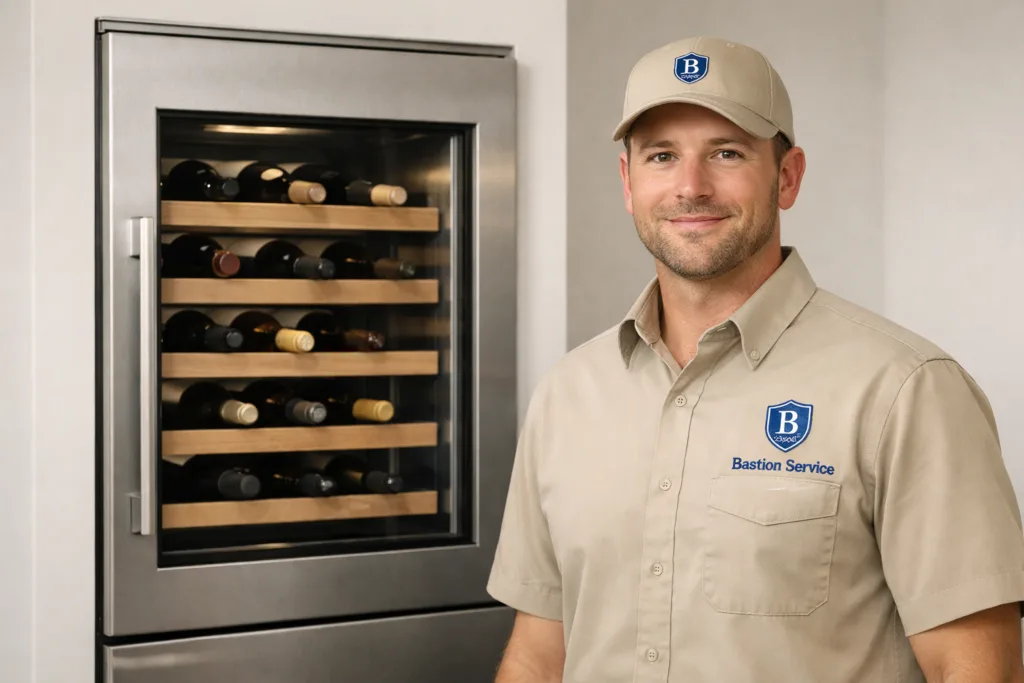
Temperature instability in a wine cooler can affect more than convenience. If bottles are being stored too warm, too cold, or under frequent temperature swings, the problem usually traces back to airflow, sensing, door sealing, drainage, or a refrigeration component that is no longer performing the way it should. Looking at the full symptom pattern first helps separate a minor issue from a larger cooling problem.
What homeowners usually notice first
Most True wine cooler problems begin with one visible or noticeable change in daily use. The cabinet may feel warmer than normal, the display may not seem to match the actual interior temperature, or the unit may start running longer than it used to. In other homes, the first warning sign is water under the appliance, condensation on the glass, frost inside the cabinet, or a new buzzing or rattling sound.
These symptoms can overlap. A worn door gasket, for example, can let humid air into the cabinet, which may lead to both condensation and longer run times. A fan problem can reduce internal airflow, causing warm spots, poor temperature recovery, and sometimes frost in the wrong areas. Because the same symptom can have several causes, it helps to evaluate how often the problem happens, when it happens, and whether it is getting worse.
Common symptom groups and what they can indicate
Not cooling enough
If a True wine cooler is no longer holding its set temperature, the issue may be relatively simple or more involved. Basic causes can include blocked airflow, dirty condenser buildup, overpacked shelves that limit circulation, or a door that is not sealing tightly. More serious causes can include a failed fan motor, a faulty sensor, thermostat trouble, control failure, or a refrigeration-system problem.
A useful clue is whether the temperature rises slowly over time or changes suddenly. Slow warming can point to restricted heat exchange or declining component performance. A sudden failure to cool may suggest a control or fan issue, or a cooling component that has stopped working altogether.
Running constantly or cycling too often
A wine cooler that seems to run all day is usually working harder than it should. That can happen when warm air keeps entering the cabinet, when coils cannot release heat efficiently, or when the unit is getting inaccurate temperature information from a sensor or control. Short cycling, where the appliance starts and stops more often than normal, can also indicate a control-side issue or early cooling-system stress.
If run time has noticeably increased, it is worth having the unit checked before the extra strain affects major components.
Water inside the cabinet or on the floor
Moisture problems often begin as light condensation and then progress into water droplets, damp shelving, or puddling near the unit. Common causes include a blocked drain path, high humidity entering through a poor seal, or temperature inconsistency that allows excess moisture to collect. Even when the cooler is still running, recurring water should not be ignored because it can affect cabinetry, flooring, and the interior condition of the appliance.
Frost buildup
Frost inside a wine cooler usually means moisture is entering the cabinet or air is not moving properly where it should. A door left slightly ajar, a damaged gasket, or an internal airflow issue can all contribute. Frost can reduce usable space, interfere with stable cooling, and push the system to work longer cycles than normal.
New or unusual noise
Some operational sound is normal, but a change in sound often matters. Buzzing, clicking, vibrating, humming, or fan noise that becomes more noticeable can point to a loose part, fan wear, mounting vibration, or compressor stress. The timing is helpful: noises at startup may suggest one type of issue, while sounds that continue throughout the cooling cycle may suggest another.
Why symptom-based diagnosis matters
With wine cooler repairs, replacing parts based on guesswork can quickly become expensive. A unit that appears to have a thermostat problem may actually be struggling with airflow. A cabinet that seems warm because of a cooling failure may instead have a sealing issue that is letting room air in constantly. A proper diagnosis should identify which system is failing and whether other components have been affected as a result.
That matters even more when the appliance still runs but no longer performs consistently. Intermittent problems are easy to misread unless the full pattern is considered, including cooling behavior, moisture, noise, and control response.
Signs the problem may be getting worse
Some wine cooler issues stay mild for a while, then become much more noticeable. A few warning signs that suggest the condition is progressing include:
- Temperature drift that becomes more frequent
- Longer run times than the unit used to have
- Water or condensation showing up repeatedly instead of occasionally
- Frost returning soon after being cleared
- Noise that grows louder or more constant
- Controls or interior lights acting irregularly along with cooling changes
When these symptoms start appearing together, the issue is less likely to resolve on its own and more likely to place added load on the cooling system.
When continued use can lead to added damage
If the cabinet is clearly too warm, the unit is struggling to restart, or the compressor seems to run without reaching the set temperature, continued operation may increase wear. The same is true when the appliance is collecting moisture that can affect surrounding materials. In many cases, the first problem is not the most expensive part of the repair; the larger cost comes from leaving the unit operating under strain for too long.
Until service is scheduled, it can help to reduce door openings, avoid overloading shelves, and make sure airflow around the unit is not blocked. Those steps may reduce short-term stress, but they will not correct a failing part or restore normal temperature control.
Repair or replacement: how to think about the decision
Many True wine cooler issues are repairable, especially when the problem is tied to fans, sensors, controls, drainage, airflow, or door sealing. Replacement becomes a more serious consideration when there is major refrigeration-system failure, repeated high-cost repairs, or overall appliance wear that makes another repair hard to justify.
For a household in Manhattan Beach, the decision usually comes down to the age and condition of the unit, how long the current issue has been going on, and whether the repair addresses one isolated fault or a broader pattern of decline. A cooler that has been reliable and is otherwise in good condition is often worth repairing when the cause is targeted and correctable.
What a service visit should clarify
A worthwhile service visit should answer a few practical questions clearly. Is the issue related to airflow, controls, sealing, drainage, or the cooling system itself? Is the unit safe to keep using in the short term, or does continued operation risk more damage? Is the repair likely to restore stable wine storage, or is the appliance showing signs of deeper wear?
For homeowners in Manhattan Beach, the goal is not just to confirm that the wine cooler is acting up. It is to understand why it is happening, how urgent it is, and whether the recommended fix makes sense for the condition of the appliance.
When to schedule service
It is usually time to schedule True Wine Cooler Repair in Manhattan Beach when you notice one or more of the following:
- The cooler no longer holds a consistent temperature
- The cabinet feels warmer than the display suggests
- The unit runs constantly or begins cycling abnormally
- There is repeated condensation, water, or frost inside
- The door does not seal tightly or opens too easily
- New buzzing, rattling, clicking, or fan noise develops
- Controls, sensors, or interior lighting behave inconsistently
Small cooling issues often become larger ones gradually. Addressing them early gives you the best chance of limiting wear and restoring stable operation before storage conditions deteriorate further.