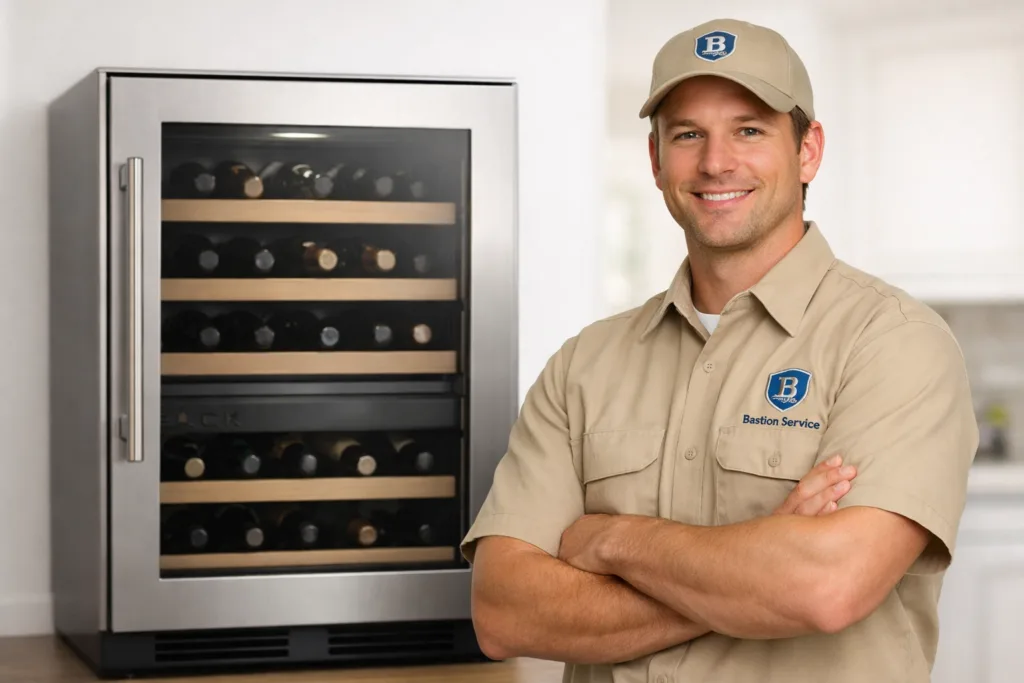
A Perlick wine cooler that stops holding temperature, starts collecting water, or runs constantly can put a collection at risk fast. In Manhattan Beach homes, diagnosis matters because the same symptom can come from very different causes, including restricted airflow, sensor failure, door seal wear, control problems, or sealed-system trouble. Finding the actual source of the issue helps avoid unnecessary part replacement and points to the repair that fits the problem.
Start with the way the problem shows up
Wine cooler failures are often easier to describe than to diagnose. A cabinet that feels warm may have a fan issue, a temperature sensing problem, or poor heat removal at the condenser. A unit that gets too cold may have a control or thermistor fault rather than a compressor problem. If the cooler is noisy, wet inside, icing up, or cycling strangely, those details help narrow the repair path.
Not cooling or drifting away from the set temperature
If your Perlick wine cooler no longer keeps bottles at a stable temperature, several failures are possible. Common causes include dirty condenser components, reduced airflow, a weak evaporator fan, a faulty temperature sensor, control board issues, or compressor-related problems. Some homeowners notice the display looks normal while the cabinet temperature steadily rises. Others find that one section feels cooler than another. Either pattern usually means the unit needs attention before storage conditions become unreliable.
Temperature drift is especially important with wine storage because the cooler may appear to be working even while performance is slowly slipping. If the cabinet takes longer than usual to recover after the door is opened, or if the interior never seems to settle at the selected setting, that is often a sign that a cooling or control component is no longer responding correctly.
Running all the time or cycling too often
When a wine cooler rarely shuts off, it is often struggling to remove heat efficiently. Dirty coils, poor ventilation, weakened door gaskets, and sensor errors are all common reasons. Short cycling can point to control trouble, overheating, or a developing compressor issue. In both cases, longer run times mean more wear on key components and can lead to a larger failure if the pattern continues.
This symptom also matters because constant running does not always mean the cooler is cooling well. A unit may run almost nonstop while still failing to reach or maintain the target temperature. That combination usually suggests the machine is compensating for a problem rather than operating normally.
Water leaks, condensation, or moisture inside
Puddles near the unit, moisture on shelves, or condensation on the glass can come from a blocked drain path, a door that is not sealing properly, or temperature regulation problems that create excess humidity inside the cabinet. These issues can seem minor at first, but moisture problems can lead to odors, staining, cabinet damage, and added strain on cooling components.
If condensation keeps returning after the door is closed and the interior is arranged normally, the problem is often more than simple humidity from recent use. Repeated interior moisture usually points to a part or airflow issue that needs repair rather than cleanup alone.
Frost buildup or ice where it should not be
Frost inside a Perlick wine cooler usually indicates airflow or defrost-related trouble. A worn gasket or misaligned door can also allow warm, humid air into the cabinet, which then freezes in the wrong areas. Ice buildup may interfere with fans, restrict circulation, and gradually reduce cooling performance.
Even a small patch of recurring frost is worth attention. If it keeps coming back after being removed, the underlying issue is still present and will often worsen with continued use.
Buzzing, rattling, clicking, or fan noise
Some operating sound is normal, but a change in sound often provides one of the best clues during Perlick wine cooler repair in Manhattan Beach. Rattling can come from loose panels or mounting vibration. Clicking may indicate a start-related issue. Fan noise can suggest obstruction, wear, or ice interference. A louder hum than usual may mean the system is working harder than it should.
Noise by itself does not always mean major failure, but new sounds that repeat during every cycle should not be ignored. They often appear before cooling performance drops enough to become obvious.
What homeowners can check before scheduling repair
There are a few simple observations that can help separate a minor use issue from a real mechanical problem:
- Confirm the set temperature has not been changed accidentally.
- Check whether the door closes fully and the gasket sits flat against the frame.
- Look for heavy dust buildup around areas that release heat.
- Notice whether the interior fan sound has changed or stopped.
- Watch for repeated condensation, frost, or water under the cabinet.
- Pay attention to whether the cooler runs constantly without reaching the target temperature.
If these checks do not explain the issue, or if the symptom returns quickly, the next step is usually service rather than trial-and-error part replacement.
Why diagnosis matters before choosing a repair
Many wine cooler problems overlap. Warm temperatures can result from a bad fan, a sensor problem, restricted airflow, electronic control failure, or sealed-system inefficiency. Water inside the cabinet might be a drain issue, but it can also be tied to door sealing or temperature instability. Because the symptoms overlap, replacing parts based on guesswork can waste time and money while leaving the original fault unresolved.
A proper evaluation helps determine whether the repair is straightforward, whether multiple issues are present, and whether the appliance is still a sensible candidate for repair. That is especially important when the unit still powers on but performance is inconsistent. A cooler that runs but cannot maintain a stable range can still put stored wine at risk.
When waiting is likely to make things worse
It usually makes sense to schedule service when the wine cooler is warming up, freezing unexpectedly, leaking, collecting condensation, making new noises, or running much longer than normal. A display that remains on while cooling performance drops is also a strong sign that service is needed.
Waiting may only make sense after a short, one-time irregularity, such as loading many warm bottles or opening the door repeatedly during a gathering. If the problem returns under normal use, it is no longer a one-off event. Continued operation can worsen fan damage, spread frost buildup, overheat the compressor, or create moisture-related cabinet issues.
Repair or replace?
Repair is often worthwhile when the problem is limited to parts such as fan motors, sensors, controls, switches, drain components, or door sealing parts. Replacement becomes more likely when the cooler has major sealed-system failure, repeated high-cost breakdowns, or overall wear that makes further work hard to justify.
For homeowners in Manhattan Beach, the real goal is not simply getting the unit to power back on. It is restoring steady temperature control, normal cycling, and predictable operation so the wine cooler can be used with confidence again. That decision depends on the actual fault, the condition of the appliance, and whether the repair path makes sense for the unit as a whole.