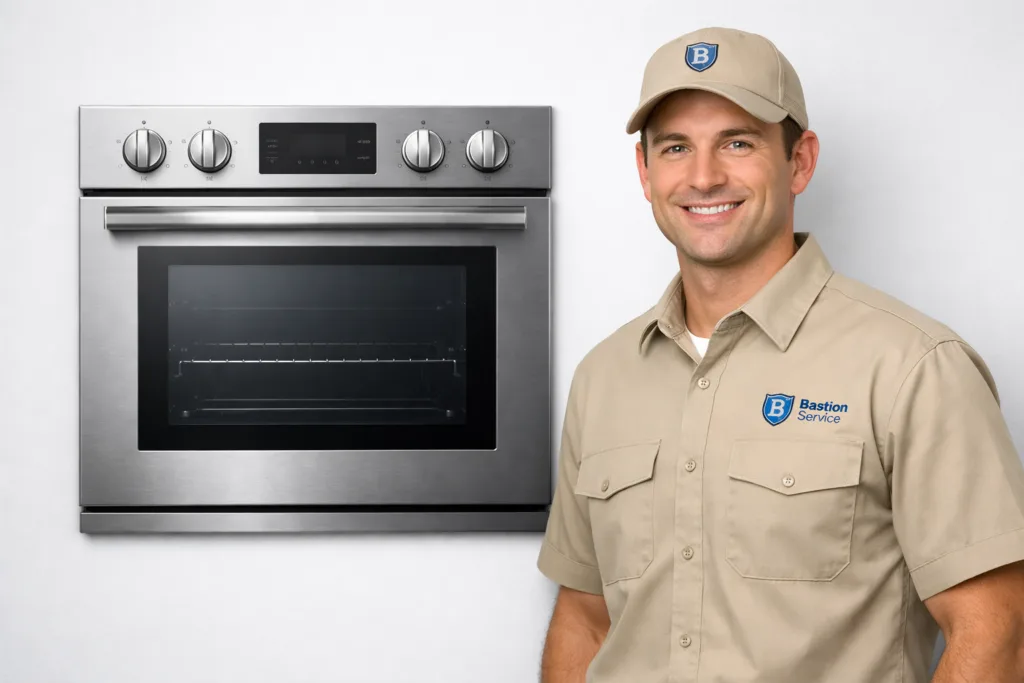
Oven problems tend to show up in everyday cooking first: cookies brown too fast on one side, casseroles need extra time, preheat takes longer than it used to, or the control panel starts behaving unpredictably. With Summit ovens, those symptoms can come from heating components, sensors, ignition parts, door issues, or electronic controls, so it helps to evaluate the pattern before assuming the cause.
Symptoms that usually point to a Summit oven repair need
If your oven is no longer performing the way it did a few months ago, the symptom itself often gives the best clue about where the problem may be. Paying attention to whether the issue is constant, intermittent, or tied to a specific mode can make the repair path much more straightforward.
Oven not heating or not reaching temperature
When a Summit oven will not heat at all, heats only partway, or stalls during preheat, likely causes depend on whether the unit is electric or gas. Electric models may have a failed bake element, broil element, sensor, wiring problem, or control issue. Gas models often develop ignition problems, especially when the igniter weakens and can no longer open the gas valve reliably.
A common point of confusion is that an oven can still appear to work while underperforming. An element may glow but not produce full heat, or an igniter may click and glow without igniting properly every time. That leads to slow cooking, underbaked food, and temperature inconsistency that gets worse over time.
Uneven baking and temperature swings
If one rack cooks faster than another, or dishes come out overdone on the edges and underdone in the center, the issue may involve inaccurate temperature sensing, poor heat circulation, or a component that cycles incorrectly. In some cases, the oven is reaching heat but not maintaining it steadily.
Homeowners in Manhattan Beach often first notice this with baking, since breads, cookies, and casseroles reveal temperature problems quickly. Repeatedly adjusting recipes or adding extra cook time may help temporarily, but it does not correct the underlying fault.
Slow preheat and longer cook times
Slow preheat is one of the most common complaints with aging ovens. The appliance still turns on, but dinner takes longer and the kitchen routine becomes less predictable. This can happen when a heating element is weakening, an igniter is no longer drawing proper amperage, or the sensor is feeding inaccurate temperature information to the control.
If preheat has gradually become slower, that is usually a sign to schedule service before the oven stops heating entirely.
Control panel, display, and power problems
A Summit oven that flashes codes, resets itself, beeps randomly, or has buttons that respond inconsistently may have a failing touchpad, control board issue, loose electrical connection, or power supply problem. Intermittent faults can be especially frustrating because the oven may work normally one day and fail the next.
When the display is dead but surface lights or other functions still work, the problem is not always as simple as a full power loss. The exact combination of symptoms matters, and that is where a clear diagnosis helps separate a repairable control issue from a broader electrical problem.
Door and seal issues that affect cooking performance
Not every oven problem starts with the heating system. A door that does not close tightly can let heat escape, which leads to uneven baking, long preheat times, and excess heat in the kitchen. Worn hinges, a torn gasket, misalignment, or latch problems can all reduce performance.
If you notice the door sitting unevenly, springing open slightly, or needing extra force to close, it is worth having it checked. Even a small gap can affect temperature stability during longer cooking cycles.
Convection fan noise or airflow concerns
On models with convection, a noisy fan or poor airflow can affect results even when the oven still heats. Rattling, grinding, or unusually loud operation may point to a worn motor, blade obstruction, or mounting issue. Some fan run-on after cooking is normal, but a clear change in sound or behavior usually is not.
When continued use may make the problem worse
It is usually best to stop relying on the oven for regular cooking when it trips the breaker, shuts off during a cycle, has delayed ignition, produces repeated error codes, or shows clear signs of overheating. Small failures often place extra strain on related parts, which can turn a targeted repair into a larger one.
- Food is cooking unpredictably from one use to the next
- Preheat time keeps increasing
- The oven will only work on certain settings
- The display cuts out during cooking
- The door no longer seals properly
- You hear unusual clicking, buzzing, or fan noise
These are usually signs that the oven is not failing in a harmless way. Even if it still runs, performance and reliability are already compromised.
Important note for gas Summit ovens
If you smell gas strongly or continuously, stop using the appliance and address that safety concern immediately through the proper emergency channel before arranging repair. If there is no active gas odor but ignition is delayed, inconsistent, or rough, the oven should still be checked before normal use continues.
Repair or replace? What Manhattan Beach homeowners usually weigh
Whether to repair a Summit oven or replace it usually depends on the failed part, the age of the appliance, overall condition, and whether this is the first meaningful repair or part of a longer pattern. Many oven problems are still good repair candidates when they involve a single heating component, igniter, sensor, gasket, hinge, or localized control issue.
Replacement becomes more worth considering when the oven has multiple unrelated failures, recurring electronic problems, or signs of broader wear that make future repairs likely. The most useful service visit is one that clarifies not just what failed, but whether the repair makes sense for the appliance as a whole.
What to expect from a focused service appointment
A well-handled Summit oven repair visit in Manhattan Beach should identify the failed component or system, explain how that issue matches the symptoms you have been seeing, and outline whether the oven should be used before repair is completed. That matters when the appliance is part of your daily cooking routine and you need a realistic next step.
In many cases, homeowners are not just trying to fix an oven. They are trying to get back to predictable meals, normal baking times, and a kitchen that works without second-guessing every temperature setting. The right repair approach should restore that consistency rather than simply address the most obvious symptom.