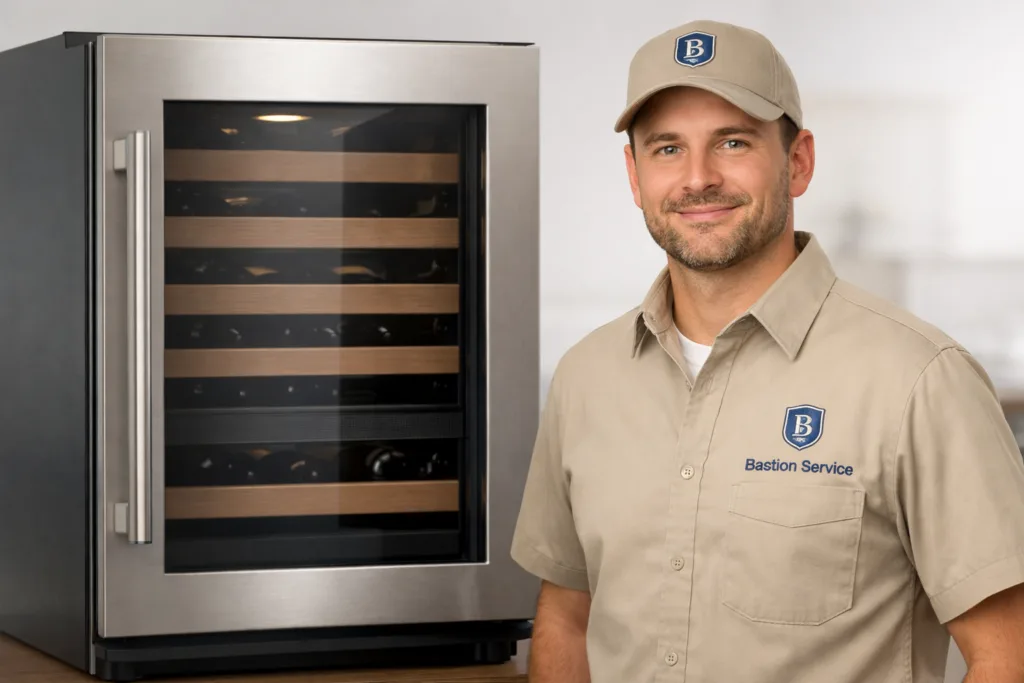
Small changes in wine cooler performance often show up before a complete breakdown. If a Marvel unit starts running longer than usual, develops moisture around the door, or drifts away from the set temperature, the cause may involve airflow, controls, door sealing, drainage, or a cooling-system component. Looking at the full symptom pattern usually tells more than any single sign on its own.
Common Marvel wine cooler problems in Manhattan Beach homes
Wine coolers are designed to hold a steady environment, so even minor changes can matter. In Manhattan Beach homes, homeowners often first notice that bottles are not as cool as expected, the cabinet feels damp, or the unit sounds different during normal cycling. These issues may seem small at first, but they can point to wear that gets worse with continued use.
Not cooling enough or temperature drifting upward
If the cabinet is warmer than the display setting, the issue may be as simple as restricted condenser airflow or as involved as a failing fan motor, sensor problem, thermostat issue, or sealed-system fault. A unit that still cools somewhat can be misleading because partial cooling often masks an underlying failure. When temperatures rise slowly instead of stopping all at once, homeowners may not realize the cooler is under stress until stored wine has already been affected.
Warning signs that often appear with a warm cabinet include longer run times, hot air near the lower vent area, inconsistent cooling from shelf to shelf, or a compressor that seems to run without reaching the target temperature.
Overcooling or freezing inside the cabinet
A Marvel wine cooler that becomes too cold may have trouble reading or responding to actual cabinet temperature. Sensors, controls, airflow components, and wiring faults can all contribute to overcooling. This problem is easy to misread because the unit is technically still cooling, just not correctly.
If bottles feel unusually cold, labels become damp, or items near one area of the cabinet are freezing while others are not, the problem may involve uneven air circulation rather than a single obvious failed part.
Condensation, water buildup, or leaking
Water inside or around a wine cooler can come from several places. A blocked drain path, worn door gasket, poor door alignment, frost buildup, or warm air entering the cabinet can all lead to moisture problems. Some leaks appear only after the door has been opened frequently, while others continue even when the unit stays closed.
Moisture should not be ignored. Besides affecting storage conditions, it can lead to odor, shelf damage, cabinet staining, or flooring concerns around the appliance.
Buzzing, clicking, rattling, or fan noise
Not every sound indicates a serious problem, but a noise that is new, louder, or more constant than before deserves attention. A fan blade may be obstructed, a motor may be wearing out, cabinet panels may be vibrating, or the compressor may be struggling during startup. Sound changes are especially useful when they occur together with poor cooling or abnormal cycling.
Homeowners often describe the difference as the unit no longer sounding “smooth.” That change is worth noting because it can help narrow down whether the problem is related to airflow, moving parts, or the compressor area.
Controls, display, or lighting issues
If the display flashes, buttons do not respond, settings change unexpectedly, or the interior light stops working along with other symptoms, the issue may involve the control board, user interface, wiring, or power supply. A cooler can still appear to run while control problems are developing, which makes these faults easy to postpone. The risk is that temperature management may no longer be accurate even if the cabinet still feels somewhat cool.
Why symptom-based diagnosis matters
Many Marvel wine cooler issues overlap. A warm cabinet can be caused by airflow restrictions, fan failure, sensor errors, control faults, or a refrigerant-related problem. Condensation may be caused by a bad seal, but it can also result from frost buildup or temperature instability inside the cabinet. Guessing based on one symptom alone can lead to replacing the wrong part.
Symptom-based diagnosis is also useful because it helps determine urgency. A minor light issue is different from a unit that short cycles, overheats, or cannot hold temperature. The more the cooler struggles to maintain normal operation, the greater the chance that continued use will increase wear on other components.
Signs the problem may be getting worse
Some wine coolers show progressive symptoms before they fail more noticeably. Homeowners in Manhattan Beach should pay attention when the unit begins doing more than one unusual thing at once.
- Temperature swings become more frequent or more extreme
- The compressor runs longer or seems unusually hot
- Moisture keeps returning after the interior is wiped dry
- Frost starts building where it was not present before
- The cooler clicks on and off without reaching the set temperature
- The display behaves erratically or settings will not hold
- The door feels loose, uneven, or does not seal firmly
When symptoms begin stacking up, the repair path often becomes clearer because the combination of signs can point to the actual source of the problem more reliably than any single complaint.
When to schedule service
It makes sense to schedule service when a Marvel wine cooler no longer holds a stable temperature, starts making persistent new noises, leaks water, develops heavy condensation, or shows control problems that affect normal operation. Waiting is rarely helpful once wine storage conditions are no longer steady.
Prompt attention is especially important if valuable bottles are being stored long term, if the unit is built into cabinetry with limited ventilation, or if moisture is affecting surrounding surfaces. A cooler that is still partially operating can still be causing strain in the background.
Repair or replace?
The right choice depends on the specific failure, the age and condition of the unit, and whether the repair addresses a contained issue or points to broader wear. Problems involving fans, sensors, drains, gaskets, some electrical components, and certain control issues are often more straightforward to repair. Repeated cooling failures, major sealed-system trouble, or multiple failing parts at the same time may shift the balance toward replacement.
For homeowners, the most useful question is not simply whether the wine cooler can be fixed, but whether the repair offers a reasonable path back to stable performance. That decision is easier when based on what the unit is actually doing now rather than on assumptions about the brand or age alone.
What to note before an appointment
A few observations can make the service process more efficient. Try to note when the problem started, whether it is constant or intermittent, whether it changes after the door is opened, and whether the display temperature matches what you feel inside the cabinet. If water is appearing, note where it collects. If there is a noise, note whether it happens during startup, while running, or after the compressor shuts off.
These details can help separate a door-seal issue from an airflow problem, a drainage issue from a frost pattern problem, or a control fault from a true cooling-system failure. For many Manhattan Beach homeowners, that makes the next step much easier: understanding whether the repair is likely to be minor, urgent, or no longer worthwhile.