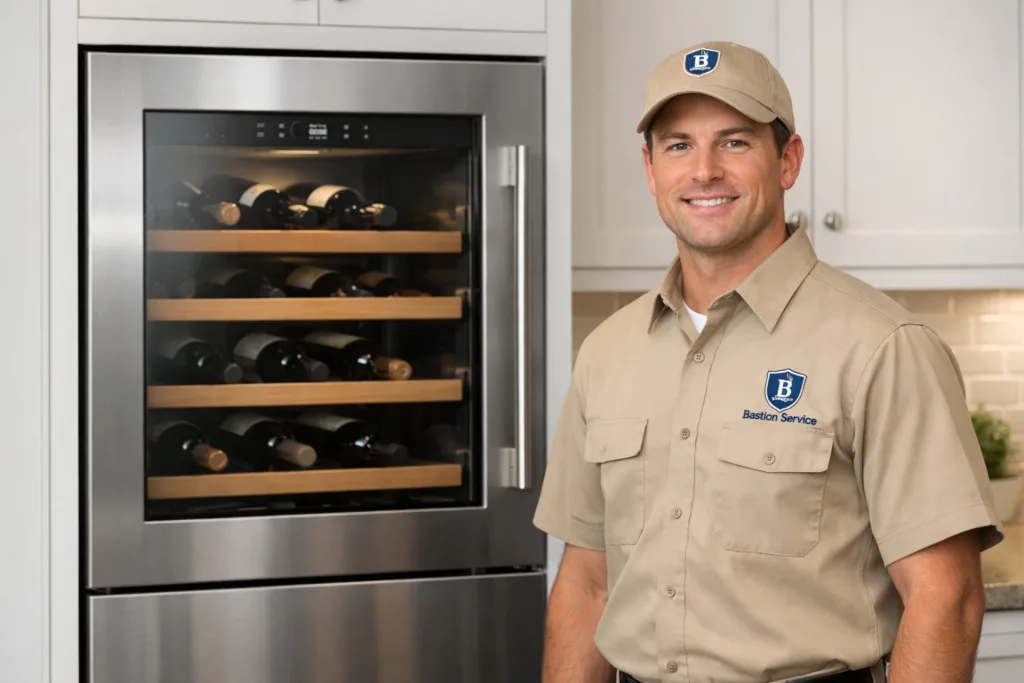
Common wine cooler problems homeowners notice

Wine coolers are designed for steady, controlled storage, so even small changes in performance can matter. A unit that seems only slightly warm, cycles longer than usual, or develops interior moisture may already be struggling with airflow, sensing, or cooling-system problems. In homes around Manhattan Beach, these issues often show up first as inconsistent bottle temperature, extra noise, or condensation around the door.
One common complaint is a cabinet that feels warmer than the control setting suggests. That can happen when condenser coils are dirty, a fan is slowing down, air circulation is blocked, or a sensor is reporting the wrong temperature. In dual-zone models, one section may drift while the other seems normal, which usually points to a component problem rather than a simple settings mistake.
Homeowners also notice puddling, fogging on the glass, vibration, or a compressor that appears to run almost nonstop. A worn gasket, poor door alignment, blocked drain path, or failing control component can all create those symptoms. If the cooler is built into cabinetry, restricted ventilation around the cabinet can also raise operating temperatures and make the system work harder than it should.
Why diagnosis matters before replacing parts
Wine cooler problems are often symptom-driven but not always obvious at first glance. “Not cooling” might be caused by a fan motor, a failed thermostat, a bad temperature sensor, a control board issue, or a sealed-system problem. Swapping parts based on guesswork can add cost without solving the actual failure.
Accurate diagnosis should include temperature verification, airflow checks, inspection of coils and fans, review of control behavior, and evaluation of the door seal. That process helps determine whether the issue is a targeted repair or a larger refrigeration failure that changes the recommendation.
If your household has more than one cooling appliance, comparing symptoms can be helpful. A freezer that is slow to recover after the door is opened or that develops heavy frost may suggest shared concerns around airflow, temperature regulation, or coil condition in the home’s refrigeration equipment. Freezer Repair in Manhattan Beach
Symptoms and what they can indicate
Wine cooler not cooling enough
When bottles are not reaching the selected temperature, the cause may be as simple as poor ventilation or as serious as a sealed-system loss. Dirty condenser coils, blocked air passages, weak evaporator airflow, sensor drift, and electronic control problems are all common possibilities. If the unit continues to run in this condition, the compressor can be placed under added strain.
Wine cooler getting too cold
A cooler that overchills or partially freezes contents is usually dealing with a regulation problem, not an advantage in performance. Faulty thermistors, thermostat failures, and control board issues can all cause overcooling. This matters because wine storage depends on stability, not just low temperature.
Condensation, leaks, or interior moisture
Water inside the cabinet or on the floor often points to a blocked drain, warm air entering past the gasket, or humidity collecting because airflow is uneven. Glass-door models can also show excess fogging when the door is not sealing consistently or the cabinet is cycling inefficiently. Left unaddressed, moisture can affect shelving, flooring, and nearby finishes.
Noise, vibration, or rattling
Some sound is normal during startup and cycling, but persistent buzzing, clicking, grinding, or noticeable vibration deserves attention. The issue may be a fan blade rubbing, an unlevel cabinet, compressor mounting wear, or loose internal shelving. A unit that suddenly sounds louder than usual is often signaling a component beginning to fail.
Runs constantly or short cycles
Long run times can mean the cabinet is losing cool air, the coils are dirty, the room environment is too demanding, or the refrigeration system is weakening. Short cycling can point toward a control issue, sensor error, or compressor-related problem. Either pattern reduces efficiency and usually gets worse over time.
How related cooling symptoms can overlap with other appliances
Some service calls involve multiple refrigeration symptoms in the same kitchen. If a refrigerator is warming, a wine cooler is drifting, and an ice system is slowing down, the comparison can help narrow down whether the issue is appliance-specific or related to ventilation, power, or maintenance conditions. Refrigerator Repair in Manhattan Beach
Ice production problems can also overlap with temperature instability. In some homes, homeowners first notice small, misshapen, or reduced ice before realizing a nearby cooling appliance has also been running warm. That does not mean the failures are the same, but water supply, fill performance, and cooling consistency are often useful clues when evaluating the broader refrigeration setup. Ice Maker Repair in Manhattan Beach
When to schedule service
It is worth scheduling service when the cabinet cannot hold a consistent temperature, the display no longer matches actual interior conditions, the unit starts leaking, or new noise appears and does not go away. Service is also a smart next step when basic checks such as confirming settings, cleaning accessible vents, and making sure the door closes fully do not improve performance.
Prompt attention matters because wine coolers often hide early failure signs behind a still-lit display and a cabinet that feels only slightly off. By the time bottles are clearly too warm, the appliance may have been overworking for days or weeks.
Repair versus replacement considerations
Many wine cooler repairs are worthwhile when the problem involves an isolated component such as a fan motor, sensor, control, gasket, switch, or drain-related part. If the cabinet is structurally sound and the cooling system is otherwise healthy, repairing the failed part can restore stable operation without replacing the entire appliance.
Replacement becomes more likely when there is a sealed-system failure, compressor damage, repeated breakdown history, or repair cost that is disproportionate to the unit’s age and condition. The right decision usually depends on the cooler’s overall reliability, the exact failure found, and whether dependable temperature control can be restored.
What homeowners should expect from a service visit
A useful appointment should focus on identifying the real cause of the temperature or moisture problem, not just reacting to the surface symptom. That includes checking actual cabinet temperatures, inspecting airflow and fan operation, reviewing controls and sensors, evaluating the door seal, and looking for signs of drainage or compressor stress.
For homeowners in Manhattan Beach, the goal is to leave with a practical understanding of what failed, whether continued use could cause more damage, and whether repair or replacement makes the most sense for the specific wine cooler in the home.