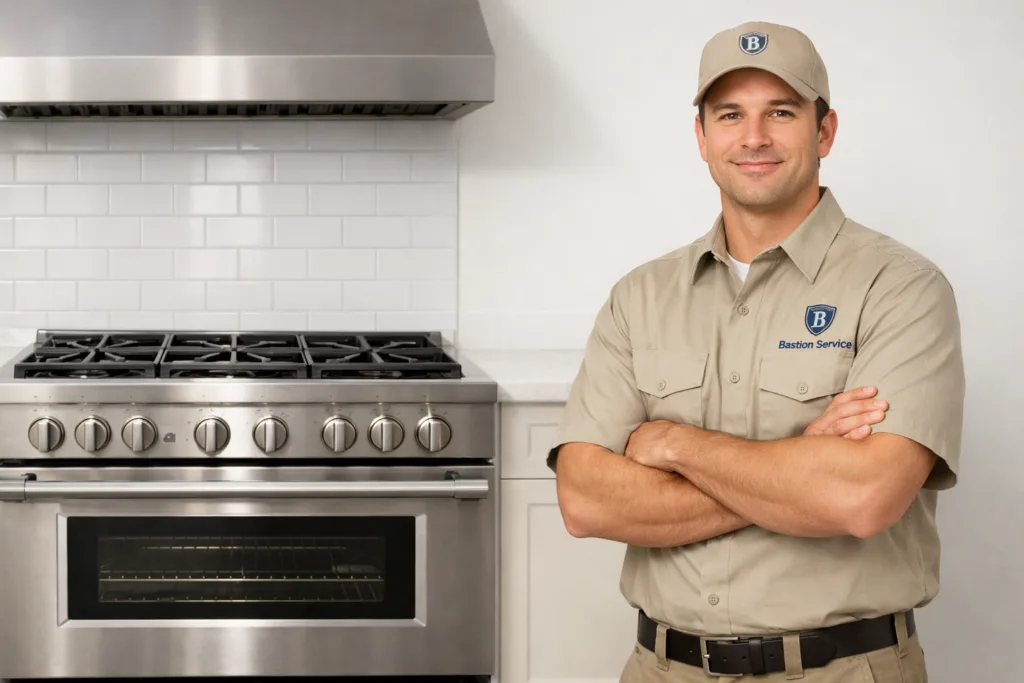
Performance changes in a Wolf range usually show up in everyday cooking before a complete failure happens. You may notice a burner that takes several tries to light, an oven that no longer matches the set temperature, or controls that respond inconsistently. Those details matter because different symptoms often point to very different faults.
In Pico-Robertson homes, it helps to pay attention to whether the problem affects the cooktop, the oven, or both. A single weak burner is usually diagnosed differently than repeated clicking across multiple burners, and an oven that drifts in temperature is not the same issue as one that will not preheat at all.
Start with the symptom, not the part
Wolf ranges combine gas ignition, heat regulation, and electronic controls, so one visible problem can have more than one possible cause. Replacing parts based on guesswork often leads to extra cost and the same complaint returning later. The better approach is to match the repair path to the exact way the range is failing.
Useful clues include:
- Whether one burner or all burners are affected
- Whether clicking continues after flame appears
- Whether the oven struggles during preheat or during longer cooking cycles
- Whether the display, knobs, or touch controls respond normally
- Whether the issue began after cleaning, moisture exposure, or a power interruption
Common Wolf range problems seen in daily use
Burner will not ignite or lights slowly
If a surface burner does not light right away, the cause may be as simple as burner alignment or buildup around the ignition area, but it can also involve the igniter, spark module, switch, or gas flow through that burner assembly. Slow ignition should not be ignored, especially if it becomes more frequent.
When the problem affects only one burner, diagnosis often stays focused on that specific burner’s components. When several burners act up at once, the issue may be more central to the ignition system.
Continuous clicking even after ignition
Clicking that does not stop after the burner lights can point to moisture, contamination, a misaligned cap, or an ignition component that is not sensing normal operation correctly. Sometimes the clicking is intermittent and appears after cleaning or boiling over. In other cases, it becomes a persistent nuisance that signals a part is wearing out or failing.
If the clicking happens repeatedly, it is worth having the range checked before the problem spreads to additional burners or leaves the cooktop unreliable during meal prep.
Oven not heating properly
An oven that stays too cool, runs too hot, or cooks unevenly can involve the temperature sensor, bake or broil ignition system, control calibration, convection components, or related wiring. Homeowners often first notice this through longer bake times, uneven browning, or recipes that suddenly stop turning out the same way.
When food cooks unevenly from front to back or top to bottom, that can be a clue that the problem is not just temperature reading alone. Heat distribution and cycling behavior may also need to be tested.
Preheat takes too long
Extended preheat times can happen when the oven is struggling to ignite correctly, not reaching full heat output, or receiving inconsistent control signals. If preheat has gradually slowed down over time, that pattern can be just as important as a complete no-heat failure.
Controls, display, or settings act unpredictably
If the display flickers, settings do not hold, or the range seems to start but not complete the cycle it was given, the fault may be within the control system rather than the burners themselves. These issues can overlap with heating complaints, which is one reason symptom-based testing matters so much on premium cooking appliances.
Signs the issue should be addressed quickly
Some problems are mostly inconvenient at first, while others should not be left alone. Delayed ignition, uneven flame, repeated failed starts, and oven overheating can all lead to bigger repair needs if the range continues to be used without inspection.
Watch for these warning signs:
- A burner clicks for a long time before lighting
- Flame is weak, uneven, or does not spread normally around the burner
- The oven temperature seems far above the setting
- The appliance shuts off unexpectedly during use
- Controls respond erratically or fail to register commands
If there is a strong or persistent gas smell, stop using the appliance and address that safety issue immediately before arranging repair.
What can make diagnosis faster
Before scheduling service, it helps to note exactly what the range is doing. Small details often shorten the path to the right repair.
- Does the problem happen every time or only occasionally?
- Is it limited to bake, broil, convection, or surface cooking?
- Did the issue begin suddenly or worsen gradually?
- Did it start after a spillover, deep cleaning, or electrical interruption?
- Does the problem appear only when the appliance is already hot?
That kind of information is often more useful than trying to identify a part on your own, because the same symptom can have several possible causes.
Repair or replacement: what usually makes sense?
For many households, repair is still the better option when the range is in otherwise good condition and the fault is limited to a serviceable component such as an igniter, sensor, switch, valve-related part, or control-related part. A well-built range with a single defined failure often remains a strong repair candidate.
Replacement becomes more likely when there are multiple major issues at once, heavy wear across several systems, or repair costs that no longer fit the appliance’s overall condition. Age alone does not decide the answer. What matters more is how the range has been performing, what failed, and whether the rest of the unit remains sound.
Why Wolf range repairs need model-specific attention
Wolf ranges are designed for high heat performance and precise cooking control, so subtle changes in burner behavior or oven cycling tend to be noticeable. The repair process should reflect that. A proper diagnosis looks at the actual operating pattern of the appliance rather than treating every ignition or heating complaint as the same type of issue.
That is especially important when symptoms overlap, such as a range that appears to have an oven problem but is actually responding to a control fault, or a burner issue that seems minor until it starts affecting reliable ignition across the cooktop.
What homeowners in Pico-Robertson can do next
If your range is still operating, avoid forcing repeated ignition attempts or relying on workarounds to get through daily cooking. Intermittent problems often become easier to identify when the full symptom pattern is documented early, before additional strain changes the way the appliance behaves.
For Wolf Range Repair in Pico-Robertson, the most useful next step is service based on the specific complaint your appliance is showing now, whether that is burner ignition trouble, oven temperature inconsistency, repeated clicking, or an unresponsive control system.