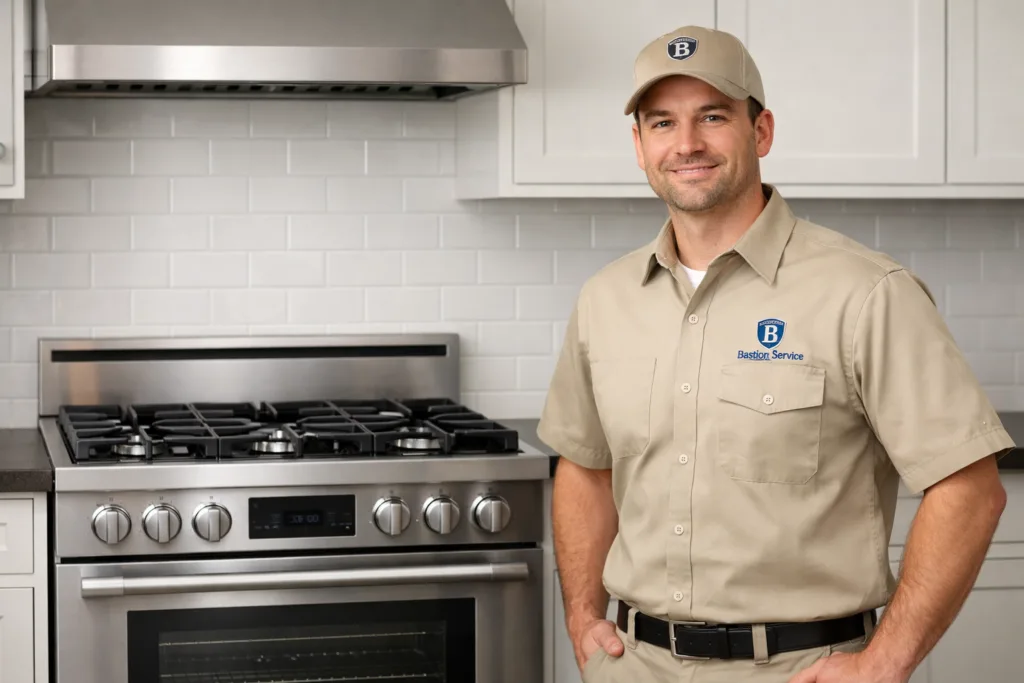
Common Dacor range problems in Pico-Robertson homes

Dacor ranges usually give warning signs before a complete failure. In many homes, the first clues are small but disruptive: a burner that takes several tries to light, an oven that seems slower than usual, a broiler that stops working, or a display that starts behaving unpredictably. Because a range combines gas, heat, ignition, and electronic controls, the same symptom can come from more than one source.
Surface burner problems often show up as repeated clicking, delayed ignition, uneven flame, weak heat, or a burner that works only part of the time. Oven-related issues are more likely to appear as long preheat times, food cooking unevenly, temperature swings, or an oven that shuts off before the cycle is finished. Electronic faults can affect either side of the appliance and may include error codes, dead buttons, flashing displays, or settings that do not respond correctly.
What specific symptoms can mean
Burner clicks but will not ignite
If a burner keeps clicking without lighting, the problem may involve the igniter, burner cap alignment, residue around the burner base, moisture, or a wiring issue. Sometimes the burner eventually lights after several attempts, which can make the issue seem minor. In practice, that pattern usually means the ignition system is no longer operating as it should.
Homeowners often notice this most during rushed cooking, when one burner behaves differently from the others. If the clicking is persistent, the flame is delayed, or ignition has become inconsistent, service is a smart next step. If there is a strong or ongoing gas smell, stop using the range until the issue is checked.
Oven is not heating accurately
A Dacor oven that runs cool, overheats, or cooks unevenly may be dealing with a failed sensor, bake or broil heating problem, control issue, or calibration drift. Some households first spot this when familiar recipes suddenly need extra time, brown too quickly, or come out unevenly baked from front to back.
When temperature accuracy is off, the range may still appear to work, but daily cooking results become unreliable. That is often a sign the problem is progressing beyond a simple inconvenience.
Long preheat times or incomplete heating
If preheating takes much longer than normal, or the oven never seems to reach the selected temperature, the issue may involve one heating circuit not engaging correctly, a sensor reporting incorrect temperatures, or a control problem interrupting normal cycling. In electric sections of a range, partial heating can be especially misleading because the oven may still warm up somewhat while never performing properly.
This symptom is worth addressing early because prolonged underheating can strain components and make the appliance harder to rely on for normal meal preparation.
Weak flame or uneven burner performance
When one burner heats slowly, produces an uneven flame pattern, or no longer matches the performance of the others, the problem may be related to blockage, wear in the burner assembly, ignition weakness, or fuel-flow regulation issues. This often becomes noticeable with everyday tasks like simmering, boiling water, or trying to keep a pan at a consistent temperature.
Uneven flame is not just a cooking annoyance. It can also signal a problem that may worsen with continued use.
Display, keypad, or control failures
A flickering display, unresponsive keypad, random beeping, or recurring fault code may point to a user interface issue, communication fault, power-related irregularity, or main control problem. On a Dacor range, these symptoms can affect both oven and cooktop functions, even if the trouble first appears to be limited to the screen.
When controls are unreliable, the appliance may not operate predictably. That is usually the point where continued use becomes hard to trust.
Signs the problem is becoming more serious
Some range issues stay relatively stable for a short time, while others spread from one function to several. A burner that occasionally misfires can turn into a full ignition failure. An oven that drifts a little off temperature can begin overcooking, undercooking, or shutting down unexpectedly. Electronic problems may start with a single error and later affect timers, heat selection, or normal operation.
It is usually time to stop guessing and schedule service when you notice any of the following:
- One or more burners no longer light consistently
- The oven takes noticeably longer to preheat
- Food is suddenly baking unevenly or burning unexpectedly
- The broiler does not heat properly
- The display freezes, flashes, or shows repeated faults
- The range shuts off during use or behaves inconsistently
- More than one function begins failing at the same time
When continued use can make repair harder
Repeated ignition attempts can wear down ignition components and create more stress on the system. An oven that overheats can affect surrounding parts and lead to broader control or sensor damage. Intermittent electrical behavior can also become more expensive if left alone, especially when one unstable component starts affecting others.
If the range is no longer heating predictably, responding normally to controls, or operating safely for everyday cooking, it makes sense to pause use until the issue is evaluated. Early attention can preserve repair options that are simpler and less invasive than waiting for a larger breakdown.
Repair or replace a Dacor range?
Replacement is not always the right answer when a premium range develops a problem. Many issues are still repairable when they are limited to ignition parts, sensors, burner components, heating circuits, or a specific control-related failure. If the range is otherwise in good condition and the fault is isolated, repair is often the more sensible path.
Replacement becomes more likely when the appliance has several major problems at once, has a long history of repeat failures, or needs extensive parts across multiple systems. What matters most is whether the issue is contained or part of a broader decline. That is why the symptom pattern matters so much when evaluating a Dacor range in Pico-Robertson.
What homeowners usually want from a service visit
Most people want straightforward answers: what is failing, whether the range is safe to keep using, and whether the repair makes sense for the appliance. A useful visit focuses on the exact complaint, confirms which functions are affected, and separates a single failed component from a larger control or heating issue.
For households in Pico-Robertson, that approach helps reduce unnecessary parts changes and gives a better picture of what the repair will actually involve. Whether the symptom starts with clicking, poor heating, temperature inconsistency, or control trouble, the goal is the same: restore normal cooking performance with the right fix for the actual problem.