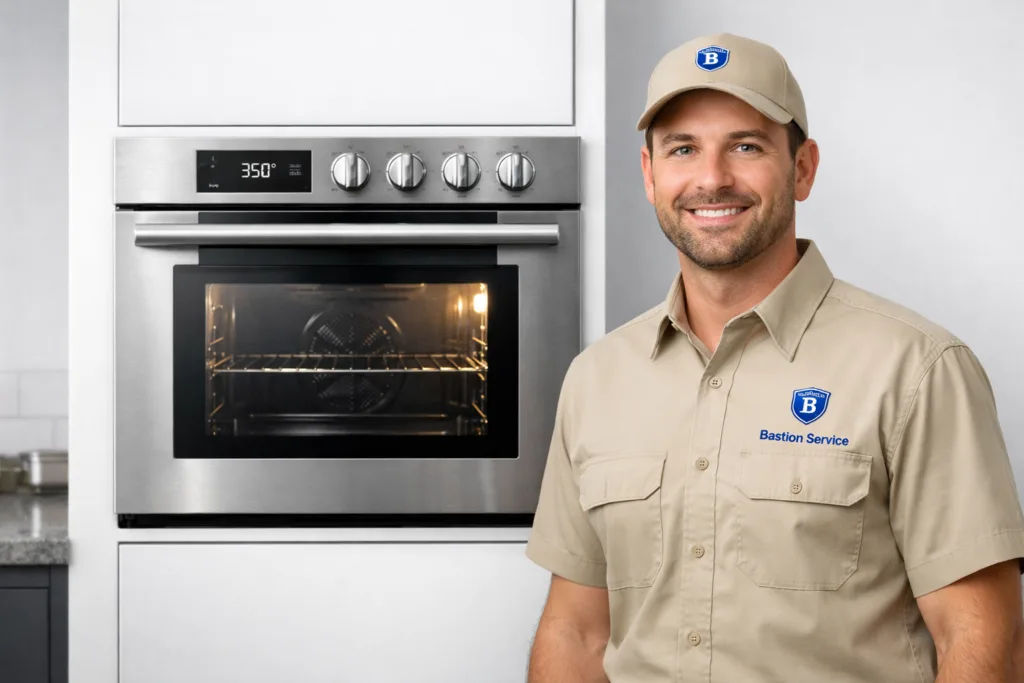
Temperature problems in a Summit oven usually show up before the appliance stops working completely. You might notice longer preheat times, pans that need extra baking time, or meals that come out overdone on top and undercooked in the center. Those patterns matter because the same complaint can come from different causes, including a failing bake element, weak ignition, a bad temperature sensor, damaged wiring, a faulty control, or heat loss around the door.
How Summit oven problems usually show up at home
Most residential oven calls in Hermosa Beach start with a symptom that seems simple but turns out to have more than one possible source. Paying attention to how the oven behaves from the moment it is started can help narrow the issue faster.
Oven will not heat at all
If the oven stays cold, the problem may involve power delivery, the heating circuit, the control, or an ignition-related failure on gas models. In some cases the display appears normal and the unit accepts settings, but the cavity never begins heating. That difference is useful because it points away from a total power loss and more toward a failed component in the heating system.
Slow preheat or weak heating
When preheat drags on much longer than normal, the oven may still be producing some heat but not enough to reach the target temperature on time. This can lead to poor baking results even when the oven eventually says it is ready. A weak element, sensor issue, or inconsistent control output can all create this kind of partial failure.
Uneven baking and temperature swings
Uneven cooking often shows up as one side browning too quickly, the back of the oven running hotter than the front, or different racks producing very different results. Sometimes the issue is not constant. One meal comes out fine, and the next is unexpectedly underdone. That kind of swing often suggests the oven is not cycling heat correctly or is getting inaccurate feedback about internal temperature.
Overheating or burning food too quickly
If the oven is running hotter than the set temperature, stop using it until it is checked. Overheating can damage internal parts, shorten the life of nearby components, and make cooking unreliable. A bad sensor, sticking relay, or control fault may be behind the problem, and guessing at the cause can lead to unnecessary part replacement.
Display or control problems
Some Summit ovens fail in a way that looks electrical rather than thermal. Common signs include a blank or flickering display, buttons that do not respond consistently, cycles that cancel on their own, or an oven that powers on but will not start a bake function. These issues often require inspection of the control system and related connections rather than just the visible heating parts.
What specific symptoms can point to
Symptom-based troubleshooting is helpful because it gives homeowners a better sense of what may be going on without assuming the cause too early.
- Food is always undercooked: possible weak heat output, inaccurate temperature sensing, or preheat failure.
- Top browns too fast but center stays cool: possible uneven heat distribution or incorrect cycling.
- Preheat takes far too long: possible failing element, weak igniter, or control issue.
- Oven shuts off during use: possible overheating protection, wiring fault, or electronic control failure.
- Error code appears: possible sensor, communication, or control-related problem that needs model-specific testing.
- Door does not seal well: possible gasket or hinge problem causing heat loss and poor temperature stability.
When continued use can make the problem worse
It is usually best to schedule service when the oven is overheating, not reaching cooking temperature, tripping power, shutting off during a cycle, or giving off an abnormal burning smell. These issues are more than a convenience problem. They can affect cooking safety, damage internal parts over time, and increase the chance of a larger repair later.
Gas-equipped ovens deserve extra caution. If ignition is delayed, heat is weak, or the burner does not light properly, stop using the appliance until it is checked. If there is a strong or persistent gas smell, leave the area if necessary and contact the gas utility or emergency service before arranging appliance repair.
Repair or replace a Summit oven?
Repair is often the better choice when the problem is limited to a single failed part or a defined control issue and the oven is otherwise in solid condition. Replacement tends to make more sense when there are several active problems at once, the cavity or door is badly damaged, or the expected repair cost no longer fits the age and overall condition of the appliance.
For homeowners in Hermosa Beach, the practical question is not just whether the oven can be repaired, but whether the repair is likely to restore normal daily use without repeated follow-up issues. Once the failed component is identified, it is much easier to weigh cost, reliability, and whether the unit still fits the household’s cooking needs.
What a service visit should help you understand
A worthwhile oven service appointment should do more than confirm that the oven is malfunctioning. It should identify the failed system, explain how that failure connects to the symptom you have been seeing, and outline whether the repair path is straightforward or more involved. That is especially important with temperature complaints, where multiple parts can create similar results.
For a Summit oven, this often means checking heat production, verifying temperature response, inspecting the sensor and control behavior, and looking for signs of wear around the door, wiring, or connection points. The goal is to determine why the oven is misbehaving, not just to replace parts based on guesswork.
Common household situations that justify service
- Dinners need longer cook times than recipes require
- Baked goods are inconsistent from one batch to the next
- The oven says it is preheated when it clearly is not
- The broil or bake function works intermittently
- The control panel responds unpredictably
- The oven loses heat after it has been running for a while
When any of these problems keep repeating, the appliance is giving useful clues about where the failure may be. Addressing them early usually leads to a simpler repair path and more predictable cooking performance afterward.