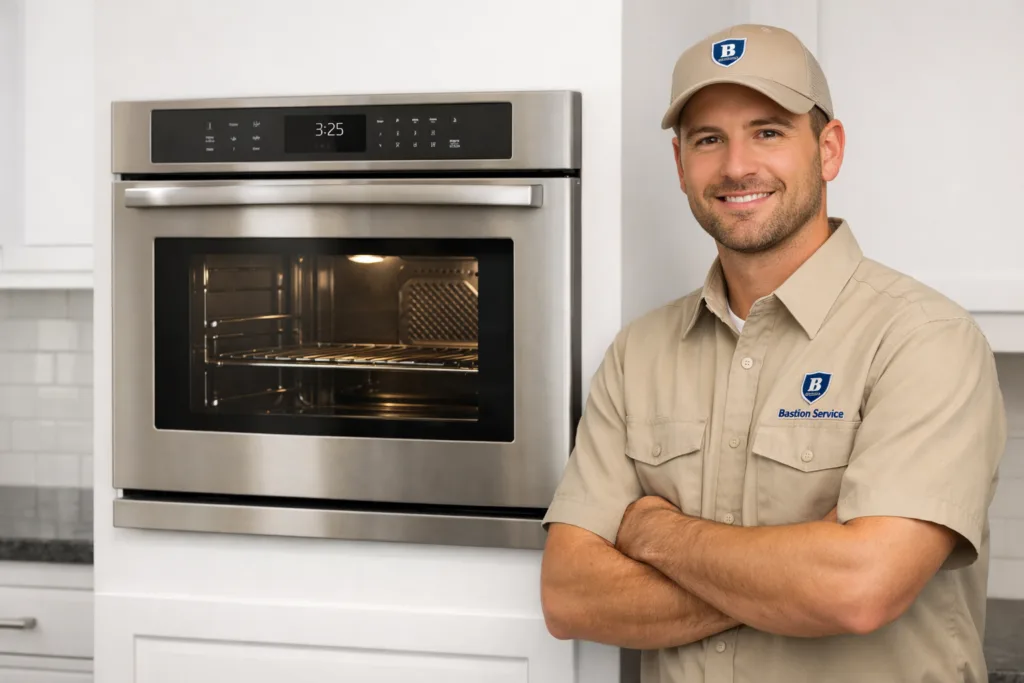
A GE oven that stops heating properly, bakes unevenly, or shuts off during a cycle can turn routine cooking into trial and error. The most useful next step is to match the symptom pattern to the likely failure point, because similar cooking results can come from very different parts inside the oven.
Common GE oven symptoms and what they usually mean
Not heating at all
If the oven stays cold, the cause often depends on whether the unit is gas or electric. On gas models, a weak or failed igniter is a common reason the burner will not light consistently. On electric models, a burned-out bake element, damaged broil element, wiring issue, or failed control relay may keep the oven from producing heat. In some cases, the display still appears normal even though the oven is not actually energizing the heating circuit.
Slow preheat
When preheat takes much longer than it used to, one component may still be working but no longer at full strength. A weakening igniter, an element that is partially failing, or a sensor that is reading temperature incorrectly can all cause sluggish warm-up times. Homeowners sometimes notice this first when weeknight meals suddenly need extra time or the oven struggles to recover after the door is opened.
Uneven baking or hot spots
If food browns more on one side, the top cooks too fast, or the center stays underdone, the problem is usually temperature control rather than total heat loss. A drifting sensor, inconsistent element cycling, poor door sealing, or rack-position-related airflow issue can all change how heat moves through the cavity. With GE ovens, this can show up as unpredictable baking results long before the oven completely fails.
Temperature swings
Some temperature variation is normal as an oven cycles on and off, but wide swings are not. If the oven overheats, drops too low, or cannot maintain a steady cooking range, the sensor, control board, or relay system may be at fault. This kind of problem is especially frustrating for baking, roasting, and longer cook times where stability matters more than short bursts of heat.
Keypad or display problems
A blank display, unresponsive keypad, flashing codes, or a panel that works intermittently can point to a failing user interface, control board issue, loose connection, or power-related fault. Sometimes the oven appears to start but cancels itself, resets unexpectedly, or refuses to accept commands. These symptoms often overlap with heating complaints because the control system is what tells the oven when and how to heat.
Door and lock issues
If the door does not close tightly, heat can escape and cooking performance suffers. A damaged gasket, hinge problem, or warped door alignment can lead to longer cook times and inconsistent results. If the door remains locked after self-clean, the problem may involve the lock motor, latch assembly, switch, or control logic. Forcing the door can make the repair larger than it needs to be.
What to check before scheduling service
A few basic observations can help narrow the problem quickly:
- Whether the oven is gas or electric
- Whether broil works even if bake does not
- How long preheat currently takes compared with normal use
- Whether the display shows an error code or resets
- Whether the problem happens every cycle or only sometimes
- Whether the door closes evenly and seals well
These details help separate a heating-component issue from a sensor or control problem. They are also useful when deciding whether the oven has a single repairable fault or a broader reliability issue.
Signs the problem is getting worse
Many oven failures start small. A little extra preheat time can become no heat at all. Slightly uneven baking can turn into major temperature drift. An occasional keypad delay can lead to full control failure. In Hermosa Beach homes, it usually makes sense to stop troubleshooting by repeated use when the oven begins tripping power, overheating, struggling to ignite, producing error codes, or shutting down in the middle of cooking.
Continued use can put more strain on related parts. For example, a weak igniter may delay ignition repeatedly, while a failing relay can create erratic cycling that affects other electrical components. Catching the issue earlier often keeps the repair more straightforward.
Repair or replace: how to make the call
Repair is often the better choice when the GE oven is otherwise in good condition and the issue traces to one failed component, such as an igniter, element, sensor, latch part, or control-related item. Replacement starts to make more sense when the oven has several unrelated problems, heavy wear, repeated breakdowns, or a repair estimate that is out of proportion to the appliance’s age and condition.
Model-specific differences matter here. GE ovens can vary in how they handle temperature sensing, control communication, and heating circuits, so the repair path is not always the same from one unit to another. A brand-aware diagnosis helps determine whether the issue is isolated and practical to fix.
When service is usually worth scheduling
It is usually time to schedule GE oven repair in Hermosa Beach when:
- The oven will not heat or takes far too long to preheat
- Recipes are failing even though cooking settings have not changed
- The oven overheats or cannot hold temperature
- The display, keypad, or controls work inconsistently
- The door will not close properly or the lock will not release
- Error codes keep returning
At that point, continued guesswork often leads to wasted time, unnecessary parts replacement, or more disruption in the kitchen. A service visit should identify the actual failed part or circuit, check whether related components were affected, and clarify whether repair is the sensible next move for the oven you have.
Why symptom-based diagnosis matters for household cooking
Oven problems are easy to misread because the visible symptom is usually the final result: undercooked food, burned tops, delayed meals, or a unit that suddenly stops responding. The real cause may be hidden in the heating system, sensor feedback, control board, or door seal. Looking at the full pattern of behavior—how the oven starts, how it heats, how it cycles, and how it responds to commands—gives a much more accurate picture of what needs attention.
For homeowners in Hermosa Beach, that means less uncertainty and a more informed decision about whether to proceed with repair, monitor the issue, or start planning for replacement.