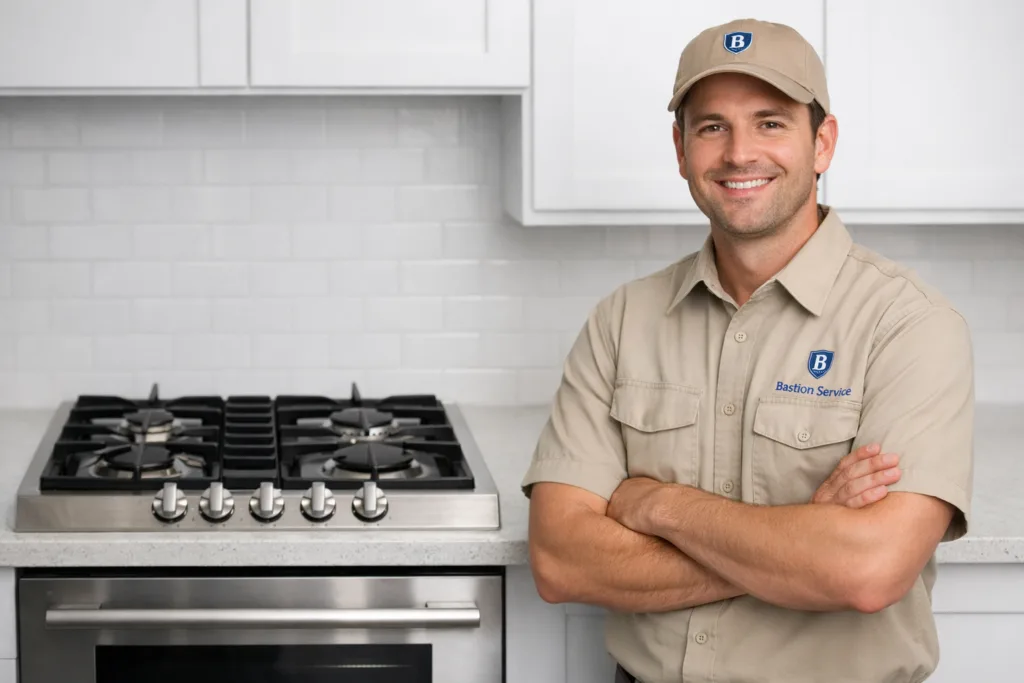
Cooktop problems are easier to solve when the symptom is described clearly. A Summit unit that clicks constantly, leaves one burner cold, overheats on low settings, or shows visible surface damage may be experiencing very different failures even when the issue appears similar during daily use. In Hermosa Beach homes, the most efficient repair path usually starts with identifying whether the problem involves ignition parts, heating components, controls, wiring, or the cooktop surface itself.
Common Summit cooktop symptoms and what they often mean
Many Summit cooktop issues follow recognizable patterns. While a proper inspection is still important, the way the appliance behaves can often narrow the likely cause.
Burner does not light on a gas cooktop
If a gas burner will not ignite, homeowners often notice one of two patterns: either the burner clicks but never lights, or it does not click at all. Clicking without ignition can point to clogged burner ports, moisture around the igniter, a misaligned burner cap, or a weak spark. No clicking at all may suggest a switch or ignition circuit problem. If the burner lights with a match but not on its own, that usually shifts attention toward the spark system rather than gas flow.
Electric burner stays cold or heats inconsistently
On electric Summit cooktops, a burner that does not heat may have a failed element, a damaged connection, or a defective control switch. If the burner sometimes works and sometimes does not, the fault may be developing rather than fully failed. Inconsistent heating can also show up as long warm-up times, weak output, or a burner that cycles in a way that does not match the selected setting.
Constant clicking or repeated sparking
Gas models can start clicking after a spill, after routine cleaning, or for no obvious reason. Sometimes the cause is simple, such as trapped moisture or burner caps that were put back slightly out of place. If the clicking continues after the surface is dry and properly assembled, the problem may involve the spark switch harness or spark module. Continued use in that condition can become frustrating and may lead to unreliable burner operation.
Cooktop gets too hot or will not stay at a low setting
When a burner seems stuck on high, runs hotter than expected, or refuses to simmer properly, the problem is often tied to the control side of the appliance. On some models, a worn switch can make heat levels feel unpredictable. Homeowners may first notice this when sauces scorch, delicate foods cook unevenly, or the same pan behaves differently from one day to the next.
Cracked glass or damaged surface components
Smoothtop Summit cooktops with cracked glass should be evaluated promptly. Surface damage is not just cosmetic. It can affect safe operation, expose underlying components to spills, and make continued use risky. Loose knobs, damaged trim, or signs of heat stress near the controls can also indicate wear that goes beyond appearance.
How symptom patterns help narrow the repair
One reason cooktop diagnosis matters is that similar complaints can come from different components. A burner that will not heat could be caused by the element itself, the switch that controls it, damaged wiring, or a problem in the power path. A gas burner that struggles to ignite could involve the igniter, burner head alignment, switch, or spark module.
Looking at the full symptom pattern often makes the difference. Useful details include:
- Whether one burner is affected or several
- Whether the problem is constant or intermittent
- Whether the issue began after a spill, cleaning, or power interruption
- Whether controls feel loose, stiff, or unresponsive
- Whether the cooktop shows visible cracking, scorching, or unusual odor
These clues can help determine whether the repair is likely to be isolated to one part or whether broader wear should be considered before moving forward.
When to stop using the cooktop and schedule service
Some cooktop issues are inconvenient. Others raise safety concerns and should not be ignored. It is wise to stop using the appliance and arrange service if you notice any of the following:
- Visible sparking outside of normal ignition behavior
- A cracked glass surface
- A burner that will not turn down or seems stuck at high heat
- Repeated clicking that does not stop
- Burning smells from the control area
- Evidence of overheating, melted knobs, or discolored trim
For gas models, delayed ignition or repeated failure to light should also be taken seriously. For electric models, a burner that overheats or cycles erratically can damage cookware and make normal cooking unreliable.
Repair or replacement for a Summit cooktop
Many Summit cooktop problems are repairable when the issue is limited to a part such as an igniter, switch, heating element, or surface control component. Repair often makes sense when the cooktop is otherwise in good condition and the failure is confined to one system.
Replacement may be the better choice when there is extensive glass damage, multiple failing burners, recurring electrical faults, or signs that the appliance has broader wear beyond the original complaint. The decision is usually less about one dramatic symptom and more about the overall condition of the unit. A practical repair plan should weigh the failed part, the state of the cooktop surface, the number of affected components, and how reliably the appliance is likely to perform afterward.
What homeowners in Hermosa Beach should expect from cooktop troubleshooting
A service-focused inspection should do more than confirm that the cooktop is malfunctioning. It should identify the system involved, note whether the problem appears isolated or linked to additional wear, and explain whether continued use could make the damage worse. That is especially helpful with Summit cooktops because ignition, heat regulation, and surface issues can overlap in ways that are not obvious from the outside.
For households in Hermosa Beach, the goal is straightforward: understand why the cooktop is not performing normally, learn whether the problem is repairable in a sensible way, and make a decision based on the actual condition of the appliance rather than guesswork.
Simple checks homeowners can do before service
Before scheduling repair, there are a few basic observations that can be helpful. These are not a substitute for technical service, but they can clarify the symptom:
- Make sure burner caps on gas models are seated correctly
- Check whether the issue affects one burner or all burners
- Note whether the clicking started after cleaning or a boil-over
- Watch for changes in indicator lights or control response
- Look for cracks, chipping, scorching, or loose control knobs
If the problem remains after these simple checks, or if any safety concern is present, the next step should be professional evaluation rather than continued trial and error.