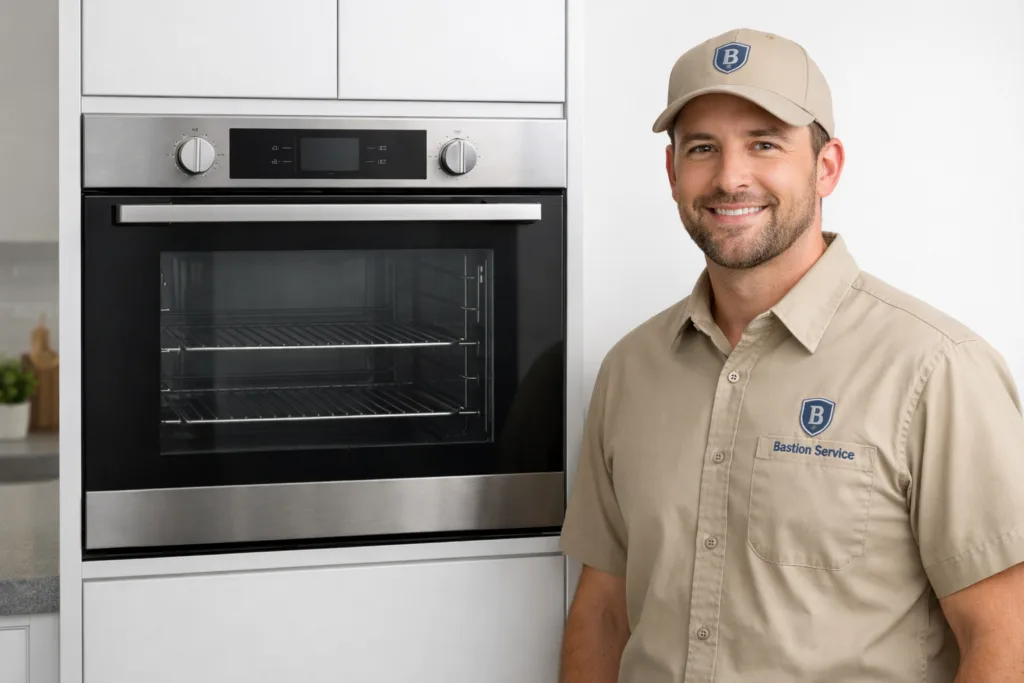
Cooking problems often start subtly. A roast that takes longer than usual, cookies that brown on one side, or a preheat that never seems to finish can all point to an Asko oven that is no longer regulating heat the way it should. In Hermosa Beach homes, these issues usually become noticeable before the oven stops working entirely, which makes symptom-based troubleshooting especially helpful.
What different oven symptoms usually mean
One of the biggest mistakes with oven problems is assuming every heating issue has the same cause. An oven that runs cool, one that overheats, and one that shuts off during cooking may all seem related, but they often trace back to different components. Looking at the exact pattern is the fastest way to understand whether the problem is likely tied to heat production, temperature sensing, airflow, the door system, or the electronic controls.
Oven not heating at all
If the oven powers on but does not heat, the failure may involve a bake element, broil element, sensor circuit, safety component, wiring issue, or control board problem. In some cases, the display appears normal even though the oven is not actually generating heat. That can make the fault seem confusing until each heating component is tested directly.
Slow preheat
A long preheat is often an early warning sign rather than a minor inconvenience. Weak heating output, a sensor that is reading inaccurately, or a control problem that interrupts normal heat cycling can all cause the cavity to warm too slowly. Homeowners sometimes adapt by adding extra cooking time, but that usually leads to inconsistent results from one meal to the next.
Uneven baking
When food cooks faster in the back, browns too much on top, or stays underdone in the center, the oven may not be distributing heat evenly. Possible causes include a failing convection fan, weak element performance, poor temperature feedback, or heat loss from a door that is not sealing properly. Uneven baking is especially noticeable with multi-rack cooking and delicate recipes.
Temperature swings
All ovens cycle on and off to maintain heat, but large swings are different. If dishes alternate between overcooked and undercooked even at the same setting, the oven may be reading temperature incorrectly or responding poorly to sensor input. A drifting sensor or control fault can make the set temperature unreliable, even when the display suggests everything is normal.
Unresponsive controls or display issues
Flashing numbers, error messages, partial displays, and controls that stop responding can indicate electronic failure rather than a heating problem alone. These issues may be isolated to the interface, or they may affect how the oven starts, heats, times cycles, or completes a program. Intermittent behavior is common with control-related faults, which is why the pattern of failure matters.
How specific components affect performance
Asko ovens depend on several systems working together. When one part begins to fail, the symptom can spread into other areas of performance.
- Heating elements: Responsible for generating bake and broil heat. If one weakens or fails, preheat slows down and cooking becomes uneven.
- Temperature sensor: Tells the control how hot the oven actually is. A bad reading can cause underheating, overheating, or erratic cycling.
- Convection fan: Moves hot air through the cavity. If airflow drops, heat can collect unevenly and baking results suffer.
- Door gasket and hinges: Help retain heat. If the door does not close tightly, temperature stability becomes harder to maintain.
- Control board and wiring: Coordinate heating commands, timing, and sensor response. Electrical faults here can create inconsistent or confusing symptoms.
Signs the problem is getting worse
Some oven issues stay relatively stable for a short time, but many progress. A preheat that is only slightly slow this week may become a complete no-heat condition later. A temperature issue that ruins one tray of cookies can turn into widespread overheating that affects every meal.
Watch for warning signs such as repeated error codes, tripped breakers, sudden shutoffs, burning smells that are not related to food residue, or controls that work only intermittently. These patterns usually mean the problem has moved beyond normal wear and should not be ignored.
When to stop using the oven
It is best to stop using the oven if it overheats, sparks, trips electrical protection, shuts down mid-cycle, locks unexpectedly, or produces smoke or odor that seems electrical rather than food-related. Continued use in these situations can increase damage to surrounding components and make a simpler repair more expensive.
If the oven door will not close securely, that also deserves attention. Heat escaping from the cavity affects cooking performance and can place extra stress on elements and controls as the oven struggles to maintain the selected temperature.
Repair or replace: what to consider
Many Asko oven problems are worth repairing, particularly when the issue is limited to an element, sensor, fan motor, latch, seal, or another isolated part. The decision becomes harder when multiple failures are present, electronics have been damaged by prolonged heat issues, or the appliance has broader wear that suggests more repairs may follow.
A realistic decision usually depends on:
- the exact failed component
- whether the symptom is isolated or part of a larger pattern
- the condition of the oven overall
- parts availability
- the cost of repair compared with expected remaining life
That is why diagnosis matters before any recommendation is made. Two ovens with the same complaint may not have the same repair path at all.
What a service visit should focus on
For homeowners in Hermosa Beach, the most useful oven service is not guesswork or quick part swapping. It should begin with symptom review, operating checks, and targeted testing based on how the oven is failing. An oven that runs cool needs a different approach than one with a dead display or a door that will not seal.
A thorough visit should help answer a few practical questions: Is the problem mechanical or electronic? Is it affecting safety, cooking performance, or both? Is the repair likely to restore normal use without leading to a second major repair right away? That kind of clear diagnosis gives homeowners a better basis for deciding what to do next.
Common household scenarios in Hermosa Beach
In everyday home use, oven problems often show up during routines that used to feel reliable. Weeknight meals may start taking longer. Baked dishes may need constant checking. Holiday cooking may become stressful because rack positions no longer produce predictable results. For families who use the oven often, even small temperature problems become disruptive quickly.
If your Asko oven is no longer heating consistently, is taking too long to preheat, or is showing control issues, addressing the symptom early usually gives you more options. Smaller faults are often easier to isolate before they create additional wear in the rest of the system.