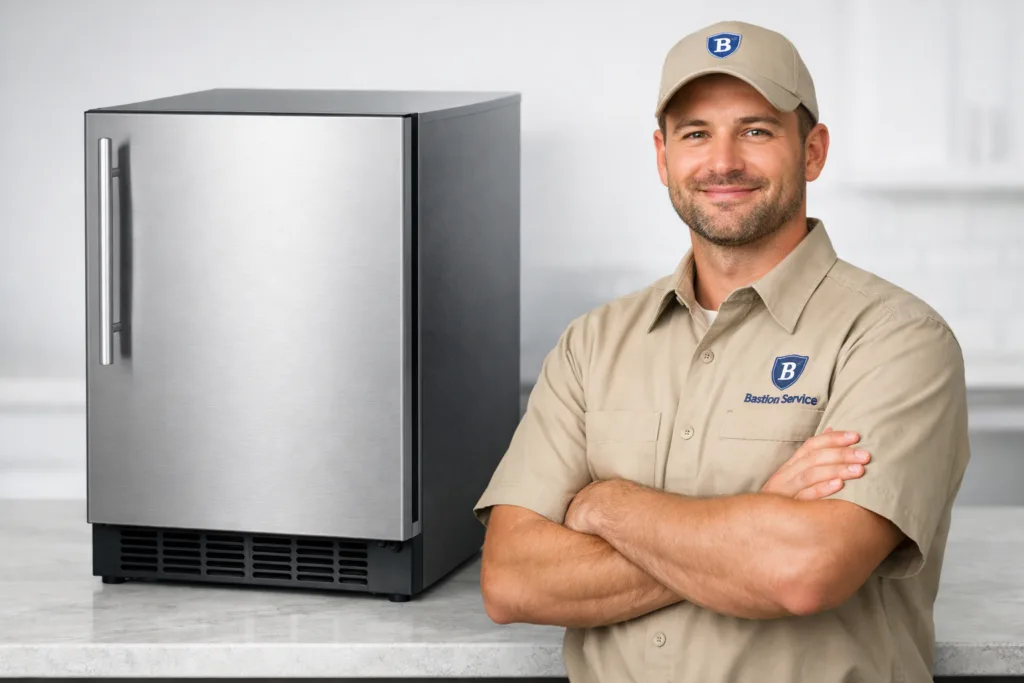
Ice maker failures are often easier to understand when you look at what the unit is doing instead of treating every problem as the same. A Summit unit that makes no ice, produces only a few thin cubes, leaks water, or creates clumped batches can point to very different causes. In many homes in Hermosa Beach, the real issue turns out to be tied to water flow, freezer temperature, fill timing, or the harvest cycle rather than a single obvious part.
Start with the symptom, not the assumption
Two ice makers can show the same outward problem for completely different reasons. For example, “no ice” might mean the ice maker assembly has failed, but it can also mean the freezer is slightly too warm, the fill tube is frozen, or the inlet valve is not supplying enough water. Looking at the symptom pattern helps narrow the repair path before parts are changed.
No ice at all
If the bin stays empty, the first question is whether the ice maker is actually being supplied with the conditions it needs to run. A Summit ice maker may stop producing when:
- The water supply is reduced or interrupted
- The fill tube is iced over
- The inlet valve is weak or stuck
- The freezer temperature is too high for normal cycling
- The ice maker module, sensor, or control has failed
Sometimes the refrigerator section still seems normal, which can make the problem confusing. But an ice maker is less forgiving than general food cooling, so even a modest temperature issue can stop production.
Slow ice production
When ice output drops gradually, the unit may still be working but not completing each cycle correctly. Low water pressure, a partially restricted line, temperature instability, or a valve that is opening inconsistently can all slow production. This is also a common pattern when the freezer door seal is allowing warm air in and causing subtle frost buildup around the ice maker area.
Small, hollow, or uneven cubes
Poorly formed cubes usually suggest a fill problem. If the mold does not receive enough water, the cubes may come out thin, partial, or irregularly shaped. In a residential setting, this often points to restricted water delivery, mineral buildup affecting flow, or a valve that is no longer opening fully. Addressing this early can prevent jams and repeated failed harvest attempts.
Leaks or water where it should not be
Water under the appliance, around the ice maker housing, or freezing into sheets can signal overfilling, a loose connection, a cracked water line, or a drainage issue that looks like an ice maker leak. This is one of the symptoms that should not be ignored, because excess moisture can spread into nearby components and create heavier ice buildup over time.
Clumped ice or cubes freezing together
Clumping usually means the ice is partially melting and refreezing. That can happen when freezer temperatures fluctuate, the bin area gets intermittent warm air, or the ice maker is producing irregularly and allowing moisture to collect between cycles. If the clumping keeps returning after the bin is emptied, the issue is usually mechanical or temperature-related rather than simple old ice.
Buzzing, clicking, or repeated cycling noises
A brief sound during fill or harvest can be normal, but repeated buzzing or clicking often suggests the unit is trying to operate without completing a step. A weak valve may buzz without delivering enough water. A jammed mechanism may click through an incomplete harvest. These noises are useful clues because they often reveal whether the problem is on the water side, the motor side, or the control side.
Why Summit ice maker problems need model-aware testing
Summit refrigeration products can differ in layout, controls, and installation style. Some units make access straightforward, while others require a closer check of surrounding freezer conditions before blaming the ice maker itself. That matters because the visible symptom is not always the root cause.
On a Summit unit, a service visit should sort out whether the fault is coming from the ice maker assembly, the water inlet system, the freezer environment, or the controls that manage cycling. That kind of practical repair guidance is especially helpful when a homeowner is deciding whether the issue is isolated and repairable or part of a broader refrigeration decline.
Signs the problem may be bigger than the ice maker alone
Some ice maker complaints are really early warnings of a larger freezer or refrigerator problem. Watch for these patterns:
- Frost building up around vents or the ice maker compartment
- Food texture changing in the freezer
- Ice production stopping and restarting without a clear reason
- Water line freezing repeatedly after being thawed
- Leaks combined with temperature swings
When these symptoms show up together, the repair may involve more than the ice maker assembly. Airflow restrictions, sensor issues, defrost trouble, or unstable temperatures can all interfere with reliable ice production.
When to stop using the ice maker and schedule service
It is a good idea to stop normal ice maker use if you notice active leaking, repeated overfilling, a fill tube that keeps freezing, or a mechanism that tries to cycle but cannot finish. Continued use in those conditions can add stress to motors and controls, create excess frost, and allow moisture problems to spread.
Scheduling service makes sense when:
- The unit has stopped making ice for more than a short reset period
- Ice output has dropped noticeably
- Cube size or shape has changed
- The bin contains clumped or partially melted ice
- You hear new noises during fill or harvest
- Water appears around the appliance or inside the freezer
Repair or replace?
Many Summit ice maker issues are worth repairing when the refrigerator is otherwise in good condition and the fault is limited to a valve, line, sensor, control component, or the ice maker assembly itself. In those cases, restoring normal operation is often straightforward once the failed part and underlying cause are identified.
Replacement becomes more likely when the appliance has multiple refrigeration problems at the same time, cooling performance is declining beyond the ice maker, or repeated failures suggest the unit is aging out of economical repair. The decision usually comes down to the condition of the full appliance, not just whether the ice bin is empty.
What homeowners in Hermosa Beach should expect from a service visit
A useful appointment should answer a few key questions clearly: Is the freezer cold enough for proper ice production? Is water reaching the mold in the correct amount? Is the unit completing the harvest cycle? Are frost, drainage, or control issues affecting performance? Once those points are checked, the repair recommendation is much easier to understand.
For households in Hermosa Beach, the goal is not just to get ice back temporarily, but to identify why the Summit ice maker failed and whether the recommended repair addresses the source of the problem. That helps reduce repeat issues, prevents unnecessary parts replacement, and gives you a better sense of the most sensible next step for the appliance.