
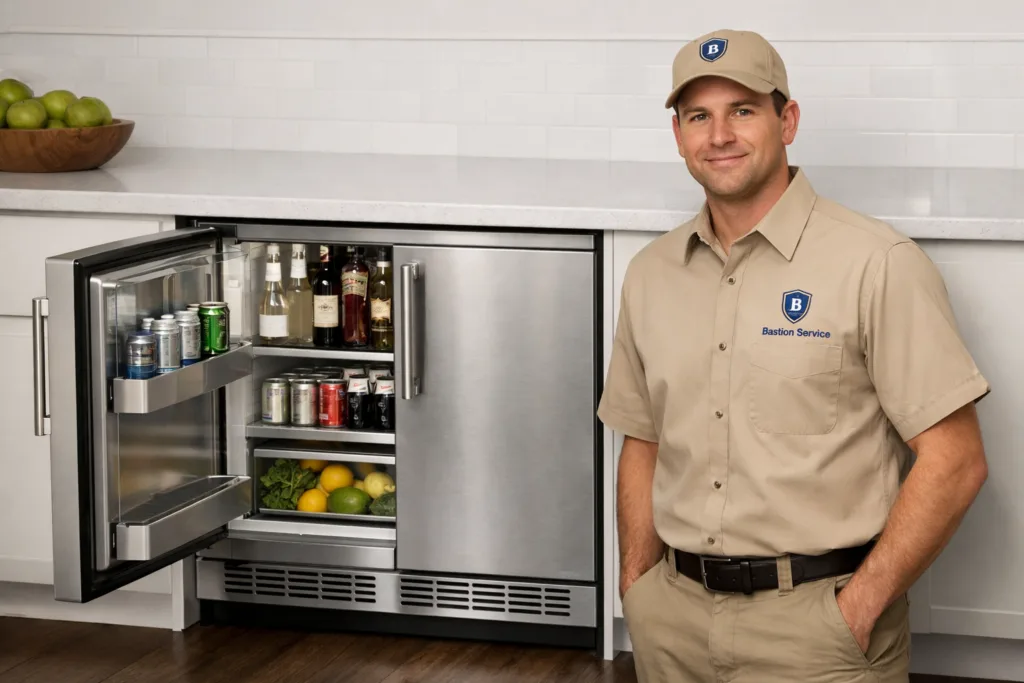




How Perlick appliance issues usually show up at home
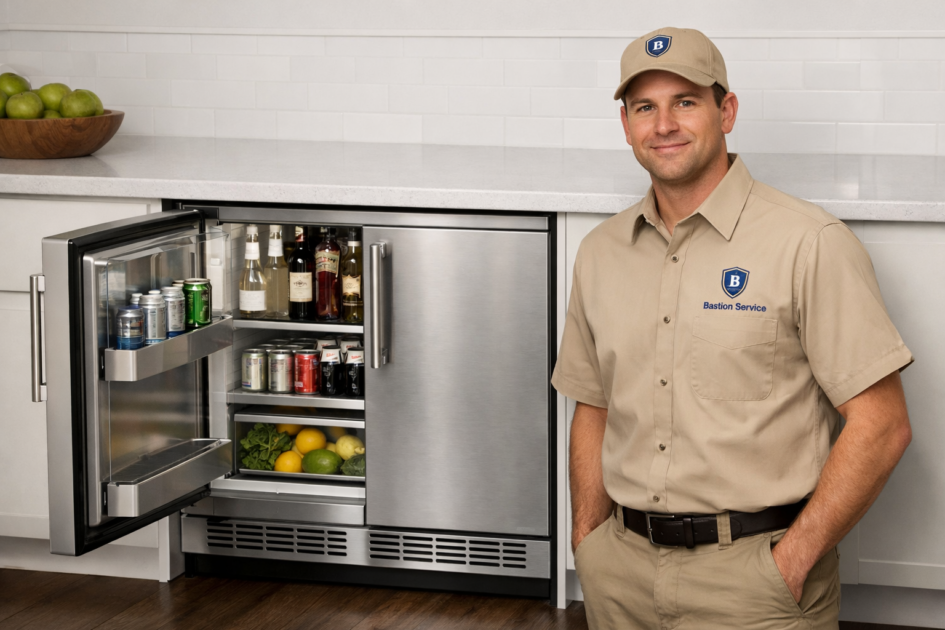
Most Perlick problems start with a household symptom you can see or hear before the cause is obvious. A refrigerator may seem a little warmer than usual, a freezer may begin building frost, an ice maker may slow down, or a wine cooler may stop holding a steady temperature. Those early changes matter because the same symptom can come from several different faults, from airflow and fan problems to controls, sensors, drains, seals, or cooling-system wear.
For specific Perlick appliance paths in Los Angeles, review Perlick Refrigerator Repair in Los Angeles, Perlick Freezer Repair in Los Angeles, and Perlick Ice Maker Repair in Los Angeles.
In Los Angeles homes, appliances also work against real-world conditions such as frequent door openings, busy kitchens, ventilation limits, and warmer indoor temperatures during parts of the year. That does not mean every issue is serious, but it does mean persistent performance changes are worth paying attention to before food loss, leaks, or heavier component strain develop.
Common Perlick refrigerator symptoms
Food not staying cold
If a Perlick refrigerator is running but not keeping food cold enough, the problem may be as simple as blocked airflow or a door that is not sealing well. It can also point to a failing evaporator fan, condenser fan, temperature sensor, thermostat, control issue, or a more serious cooling-system fault. When temperatures rise slowly, homeowners sometimes keep adjusting settings, but unstable cooling usually needs a closer look rather than repeated guesswork.
Water inside the cabinet or on the floor
Leaks and excess moisture often come from a clogged drain path, condensation caused by poor sealing, or uneven cooling that lets humidity build up in the wrong places. If water keeps returning after cleanup, the source usually needs repair. Repeated moisture can damage nearby flooring, encourage odor issues, and make the refrigerator less efficient.
New noise or nonstop running
A refrigerator that suddenly sounds louder, clicks more often, or seems to run almost constantly may be struggling to maintain set temperature. Fan wear, dirty condenser components, restricted ventilation, and electronic control trouble are all possible causes. When noise and weak cooling happen together, it is a stronger sign that the appliance is working harder than it should.
What freezer problems often mean
Soft food or uneven freezing
A Perlick freezer should hold low, stable temperatures. If some items stay frozen while others soften, the issue may involve airflow restrictions, frost buildup around the evaporator area, a fan problem, sensor trouble, or loss of cooling performance. Partial thawing is not something to ignore, especially when it repeats.
Frost that keeps coming back
Frost buildup can be caused by warm air entering through a worn gasket, a door that is not closing cleanly, or a defrost-related failure. Removing visible frost may help briefly, but if the source is not corrected, the freezer usually returns to the same pattern. Over time, heavy frost can reduce storage space and interfere with normal circulation.
Ice maker issues that deserve attention
Little or no ice production
Low output does not always mean the ice maker itself is the only problem. Water supply restrictions, valve issues, temperature problems, scale buildup, or a fault in the production cycle can all reduce output. If the unit stops making ice completely, both water delivery and cooling conditions need to be considered.
Small, hollow, or clumped ice
Changes in cube shape or texture often point to inconsistent water fill, unstable temperatures, or mineral buildup affecting normal operation. Clumping can happen when ice partially melts and refreezes, which may suggest a cooling inconsistency rather than a simple bin issue. If the ice also tastes off, lingering moisture or maintenance-related buildup may be part of the picture.
Wine cooler performance problems homeowners notice
Temperature drift
A Perlick wine cooler is built for stability, so noticeable warming or frequent swings usually mean something is off. Common possibilities include sensor inaccuracy, fan trouble, control failure, poor door sealing, or declining cooling performance. Because wine cooler issues can develop gradually, the problem may be more advanced by the time it becomes easy to notice.
Condensation, vibration, or rattling
Some operating sound is normal, but stronger vibration, new rattling, or visible condensation can signal airflow limitations, fan wear, seal problems, or an installation issue that affects how the unit sits and vents. Small changes in a wine cooler can matter because consistent internal conditions are part of the appliance’s core job.
Signs it is time to stop monitoring and schedule service
It is usually time to move beyond observation when a Perlick appliance shows any of these patterns:
- Cooling stays inconsistent for more than a short period
- Water leaks keep returning
- Frost or condensation builds back up after cleanup
- The unit makes new buzzing, clicking, grinding, or loud fan noise
- The compressor seems to run much longer than normal
- The appliance intermittently stops working or struggles to restart
- Ice production drops without an obvious supply issue
These symptoms can start as an inconvenience, but they also tend to overlap with higher wear, food spoilage, water damage, or added stress on expensive components.
When repair is often the better choice
Repair is often sensible when the appliance is otherwise in good condition and the problem is limited to one system or component. Issues involving fans, valves, drains, seals, sensors, controls, or similar parts may be worth addressing if the cabinet, insulation, and overall performance history are still solid. In many cases, the question is not whether the appliance has one problem, but whether it still has strong usable life after that problem is corrected.
When replacement may make more sense
Replacement enters the conversation when the diagnosis points to major cooling-system failure, compressor-related cost that is out of proportion to the unit’s value, repeated breakdowns in multiple areas, or general deterioration beyond a single repair. Age alone is not always the deciding factor. The bigger issue is whether the appliance has become unreliable enough that one repair is unlikely to solve the larger pattern.
What homeowners should expect from a useful service visit
A worthwhile diagnosis should do more than name a symptom. It should identify what is actually failing, whether continued operation risks further damage, what repair path is being recommended, and whether that repair makes financial sense for the appliance’s condition. That helps Los Angeles homeowners make a grounded decision instead of paying for trial-and-error part replacement.
Keeping problems from getting worse between first symptoms and service
While waiting for service, a few basic steps can help limit secondary damage. Avoid overloading shelves or blocking vents, check that doors are fully closing, clean up standing water promptly, and watch for signs of worsening temperature loss. If food safety is in question, move perishable items elsewhere rather than relying on a unit that is already showing unstable cooling.
Most importantly, avoid forcing the appliance through repeated setting changes or continued heavy use when the problem is clearly progressing. Early attention often preserves both the appliance and the food or beverages stored inside it.


