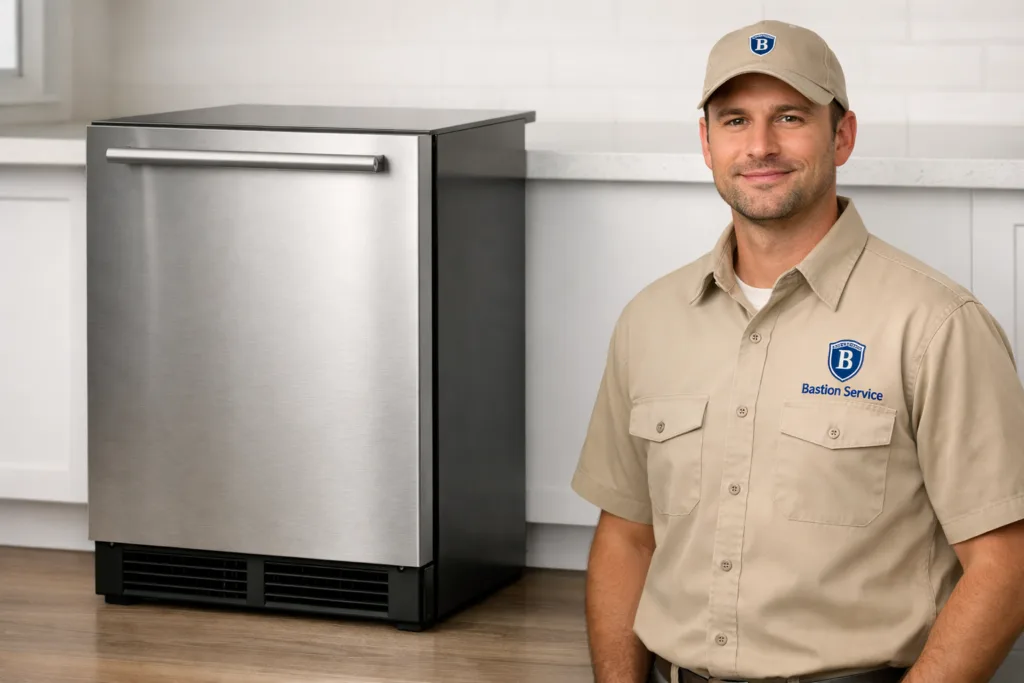
Perlick ice makers are built for steady household use, but when performance changes, the symptom often tells only part of the story. A machine that stops making ice, creates wet clumps, or leaves water near the cabinet may be dealing with a water supply issue, a drain problem, a control fault, or a cooling problem inside the unit. Sorting that out early helps prevent unnecessary part replacement and reduces the chance of avoidable damage around the appliance.
Perlick ice maker problems homeowners notice first
Most repair calls begin with one obvious change in normal operation. The unit may stop producing ice altogether, take much longer than usual to fill the bin, or make ice that looks and behaves differently. In Manhattan Beach homes, these issues often become most noticeable during busy weekends, warmer weather, or any time the household expects the machine to keep up with regular use.
No ice production
If the machine is running but no ice is being made, the problem may involve the incoming water supply, a failed inlet valve, a sensor issue, an electronic control fault, or weak cooling performance. In some cases, the unit starts a cycle but cannot complete freezing or harvest correctly. A no-ice condition is one of the clearest signs that the appliance needs testing rather than guesswork.
Slow or reduced ice output
When the ice maker still works but production drops off, the cause may be restricted water flow, partial freezing, scale buildup, temperature instability, or a problem releasing finished ice. This is the kind of issue that can seem minor at first because the machine has not fully stopped. Over time, though, reduced output usually means the unit is running inefficiently or struggling through incomplete cycles.
Small, hollow, cloudy, or misshapen ice
Changes in cube quality usually point to a fill problem, inconsistent water delivery, mineral deposits, or irregular freezing conditions. The machine may continue operating while producing poor ice, which can make the issue easier to ignore. But visible changes in cube size, clarity, or shape are often early warnings that something inside the system is no longer working as intended.
Leaking water or heavy clumping in the bin
Water around the appliance can come from an overflow condition, blocked drainage, loose connections, poor leveling, or a freeze-and-harvest problem that causes meltback. If ice in the bin forms into a solid mass, that can also indicate trouble with temperature control, drainage, or ice release. Leaks and clumping should be addressed promptly to avoid damage to surrounding flooring or cabinetry.
Unusual noises or constant running
Clicking, buzzing, repeated cycling, or a machine that seems to run much longer than normal can point to mechanical strain or a system that is not completing each stage properly. While some operating sound is normal, a clear change in noise pattern often means the unit is compensating for a failed part or an obstructed function.
Why symptom-based diagnosis matters
Ice makers combine water delivery, freezing, sensing, drainage, and control functions in a compact appliance. The same outward symptom can come from several different failures. Low production, for example, might be caused by poor water flow, sensor trouble, scale buildup, or reduced cooling efficiency. Replacing parts based only on the visible symptom can add cost without correcting the underlying problem.
Testing matters even more with premium built-in appliances because performance problems can overlap. A unit may have one obvious complaint and a second issue developing in the background. Identifying the actual fault pattern helps determine whether the repair is straightforward or whether multiple conditions are affecting the machine.
Common causes behind Perlick ice maker repair calls
While every unit should be evaluated on its own condition, several causes appear repeatedly in residential service:
- Restricted or inconsistent water supply
- Failing water inlet valve
- Mineral or scale buildup affecting fill or freezing
- Drain blockage or poor water evacuation
- Temperature sensor or thermostat-related faults
- Harvest-cycle or ice thickness issues
- Fan or cooling-performance problems
- Electrical or control board failures
- Door or closure issues affecting temperature stability
In many cases, the machine does not fail all at once. Homeowners may first notice that the bin is never as full as it used to be, cubes seem wetter than normal, or the appliance runs longer between batches. Those smaller changes are often the best time to investigate the problem before the unit stops making ice entirely.
Signs it is time to stop using the unit and schedule service
Some problems can worsen quickly if the appliance keeps running. Service is usually the right next step when your Perlick ice maker:
- Produces no ice at all
- Makes much less ice than normal
- Leaks water onto the floor or into nearby cabinetry
- Creates clumped, melting, or fused ice in the bin
- Starts cycles but does not finish them properly
- Makes new or unusual operating noises
- Runs constantly without normal output
These symptoms suggest more than a temporary interruption. Continued use can increase wear on internal parts and make a limited repair more involved than it needed to be.
Repair versus replacement for a Perlick ice maker
Many Perlick ice maker issues are repairable when the problem is limited to a valve, sensor, drain-related fault, control issue, or another serviceable component. Repair becomes less attractive when the machine has recurring cooling problems, multiple failing parts, or age-related deterioration that affects reliability overall.
The best choice depends on what testing reveals. Once the source of the problem is identified, it becomes easier to weigh repair cost against expected performance and the general condition of the appliance in your Manhattan Beach home. That decision is usually much clearer after the unit has been properly evaluated.
What a productive service visit should clarify
A useful repair appointment should explain more than the visible symptom. It should identify what component or system has failed, whether other parts have been affected, and whether using the machine in its current condition could lead to additional damage. It should also make clear whether the repair path is likely to restore normal ice production or whether replacement deserves consideration.
For homeowners dealing with no ice, slow production, leaking, or poor ice quality, the most effective next step is a diagnosis tied to the machine’s exact behavior. That gives you a realistic picture of what is wrong, what needs to be repaired, and whether the unit is a good candidate for continued use.