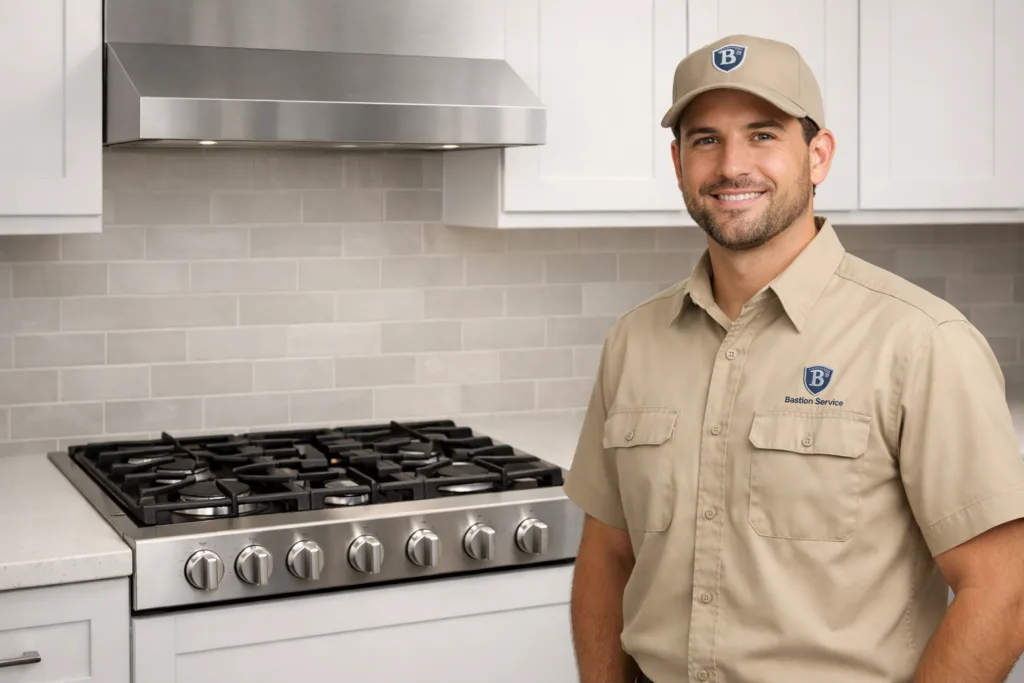
Cooktop problems are easiest to solve when the symptom is described clearly. A burner that sparks but does not light points in a different direction than a burner that heats too high, a glass surface that shows damage, or controls that stop responding altogether. In Palms homes, noticing how the problem started and whether it affects one cooking zone or the whole unit can make the repair path much more accurate.
Start with what the cooktop is actually doing
Monogram cooktops can develop faults in burner assemblies, ignition parts, switches, sensors, wiring, or electronic controls. Because several failures can produce similar symptoms, the pattern matters more than the annoyance alone. One burner failing by itself often suggests a localized issue. Multiple burners acting up at the same time can point to shared controls, incoming power, or ignition system problems.
Useful details include whether the problem began after cleaning, after a boil-over, after a power interruption, or gradually over time. It also helps to note whether the issue is constant or intermittent. A symptom that appears only occasionally may still signal a part beginning to fail.
Common Monogram cooktop symptoms and what they may mean
Burner will not ignite
On gas models, a burner that will not light may have clogged ports, moisture around the igniter, a misaligned cap, a faulty ignition switch, wiring trouble, or a failing spark module. If you hear clicking but the flame does not catch, the problem may be at the burner head rather than the gas supply itself. If there is no clicking at all, the issue may involve the ignition circuit or control components.
Burner clicks continuously
Repeated clicking is commonly linked to moisture, spill residue, a stuck switch, or an ignition fault. This often shows up after a heavy cleaning session or after liquid runs down around the burner area. If the clicking continues when the burner is turned off, the cooktop should not be treated as normal until it has been inspected.
Burner heats slowly or unevenly
Uneven heating can show up as weak flame, poor simmer performance, hot and cool spots, or pans taking much longer to heat than usual. On gas units, buildup in burner openings or wear in the burner assembly can interfere with flame spread. On electric or induction-style surfaces, the cause may involve an element, sensor, or control fault.
Burner gets too hot and will not regulate
If a cooking zone stays hotter than expected or does not respond when lowered, the cause may involve a switch, sensor, or control board issue. This symptom is more than a cooking inconvenience. Overheating can put extra stress on nearby components and make everyday use unpredictable.
Controls do not respond
When knobs feel loose, touch controls fail to register, or indicator lights behave oddly, the fault may be in the user interface, switch assembly, wiring harness, or electronic control system. If several controls fail together, it usually makes sense to look beyond a single burner part.
Cracked glass or visible surface damage
A cracked glass cooktop surface is not just cosmetic. Damage can affect safe heat transfer, allow moisture into internal components, and increase the risk of the crack spreading with normal cooking. If the surface is chipped, fractured, or visibly compromised, continued use may not be a good idea until the unit is assessed.
Symptoms that should not be ignored
Some issues can wait a short time for service. Others deserve immediate attention. Stop using the cooktop and arrange service if you notice:
- a burner that will not turn down or shut off correctly
- continuous clicking that does not stop
- multiple burners failing at once
- repeated tripping of the breaker
- burn marks, arcing, or signs of overheating
- a cracked cooking surface
If there is a strong or persistent gas smell, do not continue troubleshooting the appliance yourself. Leave the area if needed and contact the gas utility or emergency service first. Appliance repair comes after the immediate safety concern is addressed.
What often causes cooktop problems in everyday use
Household cooking conditions can be tough on cooktops over time. Spillovers can work their way into switches and ignition areas. Grease and food residue can block burner ports. Repeated high-heat use can accelerate wear on controls and sensors. Even careful cleaning can sometimes leave moisture where it should not be, especially around ignition components.
That does not mean every symptom is severe, but it does explain why a problem that looks minor on the surface can still need a proper repair. A burner that starts acting up once a week may be in the early stage of a failure that becomes much more disruptive later.
Repair versus replacement: what usually makes sense
Many Monogram cooktop issues are worth repairing when the problem is limited to a known part or system and the rest of the unit is in solid condition. Ignition components, switches, burner assemblies, and certain control-related parts are often the deciding factor in whether repair is straightforward.
Replacement may become the better option when the cooktop has major surface damage, repeated electronic failures, multiple failing systems, or repair costs that are too close to the value of the appliance. Age matters, but condition matters more. A well-kept cooktop with one isolated fault is a different situation from a unit showing several signs of wear at once.
How to prepare for service in Palms
Before scheduling an appointment, it helps to write down exactly what the cooktop is doing. The most useful notes usually include:
- whether one burner or several are affected
- whether the issue is constant or intermittent
- what happens when you turn the burner on
- whether the problem began after cleaning, a spill, or a power event
- any sounds, smells, or display behavior that seem unusual
These details can shorten diagnosis time and reduce guesswork. It is also wise to avoid repeated reset attempts or continued testing of a burner that is clearly malfunctioning. Running a failing component over and over can turn a smaller repair into a larger one.
What homeowners can expect from a symptom-based diagnosis
The goal of service is to match the real-world symptom to the actual failed part or system, not to replace parts based on assumption. That is especially important on premium cooking appliances, where surface appearance and actual internal cause do not always line up. A burner that seems dead may have a switch problem. A clicking issue may be related to moisture rather than a full ignition module failure. An overheating complaint may be tied to regulation rather than the heating element itself.
For households in Palms, that kind of practical repair guidance helps answer the question that matters most: is this a targeted repair, a safety issue that should pause use, or a larger decision about whether the cooktop is still worth fixing?
Keeping the problem from getting worse
Early attention usually helps. If ignition is becoming inconsistent, if heating performance has changed, or if controls feel unreliable, waiting too long can allow extra stress on surrounding parts. Small symptoms have a way of spreading into broader failures when the appliance is used heavily despite warning signs.
When a Monogram cooktop no longer cooks predictably, the best next step is to treat the symptom seriously, document what you are seeing, and have the unit evaluated before everyday meal prep turns into a bigger repair problem.