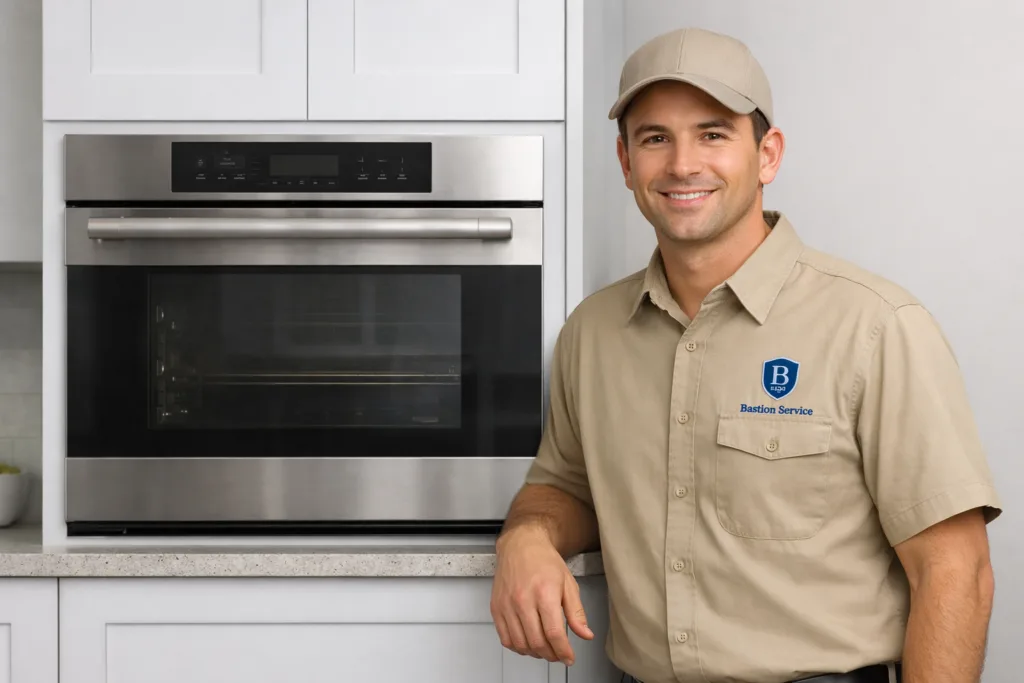
Built-in wall ovens often show trouble in small ways before they fail completely. Maybe preheat starts taking much longer than usual, cookies brown unevenly from side to side, or the display works but the oven never gets fully hot. On Monogram models, those symptoms can come from different components, so the smartest first move is to match the repair plan to the exact behavior of the oven.
For homeowners in Manhattan Beach, that usually means paying attention to patterns: whether the problem happens in bake only, during broil, after a self-clean cycle, or only once the oven has been running for a while. Those details help separate a heating issue from a sensor problem, control failure, fan issue, or door-related heat loss.
Common Monogram wall oven symptoms and what they may mean
Oven will not heat at all
If the control panel turns on but the oven stays cold, the problem may involve the bake element, broil element, temperature sensor, relay, thermal protection component, or electronic control. In some cases, a wall oven can look normal from the outside while one critical part in the heating circuit has failed.
This symptom is especially frustrating because the appliance seems operational until cooking begins. A proper diagnosis helps determine whether the repair is limited to one failed component or tied to a larger control issue.
Slow preheating
When preheat stretches far beyond normal, one of the heating functions may be weak or not cycling correctly. Monogram wall ovens often use both bake and broil during preheat, so a problem in either circuit can affect performance even if the oven eventually reaches temperature.
Slow preheat can also point to sensor drift, restricted airflow, or a door that is not sealing as tightly as it should. If dinner timing has become less predictable, that is often an early sign that service is worth scheduling before the oven stops heating altogether.
Temperature swings or uneven baking
Food that comes out too dark on the edges, pale in the middle, or inconsistent from one rack to another usually means the oven temperature is not being controlled accurately. Possible causes include a weak sensor, failing control response, convection fan trouble, or heat escaping around the door.
Uneven results do not always mean the oven is dramatically broken. Sometimes the unit still heats, but not with the stability needed for reliable baking and roasting. That is why this symptom often gets dismissed for too long, even though it can be a sign of a repairable fault.
Oven runs too hot
An oven that burns food quickly or overshoots the set temperature may have a sensor reporting the wrong temperature, a control board problem, or a relay that is not cycling heat correctly. In a built-in appliance, heat retention and airflow also matter, so diagnosis should look at the full system rather than one part in isolation.
If the oven has started behaving differently across several cooking cycles, it is usually more than normal calibration drift.
Display, keypad, or control problems
Blank screens, frozen buttons, random beeping, error messages, and controls that respond intermittently often point to interface or electronic control trouble. Sometimes the issue is in the main board; other times it comes from a failing touch panel, wiring connection, or unstable power to the control system.
Because modern Monogram wall ovens rely heavily on electronic controls, these issues can affect more than convenience. They can interrupt heating, cancel cycles, prevent startup, or trigger lock and latch errors.
Door will not close properly
A wall oven door that does not shut evenly can create several problems at once: heat loss, longer preheat, poor temperature stability, and stress on nearby components. Hinges, springs, alignment, latch parts, and the gasket may all need inspection.
Even a slight door gap can affect cooking performance more than many homeowners expect, especially during longer baking cycles.
Problems after self-clean
If the oven stops working properly after a self-clean cycle, the extreme heat may have exposed a weak latch motor, sensor, fuse, control component, or wiring connection. A door that stays locked, a dead display, or a no-heat condition after self-clean is a common service scenario on built-in ovens.
That does not automatically mean the appliance is beyond repair, but it does usually mean the failing part needs to be identified before the oven is used again.
Why symptom-based diagnosis matters
Two ovens can show the same symptom for completely different reasons. An oven that will not reach 350 degrees might have a weak bake element, a bad sensor, a control issue, or excessive heat loss from the door. An oven that shuts off mid-cycle could be dealing with overheating protection, an electrical interruption, or a failing control under load.
That is why symptom-based troubleshooting is so important on Monogram wall oven repair in Manhattan Beach. It reduces guesswork, helps avoid replacing the wrong part, and gives the homeowner a better sense of whether the repair is minor, moderate, or part of a larger wear pattern.
Signs the oven may not be safe to keep using
Some performance problems are inconvenient but manageable for a short time. Others are a reason to stop using the appliance until it is checked. It is best to pause use if you notice:
- Burning electrical smells
- Breaker trips during heating
- Power loss in the middle of cooking
- Sparking, arcing, or visible wire damage
- A door that will not latch or close securely
- Error codes paired with shutdowns or no heat
Continuing to run the oven under those conditions can increase damage and, in some cases, create a safety concern inside the home.
Repair or replace: what usually makes sense
Many Monogram wall oven problems are worth repairing when the issue is limited to a sensor, heating element, latch assembly, fan motor, or another isolated component. That is especially true when the oven is otherwise in good shape and has been performing well up to the recent failure.
Replacement becomes more likely when the oven has repeated high-cost electronic problems, major cavity or door wear, or several aging issues at the same time. Since built-in units also involve cabinet fit and installation considerations, the right answer is not always based on part cost alone.
For Manhattan Beach households, the practical question is usually whether the current oven can return to stable day-to-day cooking without stacking one repair on top of another. A targeted evaluation helps answer that honestly.
What homeowners can note before scheduling service
A few details can make the visit more productive and help narrow down the likely cause faster. Useful things to note include:
- Whether the problem happens in bake, broil, convection, or all modes
- If the oven reaches temperature and then drops off, or never gets there at all
- Any recent self-clean cycle before the issue started
- Error codes shown on the display
- Whether the problem is constant or intermittent
- If the door feels loose, misaligned, or hard to latch
Even simple observations like “it preheats normally but fails after 20 minutes” can help point the repair in the right direction.
Built-in oven repairs need a focused approach
Wall ovens are different from freestanding ranges because access is tighter and the appliance is integrated into the kitchen layout. That makes it more important to diagnose the fault correctly before moving ahead with parts and labor. The goal is not just to get heat back temporarily, but to restore consistent performance for normal household cooking.
When a Monogram wall oven starts missing temperatures, delaying meals, or becoming unreliable, the most useful service is the kind that explains what is failing, how serious it is, and what the next step should be. For homeowners in Manhattan Beach, that clarity is often what turns a frustrating appliance problem into a sensible repair decision.