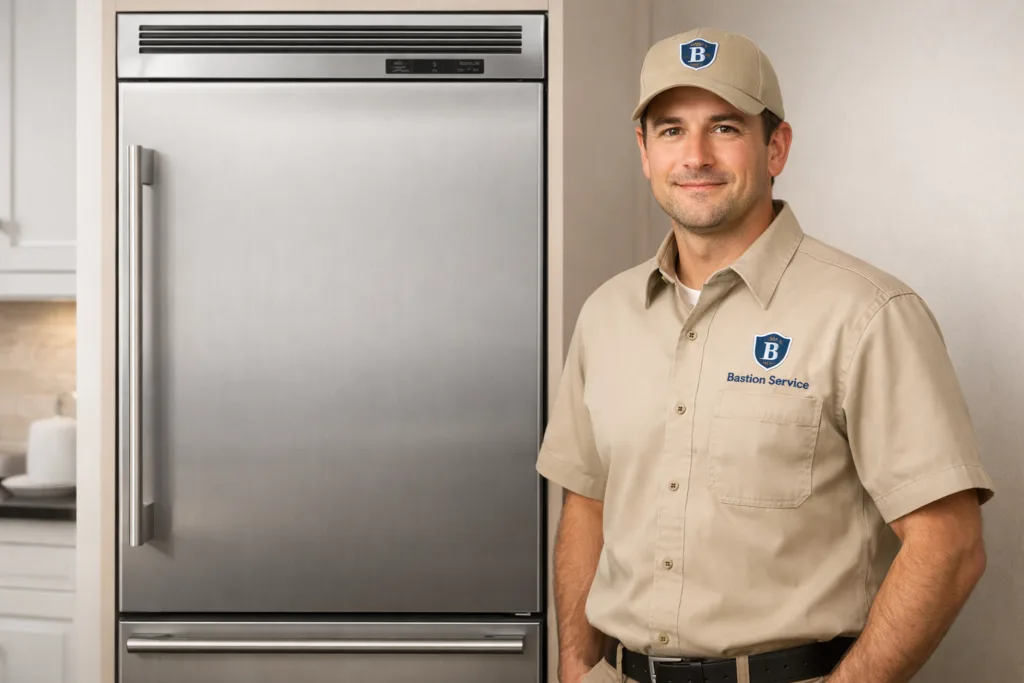
A Monogram freezer that starts warming, frosting over, leaking, or making new noise needs attention quickly because freezer problems tend to spread from one symptom to another. What looks like a simple temperature issue may actually involve airflow blockage, a defrost failure, a fan problem, a door-sealing issue, or a control fault affecting how the unit cools.
Common Monogram freezer symptoms and what they often mean
Freezers do not always fail in one obvious way. A unit may still feel cold at first while struggling to maintain safe storage temperatures, or it may freeze unevenly from one section to another. Looking at the full symptom pattern usually gives a better picture of what is happening inside the appliance.
Not freezing hard enough
If food is soft, ice cream is no longer firm, or the cabinet feels less cold than usual, the problem may involve restricted airflow, frost buildup behind the interior panel, weak fan operation, dirty condenser conditions, sensor trouble, or a deeper cooling-system issue. In some cases the freezer runs for long periods without recovering because cold air is not circulating correctly where it needs to go.
This symptom should not be ignored. Once temperatures begin drifting upward, food quality can decline fast, and the longer the system struggles, the harder the freezer may need to work.
Frost buildup on shelves, drawers, or panels
Visible frost often points to moisture entering the compartment or a defrost problem that is allowing ice to build up where it should not. A worn door gasket, a door that does not close fully, repeated warm-air exposure, or failed defrost components can all lead to heavy frost.
One important detail is where the frost appears. Light frost around the door opening may suggest sealing problems, while heavier frost behind interior covers often indicates ice forming around the evaporator area and blocking airflow. Simply removing the frost without solving the source usually leads to the same problem returning.
Temperature swings or uneven freezing
Some Monogram freezers do not fail as a complete no-cool condition. Instead, they alternate between normal cooling and periods of softening or partial thawing. That pattern may be tied to an intermittent fan motor, control issue, sensor misreading, airflow restriction, or defrost cycle problem.
Homeowners sometimes notice this first when one drawer stays colder than another, or when frozen items near the door soften before anything deeper in the cabinet. Those uneven patterns can be especially helpful during diagnosis because they point toward circulation and control-related causes rather than a single simple explanation.
Water leaks or moisture around the freezer
Water on the floor, moisture inside the cabinet, or ice collecting in unusual spots may indicate a blocked defrost drain, excess condensation from warm air entering the freezer, or frost melting and refreezing in the wrong places. Leaks are not only inconvenient. They can also signal a larger cooling or defrost issue that is already affecting freezer performance.
If leaking appears together with rising temperature or frost buildup, it is often a sign that the problem has moved beyond a minor nuisance and is interfering with normal operation.
Fan noise, buzzing, clicking, or rattling
Unusual sound is one of the most useful clues in freezer repair. A fan rubbing against ice may create a scraping or ticking sound. Buzzing or repeated clicking can point to start-related electrical trouble. Rattling may come from loosened panels or vibration, while a sudden change in normal operating sound can signal a motor or airflow problem.
Noise alone does not always mean major failure, but noise combined with weak cooling, frost, or cycling changes usually deserves prompt inspection.
Why symptom combinations matter
Single symptoms can be misleading. A warming freezer with no frost may suggest one path, while warming plus heavy frost usually suggests another. A leak by itself could be a drain issue, but a leak along with fan noise and temperature fluctuation may indicate ice buildup interfering with airflow.
That is why repair decisions are more accurate when the freezer is evaluated as a system rather than by replacing one part based on guesswork. Premium refrigeration products often have several components interacting at the same time, so the best repair path depends on which failure started the chain of symptoms.
What homeowners can check before scheduling service
There are a few basic checks worth making before assuming a major failure:
- Confirm the temperature setting has not changed accidentally.
- Make sure vents inside the freezer are not blocked by overloaded food storage.
- Check whether the door closes fully without resistance from bins, shelves, or packaging.
- Look at the door gasket for gaps, tearing, or areas that no longer seal evenly.
- Listen for normal fan movement and note any clicking, scraping, or repeated start attempts.
- Watch for visible frost returning soon after it is cleared.
If those checks do not resolve the issue, or if food is already softening, service is usually the safer next step.
When repair should not wait
Some freezer problems worsen quickly when the appliance is left running in a stressed condition. Restricted airflow can turn into solid ice blockage. A weak evaporator fan can create uneven freezing and longer run times. A unit that cycles constantly may add strain to major components while still failing to protect food.
Schedule service promptly if you notice any of the following:
- Food thawing or losing firmness
- Frost returning shortly after removal
- The freezer running almost nonstop
- Sudden fan noise or scraping sounds
- Water pooling near or under the appliance
- Repeated temperature fluctuation or unstable control behavior
Repair versus replacement for a Monogram freezer
Many Monogram freezer issues are repairable, especially when the cause involves a fan motor, defrost component, sensor, drain blockage, gasket problem, or certain electrical and control failures. In those situations, restoring normal operation is often practical if the rest of the unit is in solid condition.
Replacement becomes a more serious consideration when the freezer has a major sealed-system failure, repeated expensive breakdowns, or overall wear that makes additional investment harder to justify. The age of the appliance, the exact failed system, and the repair scope all matter. For homeowners in Manhattan Beach, the most useful approach is to weigh the real condition of the freezer rather than making the decision based only on one visible symptom.
What a service visit should focus on
A good freezer repair process starts by matching the complaint to the actual operating behavior of the appliance. That means looking at temperature performance, airflow, frost pattern, fan operation, door sealing, drain condition, and control response together. From there, it becomes much easier to tell whether the problem is localized and repairable or whether it points to a larger cooling-system concern.
For Manhattan Beach households, that kind of symptom-based evaluation helps avoid unnecessary part replacement and gives a more realistic path back to stable freezer performance.