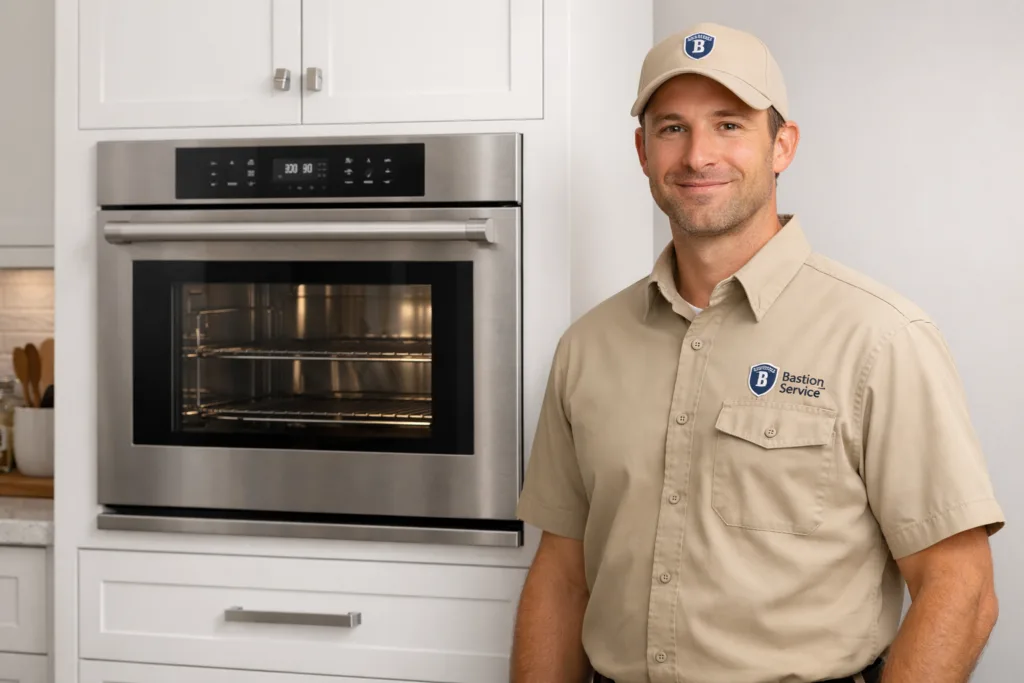
Cooking problems in a Monogram oven rarely start as a complete failure. More often, the first signs are subtle: cookies browning unevenly, casseroles needing extra time, a preheat that feels longer than it used to, or a control panel that works inconsistently. Those patterns matter because they help narrow down whether the issue is related to heat production, temperature sensing, airflow, door sealing, or the electronic controls.
Common Monogram oven symptoms and what they may mean
Many oven complaints sound similar on the surface, but the repair path can be very different depending on how the problem shows up in daily use. A symptom-based evaluation is the fastest way to determine whether the fault is likely mechanical, electrical, or electronic.
Not heating at all
If the oven turns on but never begins cooking, the cause may involve a failed bake element, broil element, igniter, safety device, relay, wiring problem, or control failure. On some models, lights and parts of the display still work, which can make the problem seem less serious than it is. If the unit appears normal but the cavity stays cool, testing is usually needed to confirm whether the oven is being told to heat and whether the heating system is actually responding.
Slow preheating
A Monogram oven that eventually gets hot but takes far too long often points to a weak heating component, partial element failure, sensor drift, or a control issue that is not cycling heat correctly. Some homeowners in Manhattan Beach first notice this when recipes begin running late even though the oven says it has already preheated. In many cases, the oven is reaching a displayed temperature that does not match the true cavity temperature.
Uneven baking
When the top browns too quickly, one side cooks faster, or the center stays underdone, the issue may not be simple calibration. Uneven results can come from inconsistent heat cycling, convection fan trouble, a worn door gasket, rack-position sensitivity, or temperature reading errors. This is especially noticeable in households that bake regularly and depend on repeatable performance.
Temperature swings during cooking
All ovens cycle on and off, but wide swings can lead to unreliable results. If food is overcooked on one use and undercooked on the next, the oven may be losing temperature and recovering too slowly. A sensor that reads out of range, a relay that sticks intermittently, or heating components that cut in and out can all create that pattern.
Control panel problems
Unresponsive buttons, flashing codes, a blank display, or settings that will not start properly often indicate a user interface problem, a board issue, or a power-related fault inside the oven. If the problem happens randomly, intermittent electrical failure is often more likely than a simple settings mistake. Repeated resets that only help temporarily are a strong sign that the fault has not been resolved.
Door and latch issues
If the door does not close firmly, heat can escape and cooking performance drops even when heating parts are still working. A bad seal, worn hinges, misalignment, or latch trouble can all affect temperature stability. Problems that appear during or after self-cleaning are also common, since high heat can expose weak latch parts and stressed electronics.
Why the exact symptom pattern matters
Two ovens can both seem to have a heating problem while needing completely different repairs. One may have a failed element, while another may have a sensor reporting the wrong temperature to the control. An error code can be helpful, but it is not a final answer on its own. Codes point to a system that needs attention; they do not always identify the failed part with certainty.
That is why a useful service visit should answer a few basic questions clearly:
- Is the oven producing heat correctly?
- Is it reading temperature accurately?
- Are controls sending the right commands?
- Is airflow or door sealing affecting results?
- Is the problem isolated, or are multiple systems involved?
Signs you should stop using the oven until it is checked
Some performance issues are annoying but manageable for a short time. Others suggest a higher risk of damage or unsafe operation. It is smart to pause use if you notice any of the following:
- Burning or hot electrical smells
- Repeated shutdowns during cooking
- Fault codes that keep returning
- The oven overheating or scorching food unusually fast
- A door that will not shut securely
- Power loss, flickering display, or tripping breakers
Continued use under those conditions can put more stress on controls, relays, wiring, and heating components. What begins as a limited repair can become broader if the oven keeps running with an unresolved fault.
What homeowners often notice before a full breakdown
Monogram ovens frequently give warning signs before they stop working completely. Paying attention to those early symptoms can help prevent a more disruptive failure right before a holiday meal or a busy weeknight dinner.
- Preheat times gradually getting longer
- Food quality becoming less consistent
- The convection feature sounding different or seeming less effective
- The display acting erratically but recovering
- The oven reaching temperature only on certain settings
- Self-clean cycles causing new behavior afterward
These symptoms do not always mean a major repair is coming, but they do suggest that performance is drifting away from normal.
Repair or replace?
Replacement is not always the best answer for a premium oven, especially when the issue is limited to a serviceable component and the rest of the appliance is in good condition. Many heating, sensor, latch, and control-related problems can be corrected without replacing the full unit.
Replacement becomes more worth considering when there are multiple unrelated failures, significant physical wear inside the cavity, recurring electronic problems, or a repair path that no longer makes financial sense. For most homeowners in Manhattan Beach, the better question is not whether the oven still turns on, but whether the fault is targeted and whether the appliance can reasonably return to stable everyday use after repair.
What a proper service assessment should clarify
A worthwhile evaluation should do more than confirm that the oven is malfunctioning. It should identify what system failed, explain how that failure connects to the symptoms you have been seeing, and outline whether repair is practical based on condition, complexity, and expected reliability afterward.
That matters with Monogram ovens because poor baking performance, temperature inaccuracy, and control trouble can overlap. A homeowner may assume the oven just needs recalibration when the real issue is a sensor or relay problem. In other cases, a panel complaint may actually start with an underlying power or communication fault. Separating those possibilities is what makes the next step sensible instead of guesswork.
Household impact in Manhattan Beach
For many homes in Manhattan Beach, the oven is part of the daily routine rather than an appliance used only on special occasions. When performance slips, the inconvenience shows up quickly in meal timing, food quality, and confidence that dinner will cook as expected. That is why symptom timing matters: whether the issue appears only during preheat, after the oven has been running for a while, during convection use, or only on certain modes can reveal a lot about the likely cause.
If your Monogram oven is baking unevenly, preheating slowly, drifting off temperature, or struggling with controls, the most useful next step is to have the actual fault identified before deciding on repair or replacement.