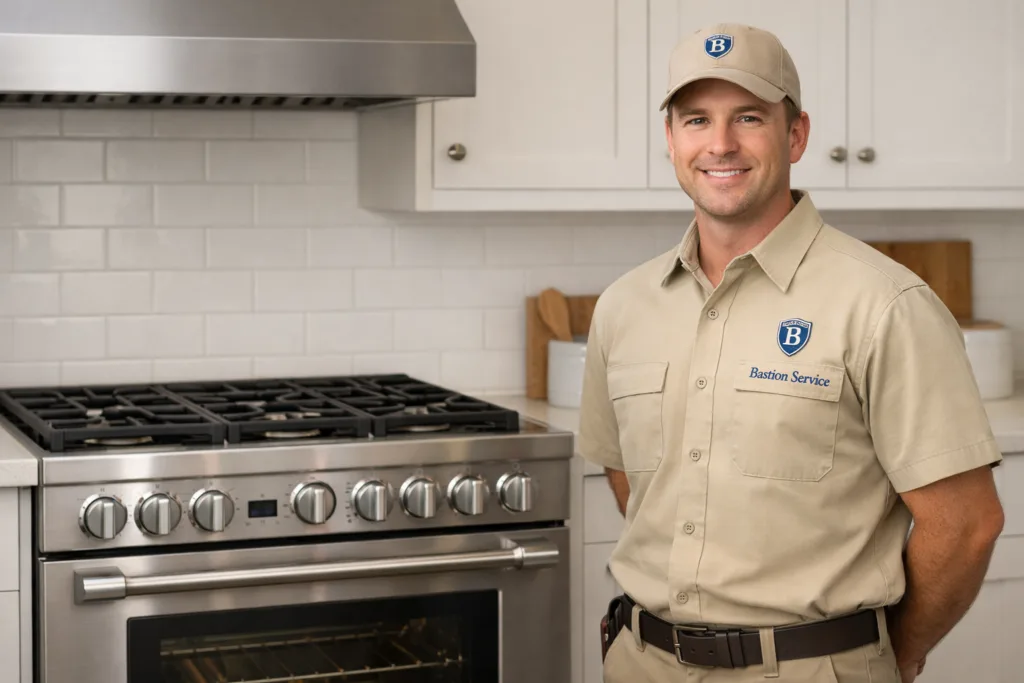
Cooking problems with a Monogram range often start small before they become disruptive. A burner may click longer than usual, the oven may need extra time to preheat, or results may become less consistent from one meal to the next. Paying attention to the exact pattern helps narrow down whether the problem is related to ignition, temperature regulation, controls, power supply, or normal component wear.
Start with the symptom pattern
Ranges combine several systems in one appliance, so similar symptoms can have different causes. An oven that seems too cool can be affected by a weak igniter, a drifting temperature sensor, a failing relay, or a control issue. A burner that will not light may involve the spark system, burner alignment, debris, moisture, or a gas flow problem. Looking at what happens before, during, and after the failure usually tells more than the symptom name alone.
That is especially important with premium appliances, where replacing the wrong part can waste time and money. The most useful service approach is to confirm which component has failed, what is still working normally, and whether continued use could lead to further damage.
Common Monogram range problems and what they may mean
Burner clicks but does not ignite
If a surface burner sparks repeatedly without lighting, the issue may be as simple as a misaligned burner cap or residue affecting the flame path. In other cases, the spark electrode, ignition switch, or related wiring may be at fault. When only one burner is affected, the failure is often localized. When several burners act up at once, the cause may involve a shared ignition component.
Burner lights slowly
Slow ignition usually means the burner is not getting the flame exactly where it needs to be right away. Food spills, grease buildup, moisture, or partial blockage in the burner ports can interrupt ignition. If cleaning does not change the behavior, the spark may be weak or inconsistent.
Constant or random clicking
Clicking that continues after the burner has lit can point to moisture, a stuck ignition switch, or a fault in the spark system. Sometimes the clicking happens after cleaning or during humid conditions, but if it keeps returning, the range should be checked before the problem spreads to other burners or becomes more annoying to use.
Oven takes too long to preheat
A long preheat time is one of the most common signs that something in the heating circuit is weakening. On gas models, a failing igniter is a frequent cause. On electric models, a bake or broil element may not be heating properly. Sensors and control boards can also create long preheat times by misreading or mismanaging oven temperature.
Oven does not reach the set temperature
If food consistently comes out underdone, the range may not be reaching the selected temperature even though the display says otherwise. Possible causes include a weak igniter, a failing sensor, calibration drift, relay problems, or a control fault. This kind of issue often becomes noticeable during baking first, when temperature accuracy matters most.
Uneven baking or roasting
When one side of a dish browns faster than the other, or the center stays undercooked while edges finish early, the problem may involve uneven heat distribution, convection trouble, poor sensor feedback, or a worn door gasket letting heat escape. If the symptom is consistent across different pans and recipes, it is more likely to be appliance-related than cookware-related.
Display or touch controls not responding
A blank display, delayed button response, or settings that do not register properly can point to control board issues, interface failure, loose connections, or power supply interruptions. Electronic problems may begin intermittently, which is why it helps to note whether the problem appears after the oven gets hot, after a power fluctuation, or only during certain functions.
Signs the problem may be getting worse
Some range issues stay manageable for a while, but others tend to progress. These warning signs usually mean it is smart to stop putting the appliance through normal daily use:
- Burners that ignite with a delay or only after repeated clicking
- An oven that overheats or burns food unexpectedly
- Temperature swings that make cooking results unpredictable
- Controls that shut off, freeze, or restart during use
- Tripped breakers or loss of power while the range is operating
- Error codes that return after resetting the appliance
If you notice a persistent gas odor, do not continue troubleshooting the appliance yourself. Stop using the range and handle the situation as a gas safety issue first.
What homeowners in Manhattan Beach can check before service
A few simple observations can help separate a minor use issue from a true mechanical or electrical failure. Before scheduling repair, it helps to note:
- Whether the problem affects the oven, one burner, or several functions
- Whether the symptom is constant or intermittent
- Whether it started after cleaning, a spill, or a power interruption
- Whether the flame looks uneven, weak, or delayed
- Whether preheat times have gradually changed or suddenly become much longer
- Any error messages, flashing displays, or unusual sounds
These details can make diagnosis faster and more accurate, especially when the issue only appears under certain conditions.
Repair or replace?
Many Monogram range problems are worth repairing when the failure is limited to ignition components, switches, elements, sensors, or specific control-related parts. Replacement becomes a stronger consideration when there are multiple expensive failures, recurring electronic problems, severe wear, or a repair cost that no longer fits the overall condition of the appliance.
Age alone does not always decide the answer. A range that looks like it is nearing the end of its life may only have one correctable problem, while a newer unit with repeated control failures may require a more cautious decision. The best choice depends on the actual fault, parts condition, and how the appliance has been performing overall.
Why accurate diagnosis matters with premium ranges
Monogram ranges are built with features that can make symptoms overlap. A heating complaint might involve the igniter, sensor, relay, convection system, or control board. An ignition complaint might be caused by moisture, a switch issue, burner contamination, or an electrical fault. That is why symptom-based evaluation matters more than guessing from one visible problem.
For homeowners in Manhattan Beach, the goal is not just to get the range running again for the moment. It is to identify the failed part or system, avoid unnecessary replacements, and restore reliable cooking performance with a repair path that makes sense for the appliance.